
When Bread Goes Bad: How to Tell the Difference Between Stale and Spoiled
Not Every Hard Loaf Is a Dangerous One
Bread can change dramatically from one day to the next. A loaf that was soft, chewy, and comforting when it was fresh can later become firm, dry, or noticeably harder to eat. That change may make it seem as though something has gone wrong with the food, but dryness by itself does not mean bread has become unsafe.
The important distinction is between bread that has simply become stale and bread that has become contaminated by mold. Those two conditions may look very different once you know what to notice, and understanding the difference can help prevent unnecessary waste while also avoiding food that should no longer be eaten.
Stale bread is primarily a change in texture. A slice that once felt soft may become firm, chewy, or hard as the loaf ages. Although the result may not be as pleasant as freshly baked bread, staleness alone is not the same thing as spoilage.
Why Bread Becomes Stale
Bread does not simply lose its freshness because time has passed. The loaf undergoes changes that affect its structure and texture. As the starches in bread reorganize, the soft interior gradually becomes firmer.
This transformation can make a loaf feel completely different from the bread that was originally placed on the counter. A slice may lose its softness and become dry or chewy, while the overall loaf can become increasingly firm.
That process is a change in the bread itself rather than evidence of contamination. Stale bread can therefore have a very different status from bread that has developed visible mold or an unusual smell.
Recognizing this difference is useful because a loaf does not automatically need to be discarded simply because it is no longer soft. Texture can change without turning an otherwise clean loaf into spoiled food.
Stale Bread Can Still Be Useful
When bread is stale but remains clean, its changed texture can actually make it useful in other forms. Instead of treating a firm loaf as something that has automatically become waste, it can be given another purpose in the kitchen.
One simple use is turning stale bread into croutons. The firmer texture can work well when bread is toasted until it becomes golden, creating pieces that can be used as a different form of the original loaf.
Stale bread can also be transformed into breadcrumbs. Rather than relying on the softness expected from fresh bread, breadcrumbs make use of the loaf after its texture has already changed.
Another possibility is warming the bread briefly in the oven. A short warm-up can change the eating experience and give yesterday’s loaf a renewed role instead of sending it directly into the trash.
These uses demonstrate why identifying the condition of bread matters. A loaf that is merely stale may still have a practical purpose, while bread showing clear signs of spoilage belongs in a different category altogether.
The Warning Sign You Should Not Ignore
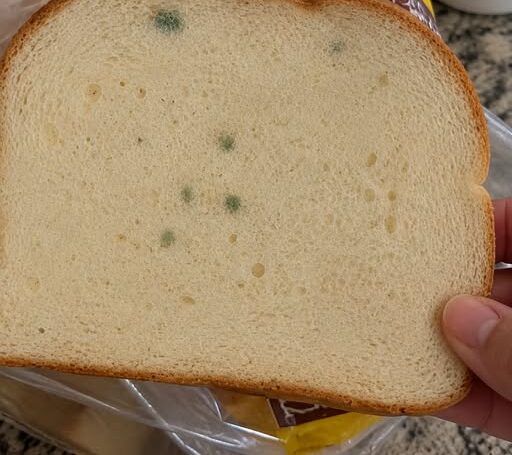
The situation changes when mold appears. Fuzzy growth on bread is a clear warning that the loaf should not be treated like ordinary stale bread.
Mold can appear in different colors. Green, white, or black fuzzy spots can all indicate that the bread has developed mold and should no longer be considered safe simply because most of the loaf still looks normal.
A common mistake is to focus only on the visible area. If one corner of a loaf contains mold, it can be tempting to cut away that section and keep the remaining slices. With bread, however, the visible spot does not necessarily show the full extent of the growth.
Bread is porous, which means mold can spread through areas that cannot be seen from the outside. What appears to be a small isolated patch may therefore not represent the entire affected area inside the loaf.
For that reason, cutting away the visible mold does not make the rest of the loaf safe. The distinction between a stale loaf and a moldy loaf is especially important here because the two situations require very different decisions.
Why Cutting Around Mold Is Not Enough
The appearance of a single fuzzy patch can make the problem seem limited to one slice or one corner. But bread’s porous structure means that what can be seen on the surface may not tell the whole story.
Mold threads can spread invisibly through the interior of the loaf. That means the absence of visible growth on another slice does not necessarily mean that portion has remained unaffected.
This is why simply removing the area that looks bad is not an appropriate way to deal with moldy bread. The visible growth should not be treated as though it marks a precise boundary around the affected food.
The safest distinction is therefore straightforward: firmness and dryness can indicate staleness, while fuzzy growth indicates mold. Those signs should not be treated as interchangeable.
Pay Attention to Unusual Smells
Appearance is not the only clue that bread may have gone beyond ordinary staleness. Smell can also provide an important warning.
A musty smell is a reason to stop and reconsider whether the bread should be eaten. An oddly sour smell can also indicate that something is wrong with the loaf.
These smells matter because stale bread does not simply become dangerous because its texture has changed. An unusual odor adds another warning sign that the bread may no longer be suitable to eat.
When a loaf looks questionable and also has a smell that seems unusual, there is little reason to ignore that signal. The difference between a harmless change in texture and a warning sign becomes especially important when deciding what to do with older bread.
Use Your Senses Before You Decide
Checking bread does not have to be complicated. Its appearance, texture, and smell can provide useful clues about whether it is simply stale or has developed signs of spoilage.
A hard or dry texture, by itself, points toward staleness rather than contamination. Such bread can potentially be toasted, warmed, or turned into croutons or breadcrumbs.
Visible fuzzy spots are different. Green, white, or black mold means the entire loaf should be treated as compromised rather than as a food that can be rescued by removing one visible section.
An unusual musty or sour smell is another reason to avoid taking chances. When the condition of the bread is uncertain, throwing it away removes the uncertainty rather than risking the consequences of eating questionable food.
Knowing When to Keep and When to Discard
The most useful lesson is that not every old loaf is automatically spoiled. Bread naturally changes as it ages, and the reorganization of starches can turn a soft loaf into one that feels firm, chewy, or dry.
That kind of staleness does not have to mean the bread has reached the end of its usefulness. A stale loaf can become croutons, breadcrumbs, or something that is briefly warmed in the oven.
Mold requires a different response. Once fuzzy growth appears, the porous nature of bread means the visible area should not be considered the only affected portion. Cutting around the spot does not make the remaining loaf safe.
Unusual smells should also be taken seriously. A musty or oddly sour odor can serve as another warning that the bread should not be treated as ordinary stale food.
Ultimately, the key is recognizing the line between an aging loaf and a spoiled one. Dryness and firmness can be part of the normal transformation of bread, while mold and concerning odors signal that it is time to stop trying to save the loaf.
Waste Less Without Ignoring Food Safety
Understanding this difference can help reduce unnecessary food waste without encouraging people to take risks with questionable food. Stale bread does not have to be thrown away simply because it no longer has the texture it had when it was fresh.
Instead, its changed condition can be put to use. Toasting stale pieces into croutons, turning them into breadcrumbs, or briefly warming the loaf can give older bread another purpose.
At the same time, avoiding moldy bread means recognizing that visible contamination should not be treated as a small section that can simply be cut away. Bread’s porous structure makes that approach unreliable.
The practical rule is simple: stale does not automatically mean spoiled, but mold changes the situation. When the bread has visible fuzzy growth or an unusual musty or sour smell, the better choice is to throw it out.
Knowing what you are looking at can make the decision much easier. A loaf can become hard without becoming contaminated, but once clear signs of spoilage appear, saving a few slices is not worth ignoring the warning.