
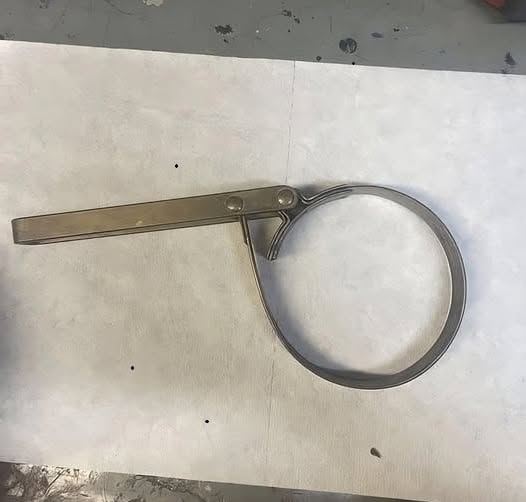
The Oil Filter Wrench: The Simple Tool That Changed Automotive Maintenance Forever
How Early Automobiles Created New Maintenance Challenges
As automobiles became increasingly common during the early 20th century, owners and mechanics quickly discovered that keeping an engine running required regular attention. Cars were complicated machines, and their moving components depended on proper lubrication to prevent excessive heat, friction, and premature wear.
Engine oil became one of the most important parts of routine vehicle care. It circulated through the engine, lubricating internal components and helping them operate smoothly under demanding conditions.
Over time, however, oil collected dirt, metal particles, and other contaminants. Drivers therefore needed to replace it regularly to protect the engine and preserve its performance.
Oil filters were introduced to capture many of those contaminants before they could continue circulating through the engine. Although the filter improved engine protection, replacing it created a new practical problem for mechanics.
The filters were typically smooth, cylindrical, and tightly installed. Once exposed to heat, oil, and repeated engine operation, they could become extremely difficult to remove by hand.
A mechanic might have enough strength to grip a clean filter, but an oily surface offered almost no traction. Attempting to twist it without the correct tool could waste time, damage the filter, or result in an incomplete maintenance job.
The Need for a Better Grip
Removing a stubborn oil filter required two things: a secure grip and sufficient leverage. The smooth metal housing made both difficult to achieve with ordinary hand tools.
Pliers could crush or puncture the filter. Standard wrenches were designed for nuts and bolts rather than large round objects, while bare hands often slipped against the oily exterior.
Mechanics needed a tool that could wrap around the filter, tighten as force was applied, and allow the user to turn the filter without losing control. The oil filter wrench emerged as the practical answer.
Its purpose was simple but highly effective. Instead of relying on finger strength, the wrench created firm contact around the filter and transferred force through a handle or tightening mechanism.
This allowed a mechanic to loosen a filter that had become firmly attached to the engine. The invention made oil changes faster, safer, and considerably less frustrating.
It also reduced the likelihood of damaging surrounding engine components while struggling with an improperly equipped removal attempt.
The First Chain and Strap Designs
Early oil filter wrenches were built around straightforward mechanical principles. Many used a chain or durable strap that wrapped around the outside of the filter.
As the mechanic pulled or turned the handle, the chain or strap tightened around the cylindrical housing. The increased tension produced the friction needed to rotate the filter.
These designs did not require complex parts. Their strength came from the way the wrapping material gripped more firmly when pressure was applied.
Chain-style wrenches were especially durable and could handle filters that required considerable force. Their metal construction made them suitable for demanding workshop environments.
Strap wrenches offered a similar approach but used a flexible band rather than a chain. The strap could conform closely to different filter shapes and was less likely to leave deep marks on the surface.
Both types helped mechanics overcome the same central obstacle: a smooth filter that could not be gripped securely by hand.
These early tools demonstrated that a simple design could solve a major maintenance difficulty without requiring complicated machinery.
Why Oil Filters Become Difficult to Remove
An oil filter is normally installed tightly enough to create a secure seal. This prevents oil from leaking while the engine is operating.
During installation, a sealing gasket sits between the filter and the engine’s mounting surface. Heat and pressure can cause that gasket to cling more firmly over time.
Oil and grime may also cover the filter’s exterior, making it slippery. Even when a filter is not excessively tightened, the combination of heat, residue, and limited working space can make removal challenging.
Many engines place the filter in a confined location surrounded by hoses, covers, or other components. A mechanic may not have enough room to wrap both hands around it.
The oil filter wrench allows force to be applied from a more useful angle. Depending on the model, it can reach the filter from the side, from below, or from the end.
This flexibility is one reason the tool has remained important even as vehicle design has become more advanced.
The Development of Flexible Strap Wrenches
Flexible strap wrenches became popular because they could adjust to filters of different diameters. A single tool could often be used on several vehicles.
The strap wraps around the filter and tightens as the handle turns. Because the band makes contact with a large portion of the filter, the force is distributed across a broad area.
This can reduce the risk of crushing the filter housing during removal. It also makes the design useful for other smooth, round objects.
Strap wrenches may use rubber, fabric, synthetic material, or metal bands, depending on the intended strength and application.
Their adjustability makes them useful in garages where mechanics regularly work with many filter sizes. Instead of selecting a perfectly matched tool for each vehicle, the strap can be tightened to fit.
However, the user must have enough surrounding space to position the strap properly. In extremely tight engine compartments, another design may be more convenient.
Cup Wrenches Offer a More Precise Fit
Cup-style oil filter wrenches were developed for applications requiring a closer and more controlled fit. Rather than wrapping around the side, a cup wrench fits over the end of the filter.
The inside of the cup is shaped to match the filter’s outer pattern. Once attached, the tool can be turned with a ratchet or another compatible handle.
This design is particularly useful when the filter is located in a recessed area. The mechanic may be unable to reach around the filter but can access its exposed end.
A cup wrench also provides even contact and reduces slipping when it is matched correctly to the filter. The close fit allows turning force to be transferred efficiently.
The main limitation is sizing. Because filters differ in diameter and shape, a mechanic may need several cup wrenches to service different vehicles.
Professional workshops often keep a selection of sizes available. For someone maintaining only one vehicle, a single correctly matched cup wrench may be sufficient.
Claw-Type Wrenches for Stubborn Filters
Claw-style oil filter wrenches offer another solution, particularly for filters that are difficult to reach or unusually tight. These tools use multiple metal arms that close around the filter.
As turning force is applied, the claws grip more firmly. The mechanism allows the wrench to adjust automatically within a certain range of filter sizes.
Claw-type models are often operated with a ratchet, extension bar, or socket handle. This makes it possible to apply significant leverage from a distance.
The design is useful when there is limited room beside the filter but enough access to approach it from the end. It can also be effective when a strap wrench repeatedly slips.
Because the claws concentrate pressure on specific areas, they may dent the filter housing during removal. This is generally not a major concern because the old filter is being discarded.
The important goal is to loosen the filter without damaging the engine’s mounting surface or nearby components.
Adjustable Sizing Improved Versatility
As automobiles became more varied, oil filters appeared in many different dimensions. Toolmakers responded by designing wrenches that could accommodate a broader range of sizes.
Adjustable mechanisms allowed one wrench to replace several fixed-size tools. This was especially useful for mechanics working on multiple makes and models.
Some designs used sliding arms, while others relied on expanding straps or self-tightening claws. Each approach attempted to create a secure grip without requiring an exact size match.
Adjustability also made oil filter wrenches more practical for home garages. A vehicle owner could purchase one versatile tool rather than building a complete professional collection.
The improvement reflected a wider trend in tool development: creating equipment that was both specialized in purpose and flexible in application.
Ergonomic Handles Made the Work Easier
Early tools were designed primarily for function, but later models placed greater attention on comfort and control. Ergonomic handles helped mechanics apply force without excessive strain.
A properly shaped grip could reduce hand fatigue during repeated maintenance work. Textured surfaces also helped prevent slipping when the user’s hands were exposed to oil.
Longer handles increased leverage, making a stubborn filter easier to loosen. Shorter handles remained useful in confined spaces where a full-length tool could not move freely.
Some manufacturers added padded grips, curved shapes, or reinforced handles. These changes did not alter the basic purpose of the wrench, but they improved the user’s experience.
Better control also reduced sudden movements that could cause scraped hands or contact with hot engine components.
Ratcheting Mechanisms Added Convenience
Ratcheting technology brought another improvement to the oil filter wrench. Instead of repositioning the tool after every small turn, the user could move the handle back and forth.
The ratchet transferred force in one direction while allowing the handle to reset in the other. This was particularly helpful when space around the filter was limited.
A mechanic might have only a few inches of movement available. Without a ratcheting mechanism, repeatedly removing and replacing the wrench could be slow and awkward.
Ratcheting models made the loosening process smoother and more efficient. They also allowed the mechanic to maintain a secure connection with the filter throughout the operation.
This feature helped transform a basic gripping device into a more refined piece of maintenance equipment.
A Tool That Supported the Growth of Routine Car Care
The oil filter wrench contributed to the development of regular automotive maintenance. By making filter replacement easier, it helped turn oil changes into a predictable and manageable service.
Mechanics could complete the job more quickly, allowing repair shops to serve more customers. Vehicle owners also gained the ability to perform basic maintenance at home.
This accessibility encouraged drivers to take a more active role in protecting their engines. A task that once required considerable effort became practical with the correct equipment.
The wrench did not change how an engine functioned, but it changed how easily an important engine component could be serviced.
That distinction explains why such a simple tool had a meaningful effect on automobile ownership and repair culture.
Vintage Wrenches as Collectible Workshop Relics
Today, early oil filter wrenches are valued by classic car enthusiasts, tool collectors, and people interested in the history of mechanical repair.
Older examples often feature heavy metal construction, straightforward adjustment systems, and visible signs of years spent in working garages.
The scratches, worn handles, and aged finishes can reveal how frequently the tools were used. Rather than reducing their appeal, these marks often increase their historical character.
Collectors may seek particular designs, manufacturers, or production periods. Chain wrenches and early adjustable models are especially interesting because they demonstrate the evolution of automotive service equipment.
These tools also reflect an era when many workshop products were made with durability as a primary goal. A well-constructed wrench could remain useful for decades.
Maintaining Antique Vehicles With Period Tools
For owners of antique automobiles, using original or period-correct tools can add another dimension to the restoration experience. The work becomes more than mechanical maintenance.
Handling an early oil filter wrench creates a direct connection with the methods once used by mechanics who serviced similar vehicles when they were new.
The tool’s weight, shape, and operation reveal how repair work was performed before modern equipment became available.
Some enthusiasts prefer contemporary tools for convenience while preserving older wrenches for display. Others enjoy using vintage equipment when it remains safe and functional.
Either approach honors the craftsmanship associated with early automotive repair and the practical inventions that supported the growing automobile industry.
Why the Oil Filter Wrench Remains Relevant
Modern vehicles contain electronic controls, advanced materials, and increasingly complex engine systems. Despite these changes, many still require routine oil and filter replacement.
The oil filter wrench therefore continues to occupy a place in professional workshops and home toolboxes. Its basic job remains nearly identical to the one it performed generations ago.
Newer designs may use improved materials, compact mechanisms, or specialized shapes, but they still depend on grip and leverage.
This continuity shows how effectively the original concept addressed the problem. The tool did not disappear because the challenge of removing a tightly fitted cylindrical filter never completely disappeared.
Even when filter placement and construction change, mechanics still need a reliable way to loosen and remove the component safely.
A Simple Invention With a Lasting Legacy
The oil filter wrench is not one of the largest or most complicated tools in an automotive workshop. Its historical importance comes from solving one specific problem extremely well.
Early automobiles required regular oil maintenance, but slippery and tightly secured filters made the process difficult. Chain and strap wrenches gave mechanics the grip and leverage they needed.
Later cup, claw, adjustable, ergonomic, and ratcheting versions improved precision, comfort, and versatility. Each development made routine engine care more efficient.
The tool helped mechanics complete oil changes faster and enabled more vehicle owners to handle basic maintenance themselves.
Vintage examples now serve as reminders of early automotive craftsmanship, while modern versions continue performing the same essential task.
More than a century after automobiles began transforming transportation, the oil filter wrench remains a practical symbol of mechanical ingenuity. Its straightforward design turned a frustrating maintenance obstacle into a quick and manageable procedure.