
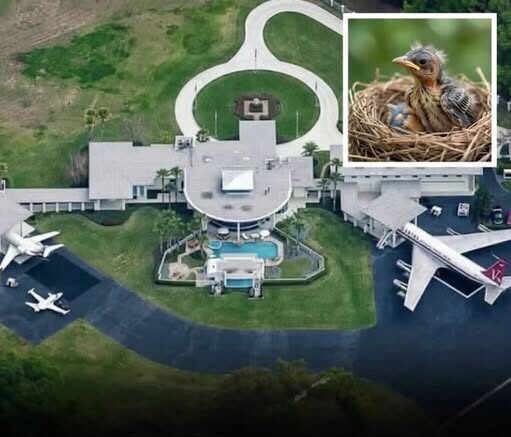
John Travolta Built His Florida Home Around a Taxiway for His Private Aircraft
A Love of Flying Shaped His Choice of Address
For John Travolta, choosing a home in Ocala, Florida, involved a requirement far beyond bedrooms, gardens, or a swimming pool. He wanted access to a runway large enough to accommodate his private aircraft, including his Boeing 707.
That priority led Travolta and his late wife, Kelly Preston, to Jumbolair Aviation Estates. They purchased land there in the 1990s and built a five-bedroom house with a private taxiway connecting directly to the airport.
The resulting property placed aviation at the center of domestic life. Aircraft parking bays were visible from inside the house, bringing the activity that shaped the estate into view from its living spaces.
Other features included a 16-car garage, a swimming pool with a slide, a golf course, and a dance floor in the pool cabana. Yet the connection between the house and the airfield remained its defining characteristic.
Rather than treating flying as an interest accommodated elsewhere, Travolta organized the property around it. The home’s location and layout reflected the same objective: making his aircraft part of the place where he lived.
Why Jumbolair Suited the Plan
The search began with the practical needs of Travolta’s aircraft. Access to a suitable runway was essential to the kind of home he wanted to create.
A house with ample land would not, by itself, have met that requirement. The important feature was a connection to aviation infrastructure capable of accommodating the aircraft he intended to bring there.
Jumbolair Aviation Estates provided the setting for that arrangement. By purchasing land within the aviation estate, Travolta and Preston could develop a residence linked to the airport through its own taxiway.
That connection distinguished the property from a home merely located near an airfield. The route between the house and the airport became part of the estate’s design.
The distinction also explains why the location mattered so much. Travolta’s choice was driven by what he wanted to do from home, with the building and its amenities following that larger purpose.
A Private Taxiway Connected the Residence to the Airport
The private taxiway was the key link between Travolta’s five-bedroom home and the runway. It allowed the property to function as an aviation-centered residence rather than simply a place where an aircraft enthusiast lived.
The arrangement brought the house and aircraft parking into close proximity. It created the impression of being able to taxi an airplane almost to the front door, although the essential feature was the designated connection to the airport.
This was the practical expression of Travolta’s original goal. His interest in flying influenced the property’s layout, not just its decoration or the objects displayed inside.
The taxiway also gave the estate a distinctive organizing feature. Alongside the familiar routes associated with a house and garage was a route intended for aircraft.
That difference makes the property memorable. Its most unusual characteristic was built into the relationship between the residence and its surroundings, rather than added as a separate attraction.
Aircraft Parking Became Part of the View
The estate’s aircraft parking bays were visible from within the house. That detail connected the interior experience of the home with the aviation facilities outside it.
A view normally associated with an airport became part of a residential setting. The aircraft were not simply somewhere nearby; their parking areas formed part of what could be seen from the home.
For Travolta, this arrangement reflected the importance of flying in his life. The design allowed the property’s purpose to remain apparent even when he was indoors.
The Boeing 707 helps explain the scale of the original requirement. Travolta wanted a location suited to his aircraft, and that ambition shaped the decision to build at Jumbolair.
The account describes the property’s connection to that aircraft as part of its history. It does not establish a current inventory of the planes kept there or suggest that every aircraft associated with Travolta remains on the estate.
The Five-Bedroom House Anchored an Unusual Estate
Despite its aviation facilities, the property was also a family residence built by Travolta and Preston. The five-bedroom house provided the domestic center of a much broader layout.
That combination is important to understanding the estate. Its distinctive purpose did not replace the functions of a home; it influenced how those functions were situated alongside Travolta’s principal interest.
The property therefore combined living space with facilities for transportation and recreation. Each element belonged to the same estate, but the airport connection determined what made the address unusual.
The purchase in the 1990s provided the foundation for that vision. Travolta and Preston built a place where the residential setting and aviation access could exist together.
The result was highly personal. A feature that would be unnecessary for most households became the central condition around which this home was planned.
A 16-Car Garage and Extensive Recreation Features
The aircraft facilities were accompanied by a 16-car garage. Its capacity added another substantial transportation-related feature to the property, separate from the parking bays intended for planes.
The swimming pool included a slide, providing a recreational element within the grounds. A golf course added another outdoor activity to the estate.
There was also a dance floor in the pool cabana. That detail gave the area beside the pool a purpose beyond swimming and relaxation.
Together, these amenities created a property with several distinct uses. The house accommodated everyday living, the grounds provided recreation, and the taxiway linked the estate to the airport.
Although those features would attract attention in their own right, they were secondary to the decision that shaped the property from the beginning. The home was located and designed to support Travolta’s love of flying.
A Home Organized Around a Personal Passion
The estate’s appeal lies in the clarity of its original idea. Travolta wanted a suitable runway and direct access for his aircraft, and the property’s design followed that requirement.
Its unusual features were therefore connected by a practical purpose. The taxiway, aircraft parking bays, and views from the house all reflected the relationship between the residence and the airfield.
The other amenities added comfort and opportunities for recreation, but they did not explain why Travolta chose this particular setting. Aviation did.
That makes the Ocala property more than a collection of expensive features. It is a residence whose most distinctive design choices grew from the owner’s enthusiasm for a specific activity.
Travolta and Preston’s home brought that enthusiasm into the structure of daily life. With an airport connection outside and aircraft parking visible from within, the estate made flying part of the experience of being at home.