
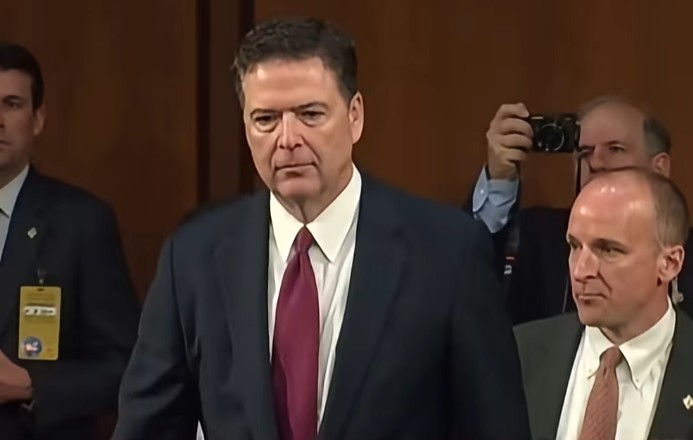
Judge Bars Outside Briefs in James Comey’s Criminal Case Over a 2025 Social Media Post
Judge Louise W. Flanagan Said Both Sides Have Capable Lawyers as the Former FBI Director Denies Wrongdoing
U.S. District Judge Louise W. Flanagan ruled Friday that outside individuals and organizations cannot submit friend-of-the-court briefs in the criminal case against former FBI Director James Comey. The prosecution alleges that Comey threatened President Donald Trump through a social media post in 2025. Comey has denied wrongdoing.
Flanagan gave a brief explanation for limiting participation. “Defendant and the government are ably represented by competent counsel,” she wrote. Her order governs who can submit legal arguments to the court. The allegation at the center of the prosecution remains unresolved.
What Outside Briefs Would Have Added to the Case
A friend-of-the-court brief, formally known as an amicus curiae brief, allows someone outside a lawsuit or prosecution to offer arguments for the court to consider. An organization might address the wider consequences of a ruling. A scholar or former official might explain how a legal rule has been understood or applied. The people who submit these briefs remain outside the case as litigants.
The practice is more common in federal appeals courts and at the U.S. Supreme Court than in federal district courts. An appeal generally centers on legal questions arising from an existing case. At the trial level, the judge must also manage the proceeding as it develops, including filings and deadlines for the parties directly involved.
Flanagan’s order means the government and Comey’s lawyers will present the written arguments on the issues before her. Outside groups and individuals interested in the prosecution can still discuss it publicly. The order concerns their ability to put their arguments before the judge through amicus filings.
Comey’s Earlier Prosecution Attracted Interest From Outside Groups
Another criminal case involving Comey drew a different response from people seeking to participate. In 2025, he faced allegations that he had lied to Congress about leaks to the media. Outside groups sought to file briefs, bringing together people with experience in government, law, and the courts.
Those groups included former senior Justice Department officials, law professors, current and former members of Congress, retired federal judges, and former U.S. attorneys. Their efforts showed how many people with different kinds of legal and government experience were prepared to weigh in when a prosecution involving the former FBI director reached federal court.
That case ended after about two months. A judge found that the prosecutor who obtained the indictment had been unlawfully appointed, and the case was dismissed. The current prosecution involves a separate allegation about a social media post. Its early procedural dispute concerns who can file arguments for the judge to consider.
A Legal Scholar Pointed to the Practical Burden of More Filings
Scott Holmes, a law professor at North Carolina Central University, said trial judges have practical reasons for limiting outside participation. District courts have to keep cases moving while managing crowded calendars. In a prosecution drawing national attention, an invitation to submit briefs could create a substantial volume of additional material for the court to review.
“I can imagine that the court is worried about the floodgates opening, and everybody who wants to weigh in on this does,” Holmes said.
Holmes was describing a possible reason a trial judge might take this approach in a prominent case. Flanagan’s stated reason was narrower. She said the parties already had capable counsel. The distinction leaves room to understand the workload concern without assigning the judge a motive beyond the explanation in her order.
Outside Expertise Can Also Help a Judge Address Difficult Questions
Holmes also saw value in giving knowledgeable outsiders a chance to contribute. An amicus brief can focus on a particular issue, bring together research, or present a perspective that neither party has the same reason to emphasize. Its usefulness depends on what the writer can add to the work the lawyers are already doing.
“It would be nice if the court would be willing to read really educated folks who have a real interest in the court getting it right and offering a lot of research,” Holmes said.
Carl Tobias, a law professor at the University of Richmond, described the order as uncommon. He said judges often find outside briefs useful when they come from people with substantial experience or specialized knowledge of the issues at stake.
“They would be people who would have expertise about the issues that are raised and probably feel strongly about them,” Tobias said.
The two professors identified considerations that can matter at the same time. A focused brief may help a judge work through a difficult issue. A large number of requests to file can add to the demands on a trial court already responsible for moving the case forward. Flanagan’s order leaves the presentation of those issues in the hands of the lawyers for Comey and the government.
What Friday’s Order Means as the Case Moves Forward
For prosecutors, the ruling leaves their responsibility to make the government’s case intact. Comey’s defense can continue to challenge the accusation and respond to the government’s filings. The immediate consequence is that interested outsiders will have no formal opportunity to place their own legal analysis before Flanagan through friend-of-the-court briefs.
The 2025 social media post remains at the center of the criminal case. Prosecutors allege that it amounted to a threat against Trump, and Comey denies wrongdoing. Friday’s decision settles who may submit briefs in the district court. Whether the government can establish its allegation is a separate question for the proceeding ahead.