
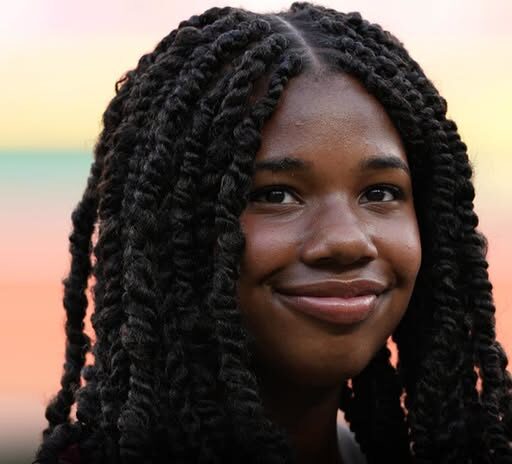
Martin Luther King Jr.’s Only Grandchild Casts Her First Vote at 18 — Her Powerful Message Is Touching Hearts Across America
At Just 18, Yolanda Renee King Honors Her Grandparents’ Civil Rights Legacy With an Emotional Milestone That Has Captured National Attention
More than half a century after Martin Luther King Jr. helped transform the struggle for civil rights in America, a new generation of his family has reached a meaningful milestone.
His granddaughter, Yolanda Renee King, has cast her first vote.
At just 18 years old, the young activist participated in the November 3, 2026, midterm elections in Atlanta, Georgia, marking a moment that carried significance far beyond an ordinary first trip to the polling station.
For Yolanda, voting was not simply a new responsibility that came with adulthood. It was a deeply personal connection to the history of her family and the generations of Americans who fought to expand voting rights.
As the only grandchild of Dr. Martin Luther King Jr. and Coretta Scott King, she grew up surrounded by a legacy of civil rights advocacy, public service, and calls for equality.
But rather than treating that history as something belonging only to the past, Yolanda made clear that she sees herself as responsible for carrying its lessons into the future.
And the message she shared after casting her ballot quickly attracted attention.
Yolanda Renee King Votes for the First Time at 18
Yolanda celebrated her 18th birthday in May 2026, making her eligible to participate in that year’s midterm elections.
On Tuesday, November 3, she visited a polling location in Atlanta to exercise that right for the first time.
The occasion was documented through a collaboration with When We All Vote, a nonpartisan civic engagement organization that encourages eligible Americans to participate in elections.
Photographs shared on Instagram captured the milestone and introduced followers to an important moment in Yolanda’s life.
For many young adults, their first election is an opportunity to take part in decisions that affect their communities and country.
For Yolanda, the experience also carried the memory of her grandparents, whose work helped shape the modern American civil rights movement.
Her participation became a reminder of how voting rights connect individual citizens to a much larger national history.
Her Powerful Words Honored Generations Who Fought for Voting Rights
In remarks shared around the occasion, Yolanda reflected on the struggles that made her participation possible.
She acknowledged that her grandparents had faced their own battles, just as her parents had continued working on issues important to their generation.
Now, she explained, it was her turn to participate.
One of the most memorable parts of her message was her recognition that people had suffered and sacrificed to secure the right to vote.
She made clear that she did not intend to take that opportunity for granted.
Her words reflected a personal understanding of history that extends beyond textbooks and commemorative speeches.
As a member of the King family, Yolanda has grown up with a direct connection to the civil rights movement and its continuing influence on American society.
But her first vote also represented something entirely her own: a personal decision to participate in the democratic process.
When We All Vote Celebrated Her Milestone
When We All Vote joined Yolanda in recognizing her first experience at the polls.
The organization highlighted her connection to Martin Luther King Jr. and Coretta Scott King while emphasizing that she is developing her own voice.
Its social media message welcomed her as a first-time voter and celebrated her participation in Atlanta.
When We All Vote was launched in 2018 with the involvement of former First Lady Michelle Obama and other prominent figures.
The organization focuses on voter registration, participation, and helping eligible people understand how to engage in elections.
Its work has included outreach to younger voters, a group that can face barriers involving registration requirements, unfamiliar voting procedures, and access to reliable election information.
Yolanda’s involvement with the initiative brought together two generations of civic engagement: the historical struggle for voting rights and contemporary efforts to encourage participation.
She Is the Only Grandchild of Martin Luther King Jr. and Coretta Scott King
Yolanda Renee King is the daughter of Martin Luther King III and Arndrea Waters King.
Her father is the eldest son of Martin Luther King Jr. and Coretta Scott King and has spent much of his life working in civil rights advocacy.
Her mother is also an activist who has been involved in initiatives promoting equality and social change.
Growing up in that environment exposed Yolanda to conversations about public service, civic responsibility, and the importance of participating in community life.
Although she never met her famous grandfather, who was assassinated in 1968, his influence has remained an important part of her upbringing.
Coretta Scott King, who continued advocating for civil rights and social justice after her husband’s death, also died before Yolanda was born.
Nevertheless, the history of both grandparents has played a significant role in shaping the family’s public work.
Yolanda has frequently spoken about her connection to their legacy while emphasizing the importance of younger generations developing their own leadership.
Martin Luther King Jr.’s Historic Fight for Voting Rights
To understand why Yolanda’s first vote attracted attention, it helps to consider the role her grandfather played in the struggle for voting rights.
During the 1950s and 1960s, Martin Luther King Jr. became one of the most prominent leaders of the American civil rights movement.
He advocated for racial equality, nonviolent protest, and the removal of discriminatory laws and practices.
Voting rights were central to that work.
In many parts of the United States, particularly across the South, Black Americans faced discriminatory obstacles that prevented them from registering and voting.
These barriers included literacy tests, intimidation, discriminatory administrative practices, and violence.
King and other civil rights leaders worked to challenge those systems through organizing, public demonstrations, legal advocacy, and sustained national pressure.
The Selma voting rights campaign of 1965 became one of the defining moments of that struggle.
Demonstrators seeking equal voting access faced violence, drawing national attention to the need for federal protections.
The Voting Rights Act of 1965 became a landmark achievement in the effort to prohibit racial discrimination in voting.
For Yolanda, participating in an election connects her personal experience to that broader history.
Coretta Scott King Continued the Family’s Work
Yolanda’s grandmother, Coretta Scott King, was a major civil rights leader in her own right.
Following Martin Luther King Jr.’s assassination, she continued working on issues involving civil rights, economic justice, peace, and human dignity.
She also helped establish the Martin Luther King Jr. Center for Nonviolent Social Change in Atlanta.
The center became an important institution dedicated to preserving King’s teachings and encouraging nonviolent approaches to social change.
Coretta’s work demonstrated that the civil rights movement was not the achievement of one individual.
It involved many leaders, organizers, families, and communities whose efforts continued across generations.
That history remains especially relevant to Yolanda as she begins participating in elections herself.
Her first vote was not an attempt to replicate her grandparents’ achievements, but an opportunity to exercise a right they worked to protect.
Yolanda Remembers Going to the Polls With Her Parents as a Child
During an interview with CNN, Yolanda recalled how her parents introduced her to voting long before she was old enough to participate.
As a child, she often accompanied them to polling locations and watched the process unfold.
She remembered feeling disappointed when she realized that she could not cast a ballot herself.
Her parents would give her an “I Voted” sticker, allowing her to feel included in the experience.
Yolanda recalled proudly wearing the sticker and pretending that she had participated.
What might seem like a small childhood memory helped make voting familiar and meaningful to her.
Rather than seeing elections as distant political events, she grew up observing participation as a regular part of family life.
Years later, when she finally became eligible to vote, the experience carried the excitement she had felt as a child.
Only this time, the ballot was hers.
Her Parents Helped Shape Her Understanding of Civic Responsibility
Yolanda also publicly thanked her mother and father for guiding her.
Her message acknowledged both the legacy of her grandparents and the influence of the parents who raised her.
Martin Luther King III has continued participating in civil rights initiatives and public discussions about equality, voting access, and nonviolent social change.
Arndrea Waters King has similarly worked on advocacy and community initiatives.
Their daughter has grown up seeing civic engagement not only as an important part of American history but also as something practiced in everyday life.
That family influence helps explain why she described her first vote as such an empowering experience.
For her, the act of voting represented a transition from watching others participate to making her own contribution.
Yolanda Has Already Become a Recognizable Young Activist
Although her first vote marked a new milestone, Yolanda was already familiar with public advocacy.
In March 2018, when she was just nine years old, she appeared at the March for Our Lives rally in Washington, D.C.
Speaking before a large crowd, she encouraged young people to pursue a future without gun violence.
Her appearance attracted national attention because of both her age and her connection to the King family.
She later continued participating in public events and conversations about issues affecting younger generations.
Those experiences helped her develop a public voice while still growing up.
Her participation in the 2026 election represents another stage in that development.
She is no longer simply encouraging others to become involved in civic life.
She is now eligible to participate directly through the ballot box.
Why First-Time Voting Can Be a Meaningful Milestone
For many Americans, turning 18 brings new legal responsibilities and opportunities.
Among the most significant is the ability to vote in federal, state, and local elections, provided the individual meets the applicable eligibility and registration requirements.
First-time voters may approach elections with a mixture of excitement, uncertainty, and curiosity.
Learning how ballots work, understanding the roles of different offices, and finding reliable information about candidates and issues can require preparation.
But the experience can also establish habits that continue throughout adulthood.
Participation allows individuals to express their preferences through an established democratic process.
For Yolanda, the importance of that opportunity was reinforced by the history of her family.
Her first election gave her a personal experience with a right that previous generations had worked to make more accessible.
A New Generation Carries the King Family’s Legacy Forward
One of the most striking aspects of Yolanda’s message was her emphasis on generational responsibility.
She recognized that her grandparents confronted challenges specific to their time.
Her parents continued their own work, and now she sees herself as part of a generation facing different circumstances and responsibilities.
That perspective reflects the way social movements evolve.
Each generation inherits institutions, achievements, and unresolved questions from those that came before.
Young people may choose different approaches and priorities while remaining influenced by the history of earlier movements.
Yolanda’s first vote does not determine what political positions she will hold throughout her life.
It does, however, demonstrate her decision to participate in a process that has long been important to her family.
Her public message encouraged other eligible voters to recognize that opportunity as well.
Her First Vote Is About More Than a Famous Last Name
Yolanda Renee King will always have a unique connection to American history because of her grandparents.
But her first vote was also a personal milestone shared by millions of young Americans who participate in elections for the first time.
She grew up watching her parents vote, learned about the history of civil rights, and waited for the day when she could take part herself.
On November 3, 2026, that day arrived.
Her participation brought together childhood memories, family history, and the beginning of her own adult civic life.
It also provided an opportunity to reflect on how rights secured through earlier generations of advocacy continue to shape people’s lives today.
For Yolanda, the experience was a reminder that the legacy of Martin Luther King Jr. and Coretta Scott King is not confined to history books.
It continues through the choices and actions of people living today.
A Powerful Moment for Yolanda Renee King
At 18, Yolanda Renee King has already participated in public advocacy and spoken about issues important to her generation.
Now she has added another experience to that journey: casting her first ballot.
Her milestone attracted attention because of her family history, but the meaning she attached to it was deeply personal.
She remembered the sacrifices of earlier generations, thanked her parents for their guidance, and celebrated the opportunity to participate for herself.
Her story offers a reminder that the right to vote is both an individual opportunity and part of a larger history of American democracy.
And while no one can know exactly where Yolanda’s journey will lead, her first election has become a memorable chapter in the continuing story of the King family.
What does Yolanda Renee King’s first vote mean to you? Do you remember the first time you participated in an election? Share your experience in the comments.