
What Coins Left on Military Graves Can Mean and Why the Tradition Matters
A Small Coin Can Carry a Powerful Message
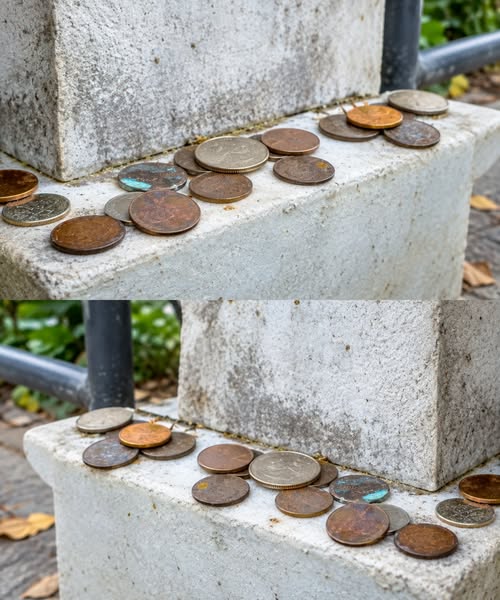
A coin resting on a military gravestone may appear insignificant to someone passing through a cemetery, but the small object can carry a deeply personal meaning.
For grieving relatives, fellow service members, veterans, and visitors paying their respects, these modest tokens can represent remembrance without requiring a single spoken word.
The practice has become associated with a widely shared tradition in which different coins communicate different relationships between the visitor and the deceased service member.
A penny, nickel, dime, or quarter may therefore tell a quiet story about who came to the grave and why the visit mattered.
The meanings are customary rather than universal, but the underlying message remains consistent: someone stopped, remembered, and chose to leave a visible sign of respect.
A Penny Means Someone Came to Pay Their Respects
Under the commonly shared interpretation of the tradition, leaving a penny on a military grave means that someone visited the service member’s final resting place.
The visitor does not necessarily need to have known the person during life.
The penny can simply communicate that someone paused at the grave, recognized the person buried there, and took a moment to honor that life.
For families, even this simplest version of the tradition can carry emotional significance.
A small coin shows that the grave was noticed and that the person buried there was remembered by someone beyond the immediate family.
The gesture may take only seconds, but for those mourning a loved one, knowing that another person stopped can provide a meaningful sense of connection.
A Nickel Represents a Connection From Boot Camp
A nickel traditionally carries a more specific meaning.
Within the widely shared custom, a nickel indicates that the person who left it attended boot camp with the deceased service member.
That connection can reach back to the earliest stage of a military career, when recruits were learning, training, adapting, and experiencing military life together.
Leaving the nickel can therefore represent memories formed long before later assignments or deployments.
It becomes a small acknowledgment of a shared beginning.
To relatives who find the coin, it may suggest that someone from an earlier chapter of their loved one’s military life returned to remember them.
A Dime Signals That the Two Served Together
A dime traditionally indicates another type of military connection.
Its customary meaning is that the visitor served alongside the person whose grave they visited.
That relationship can carry memories of shared duties, difficult moments, ordinary days, and experiences understood most clearly by those who served together.
The dime does not need an accompanying note to communicate that connection.
Its presence can quietly say that a fellow service member returned and remembered someone with whom they once shared part of their military experience.
For a family discovering the coin later, the gesture can make that bond visible even when they never meet the person who left it.
A Quarter Carries an Especially Solemn Meaning
Among the commonly described meanings, the quarter carries the most solemn message.
A quarter traditionally signifies that the visitor was present when the service member died.
That makes it different from the other coins because it can represent a connection to the person’s final moments.
To an unfamiliar visitor, the quarter may look no different from ordinary change.
To someone who understands the tradition, however, it may represent a relationship shaped by an experience of enormous emotional weight.
The person leaving it may be carrying memories that require no written explanation.
The quarter itself becomes the message.
The Meanings Are Traditional Rather Than Absolute
Although the penny, nickel, dime, and quarter have become associated with these particular meanings, the practice should not be understood as a rigid system followed identically by everyone.
The meanings are customary rather than universal.
Visitors may leave coins for personal reasons, and not every coin necessarily follows the commonly shared interpretation.
What remains important is the act of remembrance behind the gesture.
Whether the person leaving the coin was a fellow veteran, a friend, someone connected through military service, or simply a stranger wishing to show gratitude, the offering represents a moment of attention directed toward the person buried there.
Why Such a Small Gesture Can Matter to Families
Grief often leaves families searching for signs that the person they lost continues to be remembered.
A coin on a gravestone can provide one of those signs.
Someone came to the cemetery.
Someone stopped at that particular grave.
Someone thought about the person whose name was carved into the stone.
For loved ones, that realization can bring comfort.
The service member’s life did not disappear from every memory after death. Another person carried enough of that memory to return and leave something behind.
Even when families never discover who left the coin, its presence can show that remembrance extends beyond the people they already know.
The Coin Makes an Invisible Relationship Visible
Military service can create relationships that families do not always fully see.
People train together, serve together, and share experiences that may become important parts of their lives.
Years later, many of those connections may exist only in memories.
A coin left on a grave can briefly make one of those invisible relationships visible again.
A nickel may point toward someone who remembers boot camp.
A dime may suggest a person who served alongside the deceased.
A quarter may represent someone whose memories include the service member’s final moments.
Without identifying the visitor, the coins can still show that a bond existed.
Flowers and Coins Speak in Different Ways
Flowers are a familiar symbol at gravesites, often representing affection, grief, sympathy, and remembrance.
A coin can communicate something different.
Its meaning may be connected specifically to the act of visiting or to a shared military experience.
Because of that, a single coin can tell a story that might not be obvious at first glance.
It can represent a visitor who came quietly and left without speaking to the family.
The modest size of the offering does not reflect the emotional importance behind it.
Sometimes the smallest object on a grave can carry one of the largest stories.
Respecting Coins Found on Military Gravestones
When encountering a coin resting on a military gravestone, leaving it undisturbed allows the gesture to remain where the visitor intended it to be.
The coin may have been placed there by someone with a deeply personal connection to the deceased.
Even when its exact meaning is unknown, recognizing it as a possible memorial gesture encourages respect for both the person buried there and the visitor who left it.
A brief pause can also offer an opportunity to reflect on the name carved into the stone.
The grave represents an individual life, while the coin may represent one of the relationships that continued to matter after that life ended.
Remembrance Does Not Require a Grand Gesture
Memorial traditions often demonstrate that respect does not need to be elaborate.
A person does not need to arrive with a large floral arrangement or a lengthy written tribute to show that someone mattered.
Sometimes the act of visiting is enough.
Placing a simple coin can become a way of saying that a person has not been forgotten.
That simplicity is part of what gives the gesture its emotional strength.
The visitor can come quietly, spend a few moments remembering, leave the coin, and walk away.
What remains is a small physical sign that someone was there.
A Quarter May Tell the Most Personal Story of All
The customary meaning of a quarter makes it especially moving.
If the tradition is being followed, the person who placed it on the grave was present when the service member died.
That person may carry memories of an experience that remains deeply personal long afterward.
Leaving the quarter can become a private act of remembrance between the visitor and the person they lost.
No explanation has to accompany it.
The family may never know the full circumstances behind the visit, but the coin can still reveal something important.
Their loved one was not alone in someone else’s memory.
A Penny Can Be Meaningful Too
The simpler meaning of a penny should not be overlooked.
A person who never knew the service member personally can still stop and pay respects.
That moment demonstrates how remembrance can extend beyond direct relationships.
A stranger may read a name, recognize the military service represented by the gravestone, and decide that the individual deserves a moment of reflection.
Leaving a penny makes that moment visible to whoever visits afterward.
For family members, knowing that an unknown person cared enough to stop can be meaningful in its own quiet way.
Every Coin Points Back to a Person
The tradition can easily become a discussion about denominations and their meanings, but the most important part is not the metal itself.
Behind every coin is a person who chose to leave it.
And beneath every military gravestone is a person whose life created relationships, memories, and experiences that continued beyond death.
The coin brings those two realities together.
It connects a visitor in the present with the person being remembered.
Whether the connection began at boot camp, during later service, in someone’s final moments, or only during a quiet cemetery visit, the act preserves remembrance in a tangible form.
A Quiet Tradition With a Lasting Message
Coins left on military graves may be small, but the tradition surrounding them carries a powerful emotional message.
A penny commonly means that someone visited and paid their respects.
A nickel traditionally indicates that the visitor attended boot camp with the deceased, while a dime signifies that the two served together.
A quarter carries the solemn customary meaning that the person leaving it was present when the service member died.
Those meanings are not universal rules, and individual visitors may have their own reasons for leaving a coin.
What remains consistent is the idea of remembrance.
Someone came to the grave.
Someone paused.
Someone remembered.
For families facing grief, that knowledge can provide comfort that extends far beyond the monetary value of the object itself.
The next time a small coin is seen resting on a military gravestone, it may be worth looking beyond its ordinary appearance.
It could represent a visit, a shared beginning, years of service together, or a memory carried from someone’s final moments.
Most of all, it is a reminder that even the quietest gesture can keep a person’s memory present long after goodbye.