
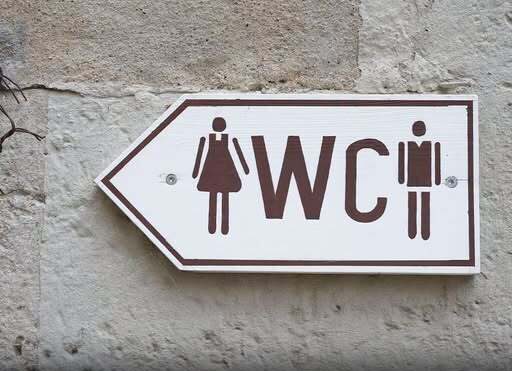
What Does WC Mean Outside a Public Bathroom?
The Surprising Meaning Behind WC Signs
The letters WC are seen on public bathroom signs in airports, restaurants, hotels, and other shared spaces around the world. For many people, the meaning is not immediately obvious, especially in places where words like bathroom, restroom, washroom, toilet, or loo are more common.
Although the sign may look mysterious at first, WC is simply another way to identify a room that contains a toilet and usually a sink. The letters stand for water closet, an older term that has remained in use even as modern language around bathrooms has changed from country to country.
The term may sound unusual today, but it has a long history tied to the development of indoor plumbing and the way people once separated bathing spaces from toilet spaces. Over time, WC became a practical label, especially in public areas where travelers from different countries might recognize it more easily than a local word.
Why Bathroom Names Can Be Confusing
The room that contains a toilet has many names, and not all of them make perfect literal sense. In some places, people say bathroom. In others, they say restroom, washroom, lavatory, loo, toilet, or WC.
This variety has created plenty of confusion, especially when people travel or encounter a term they are not used to hearing. A person from one region may ask for the bathroom, while someone from another may ask for the washroom or the toilet.
In everyday conversation, most people understand what is meant from context. Still, the words themselves can seem strange when taken literally.
A bathroom may not contain a bathtub. A restroom may not be a place where anyone rests. A washroom may involve very little washing beyond cleaning one’s hands. And a water closet may not resemble what many people would call a closet.
The Viral Conversation About Washrooms and Restrooms
In 2020, a couple named Shelby and Dylan drew attention to this language difference through a TikTok video. Their conversation focused on the word washroom and how it compared with restroom.
“What in the world is a washroom?” asks Dylan as he walks by sign that says “washroom.”
He then jokes about the meaning of the word and questions what people are actually washing in that room.
“And what are they washing in there? Oh, it’s a restroom. The only thing I wash in there is my hands,” he tells his wife.
Off-camera, Shelby responds with another question that points out the same problem with a different term.
“Do you rest in a restroom?”
Dylan admits that both names can sound odd when examined closely.
“That’s a good point. They both don’t make much sense,” Dylan adds.
The exchange resonated with many viewers because it highlighted something people often use without thinking: everyday words can become normal even when their literal meanings no longer match the modern room they describe.
How People Reacted to Different Bathroom Terms
Online users quickly joined the discussion and began sharing the words they use for the same space. One person noted the wide range of terms, writing, “It’s called a bathroom, restroom, washroom and toilet.”
Another person described confusion while visiting Disneyland. They said they “asked for the washroom” and they “sent me to the laundromat!”
The comment showed how regional language can create misunderstandings, even when everyone involved is speaking the same language.
A third user brought the discussion back to the letters many people have seen on signs without fully understanding them: “Wait ‘til he finds out about water closets.”
That comment pointed to the older phrase behind the abbreviation WC. While the term may not be widely used in casual speech everywhere, it remains visible in public signage and continues to spark curiosity.
What WC Actually Means
WC stands for water closet. The phrase refers to a room or compartment that contains a toilet, or to the toilet bowl and its related fixtures.
In modern use, the abbreviation is generally understood as a sign for a restroom or bathroom. It is especially common in public places where short, recognizable signage is useful.
For travelers, WC often serves as a simple universal marker. Even if a person does not use the phrase water closet in daily speech, the letters can still be recognized as pointing to a toilet facility.
The term has survived because it is compact and practical. A small sign with two letters can communicate the same basic idea as several different regional words.
Why It Was Called a Water Closet
The history of the phrase comes from a time when the functions of bathing and using the toilet were not commonly combined in one room. A bathroom was mainly a room for bathing. A restroom could be associated with washing up, getting ready, or using a sink and mirror.
The toilet itself was often separate. When indoor plumbing began changing homes and public buildings, the room containing the toilet became known as the water closet.
The word water reflected the flushing mechanism, while closet referred to a small enclosed space. Together, the phrase described a private room with a toilet that used water for waste removal.
Although the name may seem old-fashioned today, it made more sense when compared with earlier outdoor facilities and with indoor rooms that were designed only for bathing.
Indoor Toilets Were Once a Luxury
Before the 19th century in America, indoor toilets were not common in ordinary homes. They were largely limited to wealthier households, while many people relied on outhouses or other outdoor sanitation arrangements.
At the same time, homes could have rooms used for bathing, but those spaces did not necessarily contain toilets. This meant that a bathroom and a toilet room were often separate ideas.
The spread of indoor plumbing changed that arrangement. By the late 19th century, indoor toilet installations became more common, and the water closet became part of the development of modern home sanitation.
By 1890, the water closet had become an important fixture in this shift. These spaces gave people access to a toilet indoors, often apart from the bathing room.
How the Modern Bathroom Developed
The modern bathroom, where the toilet and bathing facilities are located in the same room, became more common in the early 20th century. This arrangement made sense for practical reasons.
Combining a toilet, sink, and bathing area simplified plumbing and saved space. Instead of building separate rooms for related needs, homes could place them together in one shared area.
However, that convenience also changed privacy. When a bathtub and toilet occupy the same room, one person using the space can prevent others from using a different function in the room at the same time.
As bathroom design evolved, the term water closet continued to survive in another form. In some homes and public buildings, it came to refer to a small enclosed toilet room inside or near a larger bathroom area.
These smaller spaces may include a toilet and a compact sink, making them self-contained and convenient while preserving more privacy.
Why WC Still Appears in Public Places
Today, the letters WC are often seen in places that serve people from many regions and language backgrounds. Airports, restaurants, hotels, and other public venues may use WC because it is brief and widely recognized.
In some countries, WC is a normal sign for a toilet facility. In others, it may feel formal, old-fashioned, or international.
For people who grew up using the word restroom or bathroom, the letters can seem unclear at first. But once the meaning is known, the sign becomes easy to understand.
WC is not usually meant to describe the room in a literal modern sense. Instead, it functions as a familiar label, much like restroom or washroom does in places where those terms are standard.
Bathroom, Restroom, Washroom, or Toilet?
The debate over the best term continues because each word carries its own regional habits and cultural expectations. Bathroom is common in many places, especially when people are speaking casually.
Restroom is often used in public settings, particularly in the United States. It can sound polite and less direct than saying toilet, even though the room may not be used for resting.
Washroom is strongly associated with Canada, though it is also used in some parts of the United States. Supporters of the word often point out that washing hands is an important part of using the room.
Toilet is more direct and is commonly used in many countries. In some regions, it refers to both the fixture and the room itself.
Loo, lavatory, and WC are also part of the broader collection of terms used around the world. Each one reflects a different history, habit, or level of formality.
@shelbanddyl I didn’t know he had Canadian roots 🤣 We got to ride a horse trolley and loved it! We can’t wait to come back and do a lot more! ❤️#shelbanddyl #husbandreacts #canada #couples #relationships
Online Discussions About Bathroom Language
The confusion around WC and other bathroom terms has also appeared in online discussions. In one Reddit conversation, users debated why a public WC might be called a bathroom when there is no bath inside.
One commenter noted that Americans could ask a similar question about WC by wondering why it is called a water closet when it does not seem like a closet.
The same discussion described bathroom and restroom as common American euphemisms for a room with a toilet. Other regions may instead use WC, lavatory, loo, or different local terms.
Other users added examples from different languages. One person shared that in Russian, the term can be understood as “a room without windows,” even if the room actually has a window.
Another person mentioned Esperanto, where the word is necesejo, meaning “necessary place.” That example shows how some languages describe the room by function rather than by fixture, furniture, or plumbing history.
Why the Term Still Matters
WC may be short, but it carries a surprisingly long story. It connects modern public signage to the history of indoor plumbing, changing home design, and regional differences in language.
The letters also show how people often use polite or indirect words for everyday needs. Instead of one universal term, different communities developed different names for the same basic room.
That is why a simple sign can lead to so much curiosity. A person may know exactly where the sign points without knowing what the letters stand for.
In the end, WC means water closet, and it identifies a room with a toilet and usually a sink. Whether someone calls it a bathroom, restroom, washroom, toilet, loo, lavatory, or WC often depends on where they live and what words they grew up hearing.
The many names may not always make literal sense, but they all serve the same purpose. They help people find one of the most necessary rooms in any public space.