
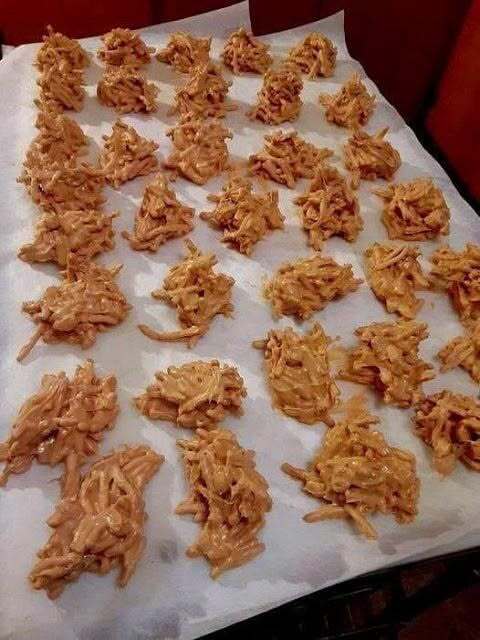
No-Bake Peanut Butter Haystacks With Caramel Chips and Crispy Noodles
A Simple Dessert With Creamy, Sweet, and Crunchy Layers
No-bake desserts are especially appealing when a sweet craving arrives but turning on the oven feels unnecessary. These peanut butter haystacks bring together creamy peanut butter, caramel chips, crispy chow mein noodles, and salted peanuts in a quick treat that requires only a saucepan, a mixing bowl, and a lined baking sheet.
The finished dessert has a rich, smooth coating wrapped around light, crunchy noodles and peanuts. Each spoonful forms a small cluster that cools into a firm, easy-to-serve treat with a satisfying contrast between sweetness, saltiness, creaminess, and crunch.
Because the recipe does not require baking, it is approachable for anyone who wants a homemade dessert without a lengthy preparation process. The most important steps are melting the coating gently, combining the ingredients evenly, and shaping the haystacks before the warm mixture begins to set.
Ingredients Needed for Peanut Butter Haystacks
This recipe uses a short list of ingredients, yet each one contributes an important element to the finished dessert. The combination is simple, but the flavors and textures work together to create clusters that feel more substantial than the preparation time might suggest.
You will need 11 ounces of caramel chips, one 5-ounce box of crispy chow mein noodles, 1 cup of creamy peanut butter, and ½ gram of salted peanuts. Parchment paper is also helpful for lining the baking sheet and preventing the warm haystacks from sticking as they cool.
Before beginning, measure the ingredients and prepare the work surface. Since the melted peanut butter mixture can begin thickening as it cools, having the noodles, peanuts, mixing bowl, spoon, and lined baking sheet ready will make the final steps easier.
Why Creamy Peanut Butter Works So Well
Creamy peanut butter forms the rich base of this no-bake dessert. As it warms with the caramel chips, it becomes smooth enough to coat the chow mein noodles while giving the haystacks their familiar nutty flavor.
The peanut butter also helps bind the loose ingredients together. Once the clusters cool, the coating firms around the noodles and peanuts, allowing each spoonful to hold its shape without requiring flour, eggs, or oven time.
Its natural saltiness balances the sweetness of the caramel chips. That contrast keeps the dessert from tasting one-dimensional and gives each bite a fuller combination of flavors.
The Sweet Role of Caramel Chips
Caramel chips provide the main sweetness in the recipe. When heated slowly, they melt into the peanut butter and create a thick, velvety coating that surrounds the crunchy ingredients.
Using medium-low heat is important during this stage. Gentle warmth allows the chips to soften gradually and blend with the peanut butter without exposing the mixture to unnecessarily high temperatures.
Continuous stirring also helps produce an even consistency. The goal is a completely melted mixture with no firm chips remaining and no separate streaks of peanut butter.
How Chow Mein Noodles Create the Signature Crunch
Crispy chow mein noodles give these haystacks their distinctive structure. Their thin, irregular shape naturally creates small peaks and uneven edges when spoonfuls of the mixture are dropped onto the baking sheet.
The noodles remain light and crisp beneath the creamy coating. This creates a noticeable crunch that contrasts with the smoothness of the melted peanut butter and caramel mixture.
They also make the dessert visually recognizable. Rather than spreading into flat cookies, the clusters settle into textured mounds that resemble miniature haystacks.
Salted Peanuts Add Extra Texture
Salted peanuts contribute another layer of crunch while strengthening the peanut flavor already present in the creamy base. Their firmer texture complements the lighter crispness of the chow mein noodles.
The salt on the peanuts also offsets the sweetness of the caramel chips. Even though the recipe is designed as a dessert, the salty element gives the clusters a more balanced finish.
When mixed throughout the noodles, the peanuts ensure that the texture changes slightly from bite to bite. Some portions may contain more noodle crunch, while others offer the denser bite of a peanut.
Preparing the Baking Sheet
Before melting the ingredients, line a baking sheet with parchment paper. This creates a clean, nonstick surface where the warm spoonfuls can cool and solidify.
Preparing the sheet in advance is useful because the shaping process should happen quickly. Once the noodles and peanuts are coated, the mixture will gradually become more difficult to portion as it loses heat.
Place the lined baking sheet close to the mixing area. Keeping everything within reach helps prevent delays and allows the clusters to be formed while the coating is still soft and workable.
Melting the Peanut Butter and Caramel Chips
Place the creamy peanut butter and caramel chips in a saucepan over medium-low heat. Stir the ingredients steadily as they begin to soften.
At first, the chips may hold their shape while the peanut butter becomes looser. Continued gentle heating and stirring will gradually bring the two ingredients together into a single smooth mixture.
Keep stirring until the caramel chips have completely dissolved. The coating should look uniform, glossy, and thick enough to cling to the noodles without appearing dry or separated.
Avoid rushing this stage by sharply increasing the heat. The recipe depends on a smooth coating, and slow melting offers better control over the texture.
Combining the Crunchy Ingredients
Place the crispy chow mein noodles and salted peanuts in a mixing bowl. Use a bowl large enough to provide room for folding and stirring without crushing the noodles or spilling the coating.
Pour the melted peanut butter and caramel mixture over the noodles and peanuts. Try to distribute it across the bowl rather than concentrating all of it in one small area.
Stir carefully until the noodles and peanuts are evenly coated. Gentle movements are best because aggressive mixing can break the delicate noodles into very small pieces.
Continue folding until no dry sections remain. The coating should reach through the entire mixture so that every haystack contains a balanced combination of the ingredients.
Shaping the Haystacks
Once everything is combined, begin dropping spoonfuls of the mixture onto the parchment paper-lined baking sheet. Work promptly while the coating is still warm and flexible.
Each spoonful should form a small mound rather than being pressed flat. The irregular shape of the noodles will naturally create the raised, rustic appearance associated with haystack desserts.
The clusters do not need to be perfectly identical. Slight differences in shape and size are part of their homemade character, although using similar spoonfuls can help them cool at roughly the same rate.
Leave a small amount of space between each haystack. They will not spread like oven-baked cookies, but the extra room makes them easier to lift from the parchment paper after they have set.
Cooling the No-Bake Clusters
After all the mixture has been portioned, allow the haystacks to cool completely. During this resting period, the peanut butter and caramel coating will become firmer and hold the noodles and peanuts together.
It may be tempting to serve them immediately, but warm clusters can be soft and more likely to lose their shape. Waiting until they have solidified creates the intended crisp, firm texture.
The cooling stage also allows the flavors to settle into a unified dessert. Once firm, each cluster should lift cleanly from the parchment paper and remain intact when handled.
Serving the Finished Dessert
Serve the haystacks only after they have cooled and become solid. Their compact shape makes them easy to arrange on a plate or place individually among other small desserts.
Each bite delivers several textures at once. The outer coating is creamy and sweet, the chow mein noodles provide a light crunch, and the salted peanuts add a firmer, savory contrast.
Because the clusters are already portioned, no slicing is required. Guests can simply pick up a single haystack, making the dessert convenient for casual gatherings, family treats, or an easy sweet snack.
Tips for a Smooth Preparation Process
Organization is one of the most useful parts of making this recipe successfully. Measure the ingredients, line the baking sheet, and place the mixing bowl nearby before beginning to heat the peanut butter and caramel chips.
Stir the saucepan mixture consistently so the ingredients melt evenly. Stop heating once the chips have completely dissolved and the coating is smooth.
When adding the coating to the noodles and peanuts, fold gently but thoroughly. The goal is to cover the ingredients without crushing away the texture that makes the dessert distinctive.
Shape the clusters immediately after mixing. The warm coating is easiest to portion at this stage, while a cooler mixture may become thick and difficult to scoop.
A Convenient Treat Without Oven Time
The simplicity of these peanut butter haystacks is part of their appeal. They require no baking, no complicated decorating, and no long list of ingredients.
The recipe relies on a straightforward sequence: melt, mix, portion, cool, and serve. Even with such a simple method, the finished clusters offer a rich blend of contrasting flavors and textures.
They are also a practical choice when oven space is unavailable or when a quick dessert is preferred. The preparation takes place on the stovetop, while the final structure develops naturally as the clusters cool.
A Balanced Combination of Sweet and Salty
What makes this dessert memorable is the way the ingredients support one another. The caramel chips bring sweetness, the creamy peanut butter adds richness, the salted peanuts provide balance, and the chow mein noodles create the signature crunch.
No single ingredient needs to dominate the recipe. Instead, the coating surrounds the crunchy components and turns them into small, cohesive clusters that are easy to prepare and enjoyable to eat.
The result is a no-bake dessert that feels indulgent without requiring elaborate techniques. With gentle heating, careful mixing, and enough cooling time, the ingredients transform into flavorful peanut butter haystacks ready to satisfy a sweet craving.
Final Thoughts on No-Bake Peanut Butter Haystacks
No-bake peanut butter haystacks demonstrate how a few familiar ingredients can create a dessert with plenty of character. Their creamy coating, caramel sweetness, salty peanut flavor, and crispy noodle texture make every bite varied and satisfying.
The recipe is especially useful for anyone looking for a homemade treat that avoids the oven and keeps preparation manageable. Most of the work involves stirring and shaping, followed by a simple cooling period.
Once the clusters have fully solidified, they are ready to serve and enjoy. Their combination of convenience, texture, and flavor makes them an appealing addition to any collection of easy no-bake desserts.