
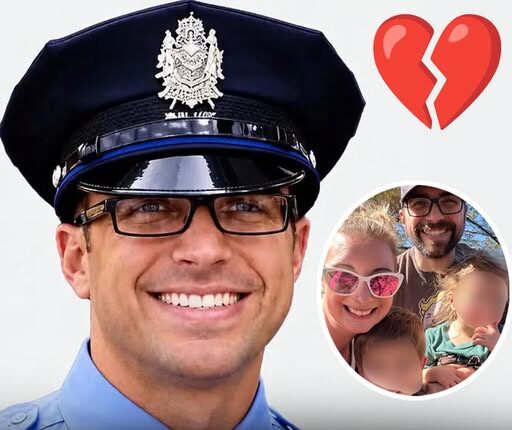
Philadelphia Police Officer, 40, Killed in Reported Ambush, Leaving Behind Wife and Two Young Children
Officer Shane Seiber Died After Being Shot Three Times While Responding to a Call in West Philadelphia. His Partner, a Father of Five, Was Shot 12 Times, While a Suspect Now Faces Dozens of Criminal Charges.
A Philadelphia police officer who spent a decade serving his community has died after a shooting that also left his partner seriously wounded.
Officer Shane Seiber was just 40 years old.
He was a husband, a father of two young children, and a ten-year veteran of the Philadelphia Police Department.
Shortly after midnight on Saturday, October 10, 2026, Seiber and another officer responded to a report of an armed man at a home in West Philadelphia.
What began as a police response to a weapons complaint quickly turned into a deadly confrontation.
Authorities say a man opened fire on the officers near the front porch of a residence on North 52nd Street.
Seiber was struck by three bullets.
His partner, a 33-year-old officer whose name has not been publicly released, suffered 12 gunshot wounds.
Both officers were rushed to Penn Presbyterian Medical Center.
Despite the efforts of medical personnel, Seiber died later that morning.
His wife and other family members were able to be at the hospital before his death.
Behind him, he leaves a seven-year-old son and a three-year-old daughter.
His surviving partner, meanwhile, remained hospitalized with serious injuries.
The shooting has devastated members of the police department and prompted an outpouring of condolences from public officials and community members.
Authorities have charged a 35-year-old Philadelphia man, Eric Lewis, with murder, attempted murder, and numerous related offenses.
But beyond the investigation and criminal charges is the loss of a father whose family now faces a future without him.
The Officers Were Responding to a Report of an Armed Man
The incident began in the early hours of October 10.
At approximately 12:17 a.m., a woman contacted emergency services to report a man with a firearm on the porch of a home in the 100 block of North 52nd Street.
The residential block is located between Race and Arch Streets in West Philadelphia.
Police dispatchers relayed information about the armed individual, and officers were sent to investigate.
Among those responding were Shane Seiber and his partner.
They approached the property as part of their assigned duties.
At that point, they were attempting to address a report involving a potentially armed person.
According to investigators, the encounter quickly became violent.
A Confrontation Developed Outside the Home
Police initially described the shooting as an ambush.
More detailed information emerged in an arrest report described by The Philadelphia Inquirer on October 12.
According to that account, Seiber approached the front door of the residence.
A man later identified by authorities as Eric Lewis approached the officers.
Investigators described a brief confrontation and struggle before shots were fired.
The exact sequence of every movement remains part of the criminal investigation.
Authorities allege that Lewis shot both officers during the encounter.
The shooting left Seiber and his partner gravely wounded near the front porch.
Shane Seiber Was Shot Three Times
Police Commissioner Kevin Bethel confirmed that Seiber sustained three gunshot wounds.
Emergency responders transported him to Penn Presbyterian Medical Center for treatment.
Medical personnel worked to save his life.
But the injuries proved fatal.
Seiber died shortly after 9 a.m. Saturday, according to police.
The news ended hours of concern for his family and colleagues.
During a news conference, Bethel spoke about the effort to keep Seiber alive.
“He fought valiantly, but he lost his life today,” the commissioner said.
Bethel also acknowledged the support the department had received during the emergency.
His remarks reflected the sadness felt across the police force.
His Wife and Family Were at the Hospital
One of the most heartbreaking details emerged when authorities discussed Seiber’s family.
His wife and other loved ones were able to be with him at the hospital before he died.
The 40-year-old officer was not only a member of the police department.
He was also a husband and the father of two young children.
His son is seven years old.
His daughter is three.
Both are now facing the loss of their father at an age when family relationships are central to everyday life.
Their private grief remains their own.
But the announcement of their father’s death prompted expressions of sympathy from across Philadelphia and Pennsylvania.
His Partner Was Shot 12 Times
The second officer involved in the shooting also suffered severe injuries.
Police identified him as a 33-year-old man who has served with the department for approximately nine years.
He is also the father of five children.
During the confrontation, he was struck by 12 bullets.
He was transported to Penn Presbyterian Medical Center and underwent medical treatment, including surgery.
Initial updates described his condition as stable but serious.
Commissioner Bethel cautioned that the officer still faced significant medical challenges.
The department has not publicly identified him, citing privacy considerations for the officer and his family.
The Wounded Officer’s Recovery Remains a Major Concern
Although the surviving officer was described as stable following treatment, his injuries were extensive.
Being medically stable does not necessarily mean that someone has completed recovery.
Patients with serious injuries may require further treatment, monitoring, rehabilitation, and ongoing medical care.
The precise course of recovery depends on the nature of the injuries and other medical factors.
As of October 12, The Philadelphia Inquirer reported that police had declined to provide an updated account of the officer’s condition.
Accordingly, earlier descriptions of stability should not be mistaken for confirmation that he is out of danger or has been discharged.
For his wife, children, and other loved ones, his recovery remains a deeply personal concern.
Nine Additional Officers Were Allegedly Targeted
According to investigators, the danger did not end after Seiber and his partner were shot.
Authorities say the suspect fled from the initial scene.
Additional officers rushed into the neighborhood after learning that two colleagues had been wounded.
During the response, the suspect allegedly fired at nine more officers.
District Attorney Larry Krasner confirmed that none of those nine officers was struck by gunfire.
The reported exchange added to the danger of an already serious emergency.
Police secured the area while searching for the armed suspect.
The Neighborhood Became the Scene of a Major Police Search
The shooting prompted a significant law enforcement response in West Philadelphia.
Officers converged on the residential block as the search continued.
Investigators described the suspect moving through the area while attempting to avoid arrest.
Specialized police units were brought in.
SWAT officers worked to locate the suspect while managing the possibility of further gunfire.
The operation unfolded during the early morning hours, when many nearby residents would ordinarily have been sleeping.
Instead, the neighborhood became the center of an emergency involving wounded officers, police reinforcements, and an active search.
Police Located the Suspect in a Tree
One of the most unusual details of the investigation involved the suspect’s eventual discovery.
According to police and the arrest report, officers located Eric Lewis in a tree during the search.
A SWAT team had been searching the surrounding area.
Officers reported hearing a man expressing a desire to end the confrontation peacefully.
When a light was directed toward the tree, Lewis was reportedly found high among its branches.
Officers ordered him to come down.
According to the arrest report, he fell from the tree and sustained an injury to his head.
Police then took him into custody.
Several Firearms Were Recovered
Authorities reported recovering multiple firearms in connection with the arrest.
These included two handguns and a shotgun.
Police alleged that one of the handguns belonged to an officer involved in the original shooting.
Investigators believe the weapon was taken during the confrontation.
The firearms became important evidence in the criminal investigation.
Authorities also examined witness accounts and police communications to reconstruct the sequence of events.
Those findings will be considered as the criminal case moves through the legal system.
Eric Lewis Was Charged With Murder and Attempted Murder
The suspect was identified as Eric Lewis, 35, of Philadelphia.
He was charged with murder in connection with Seiber’s death.
Prosecutors also filed attempted murder charges involving the surviving officer and additional responding police personnel.
Other allegations include offenses involving firearms and assaults on law enforcement officers.
By October 12, court reporting identified 76 charges against Lewis.
Earlier accounts had described the total as approximately 80.
Lewis was ordered held without bail.
The charges are allegations, and he is presumed innocent unless and until proven guilty in court.
The Criminal Case Was Still in Its Early Stages
Following his arrest, Lewis appeared in Philadelphia Municipal Court.
Authorities said the investigation was continuing.
District Attorney Larry Krasner described the shooting as an extremely serious act of violence against police officers.
Prosecutors indicated that they intended to pursue accountability through the criminal justice system.
The next stages involve court proceedings, the presentation of evidence, and opportunities for the defense to challenge the prosecution’s case.
Although authorities have outlined their allegations, a criminal charge is not the same as a conviction.
The legal process must determine responsibility according to the evidence and applicable law.
The Arrest Report Provided Additional Details
On October 12, The Philadelphia Inquirer published an account based on police records and other reporting.
The report described a confrontation at the front porch followed by the shooting.
It also included statements that investigators attributed to Lewis after his arrest.
According to the report, Lewis allegedly acknowledged shooting the officers during conversations with police.
The account also described his assertions about the officers’ actions during the encounter.
Those statements remain part of the evidence and allegations surrounding an active criminal case.
They do not replace independent judicial findings.
The full circumstances remain subject to investigation and court proceedings.
Authorities Described the Attack as an Ambush
Police officials repeatedly characterized the shooting as an ambush.
They emphasized that Seiber and his partner had responded to a reported weapons complaint.
The officers were carrying out police duties when the confrontation occurred.
Commissioner Bethel and District Attorney Krasner condemned the violence.
The term ambush reflected the authorities’ description of the circumstances.
However, the precise legal conclusions regarding the suspect’s actions and intent remain matters for the criminal proceedings.
The factual outcome is clear: one officer died, another was seriously wounded, and additional police officers came under fire.
Shane Seiber Had Served the Department for Ten Years
Seiber joined the Philadelphia Police Department in 2016.
He graduated from the police academy the following year.
His career included approximately a decade of service.
He worked in the city’s 19th Police District.
In the days after his death, colleagues and public officials remembered his commitment to police work.
He had chosen a profession requiring officers to respond to unpredictable situations and serve people during emergencies.
His death occurred while responding to one of those calls.
He Was Also an Air Force Veteran
In addition to his police career, Seiber had served in the United States Air Force.
His military background became another part of the public tributes following his death.
Service in the military and law enforcement had been important parts of his adult life.
But those professional achievements were only one aspect of who he was.
Family members and colleagues also remembered his personality, humor, and relationships.
Those memories offered a more personal picture of the man behind the uniform.
His Police Academy Message Reflected His Personality
After Seiber’s death, The Philadelphia Inquirer revisited a message he had shared following his police academy graduation.
In the post, he thanked people who had supported him during his training.
He also expressed appreciation for his wife.
His remarks reflected a playful personality, acknowledging the patience she had shown with his jokes and sense of humor.
The message provided a glimpse of Seiber as a person preparing to begin his career.
At the time, he was looking ahead to years of service.
Nearly a decade later, colleagues were reflecting on that same commitment while mourning his death.
Colleagues Remembered His Character
People who trained alongside Seiber shared memories after the shooting.
One police academy classmate described him as a person with a generous and caring spirit.
The tribute reflected the shock felt by someone who had known Seiber at the beginning of his law enforcement career.
For colleagues, the loss was not only professional.
They had worked beside him, trained with him, and built relationships over years of service.
His death changed the lives of people who had expected to continue sharing those experiences.
Philadelphia’s Police Commissioner Addressed the Tragedy
Commissioner Kevin Bethel spoke publicly after Seiber’s death.
He expressed grief for the officer’s family and the police department.
Bethel also discussed the surviving officer’s serious injuries and the support the department was receiving.
The news conference made clear that the shooting had affected officers throughout the city.
Police departments often face significant emotional challenges when an officer is killed in the line of duty.
Such losses affect immediate colleagues, supervisors, support personnel, and the wider department.
Bethel acknowledged that Philadelphia police would face a period of mourning.
Mayor Cherelle Parker Paid Tribute to Seiber
Philadelphia Mayor Cherelle Parker also addressed the officer’s death.
She recognized his decision to serve in law enforcement and expressed sympathy for his surviving family.
Parker emphasized the loss experienced by Seiber’s wife and young children.
Her remarks reflected a broader response from city leadership.
Seiber’s death was both a personal tragedy and a significant event for the Philadelphia Police Department.
The mayor’s statement acknowledged the service of the fallen officer while drawing attention to the family left behind.
Pennsylvania Ordered Flags to Be Lowered
Pennsylvania Governor Josh Shapiro directed that flags be flown at half-staff in honor of Seiber.
The order served as a public expression of mourning and recognition.
State officials also conveyed condolences to his family and colleagues.
Lowering flags is a traditional form of remembrance used to honor public servants and mark significant losses.
For those who knew Seiber, the gesture was one of several public acknowledgments of his service.
But the personal impact of his death extended far beyond ceremonial recognition.
Two Young Children Have Lost Their Father
Seiber’s surviving family includes his wife and two children.
His son is seven years old.
His daughter is three.
Both are at ages when daily family routines help provide comfort, stability, and a sense of security.
The death of a parent can affect children in different ways as they grow and begin to understand the loss.
Those experiences are private and individual.
What is publicly known is that Seiber was deeply loved by his family and that his death has left a profound absence.
Officials repeatedly acknowledged that personal loss while discussing the shooting.
The Surviving Officer Is Also a Father
The other wounded officer has five children.
His identity has not been publicly released.
The department’s decision to withhold his name reflects concerns about privacy during a difficult period for him and his family.
He survived the initial shooting but sustained serious injuries requiring hospital treatment.
His recovery remains an important concern for loved ones and colleagues.
Public updates about his medical condition have been limited.
His family’s need for privacy should be respected while the medical and legal processes continue.
The Shooting Deeply Affected West Philadelphia Residents
The violence occurred on a residential block in West Philadelphia.
Neighbors were confronted with police activity, emergency vehicles, and a search for an armed suspect.
Local residents spoke to reporters about the shock of the incident.
Some described the shooting as a disturbing event for their neighborhood.
Others expressed sadness for the officers and concern over the violence that had unfolded nearby.
The community response reflected the wider impact of a serious incident involving law enforcement and residents.
Beyond the individual officers, the shooting affected people who lived and worked in the surrounding streets.
A Detailed Timeline Helped Explain the Events
Reporting published on October 12 provided a clearer sequence of the shooting.
The original emergency call came shortly after midnight.
The officers arrived to investigate a report of an armed individual.
A confrontation developed near the porch.
Both officers were shot.
Additional responding officers subsequently came under fire, according to investigators.
The suspect fled and was eventually located in a tree during the police search.
Meanwhile, Seiber and his partner were receiving hospital treatment.
Seiber died later that morning.
These events formed the basis of the continuing criminal investigation.
Why the Number of Charges Changed in Reports
Initial news coverage described the suspect as facing approximately 80 criminal charges.
As court records and arraignment details became available, later reporting identified 76 offenses.
That difference reflects the way early information can be refined during a developing criminal case.
Formal charging documents provide greater precision than approximate statements made immediately after an arrest.
The allegations include murder and multiple attempted murder counts.
They also involve additional offenses related to the reported shooting and police response.
The precise charges and their legal disposition will be addressed through the courts.
The Investigation Continues
Authorities continue examining evidence related to the shooting.
That includes the accounts of responding officers, available recordings, recovered firearms, and the sequence of events surrounding the suspect’s arrest.
Investigators must establish what happened and present evidence to prosecutors and the court.
Defense attorneys also have the right to challenge evidence and allegations.
These procedures are necessary in serious criminal cases.
Although officials have publicly described the incident as an ambush, the courts will determine criminal responsibility.
For Seiber’s family and colleagues, the legal process will continue alongside the personal reality of their loss.
His Death Was Recorded as a Line-of-Duty Loss
The Officer Down Memorial Page records Shane Seiber’s end of watch as October 10, 2026.
The memorial lists him as a member of the Philadelphia Police Department with ten years of service.
It identifies gunfire as the cause of death and notes that the suspect was apprehended.
The record also acknowledges his surviving wife and children.
Such memorials preserve information about officers who die while performing their duties.
They provide a lasting record for families, colleagues, and the public.
Why the Department’s Loss Extends Beyond One Day
The consequences of the shooting did not end when the immediate emergency was resolved.
Colleagues lost someone they had worked beside for years.
The surviving officer began a difficult medical recovery.
Families were left facing uncertainty and grief.
The department also had to continue serving the city while responding to the loss of one of its own.
Events involving serious violence against officers can create additional emotional strain for those who respond and investigate.
Support for affected personnel and their families becomes especially important during the aftermath.
Remembering the Man Behind the Uniform
News reports naturally focus on the circumstances surrounding Seiber’s death.
They describe the emergency call, the shooting, the police search, and the criminal allegations.
But those details represent only the final hours of his life.
Seiber had spent years building a career and a family.
He had served in the military and the Philadelphia Police Department.
He had graduated from the police academy and expressed pride in beginning his law enforcement career.
He was remembered by colleagues for his character and personality.
Most importantly, he was a husband and the father of two children.
His life deserves to be remembered for more than the violence that ended it.
What We Know About the October 10 Shooting
The confirmed details establish that two Philadelphia police officers were shot during a response to an armed-person complaint in West Philadelphia.
Shane Seiber, 40, was shot three times and died at Penn Presbyterian Medical Center.
His 33-year-old partner was shot 12 times and survived the initial attack.
Police described the incident as an ambush and alleged that the suspect fired at nine additional officers.
None of those additional officers was struck.
Eric Lewis, 35, was subsequently arrested and charged with murder, attempted murder, and numerous related offenses.
He remained in custody without bail as the case proceeded.
The surviving officer remained hospitalized as of the latest publicly reported update reviewed for this article.
And Seiber’s family and department continued mourning a loss that had occurred only days earlier.
A Family and a City Remember Officer Shane Seiber
Saturday, October 10, 2026, began with a police response to a reported armed individual in West Philadelphia.
It ended with a city grieving the death of a ten-year police veteran.
Officer Shane Seiber was 40 years old.
He had served in the United States Air Force and devoted a decade to the Philadelphia Police Department.
He was responding to a call alongside another officer when both were shot.
Seiber suffered three gunshot wounds and died later that morning despite medical efforts to save him.
His partner, also a father, survived after suffering 12 gunshot wounds and remained under hospital care.
The suspect was arrested following an extended police search and now faces numerous serious charges.
For investigators, the case remains a matter of gathering evidence and pursuing the appropriate legal process.
For the police department, it is the loss of a colleague.
For Philadelphia, it is another moment of mourning following violence that affected officers and a residential neighborhood.
But for Seiber’s wife and two young children, the loss is profoundly personal.
A seven-year-old boy and a three-year-old girl have lost their father.
Their family’s future has been changed by an event that happened while he was carrying out his duties.
As colleagues and public officials honor his service, the most meaningful remembrance also includes the life he built away from police work.
The husband, father, veteran, and colleague whose death has affected so many people.
And whose memory will continue to matter long after the immediate headlines have passed.