
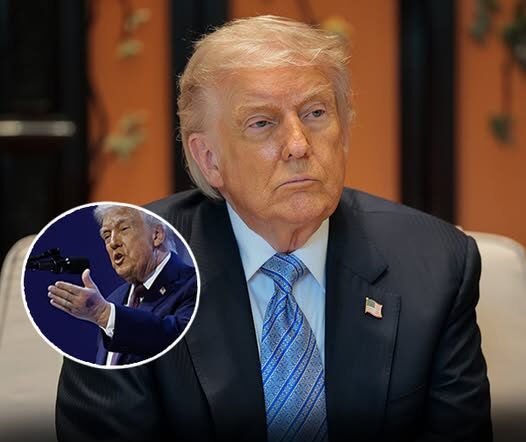
Questions Swirl After Trump’s Latest Walter Reed Visit Sparks New Debate Over Health and Transparency
Another Hospital Visit Fuels Intense Public Attention
Donald Trump’s latest unannounced visit to Walter Reed National Military Medical Center has reignited intense public scrutiny surrounding his health, stamina, and ability to handle the pressures of the presidency.
The hospital trip marked the third known visit in just 13 months, immediately triggering speculation across Washington and beyond. In a political environment already defined by distrust and polarization, even routine medical evaluations quickly became a source of controversy.
Questions spread rapidly after reports surfaced involving mysterious bruises, discussions of MRIs and CT scans, and renewed attention on moments where critics claimed Trump appeared unusually fatigued or distracted during high-pressure appearances.
Supporters dismissed the concerns as political theater, arguing that a nearly 80-year-old president undergoing regular medical monitoring should not be treated as evidence of crisis. Others, however, viewed the growing pattern of medical visits and vague explanations as cause for concern.
Visible Bruising and Medical Explanations Draw Attention
Public discussion intensified after visible marks on Trump’s hands and skin prompted fresh speculation online and within political circles.
His physician later described the issue as “minor soft tissue irritation,” while also referencing aspirin use as a contributing factor. The explanation was intended to calm growing rumors, but instead it appeared to deepen public curiosity.
In today’s political climate, every visible sign of aging surrounding a sitting president becomes magnified. A bruise, a stumble, or even an awkward pause during a speech can instantly become national debate.
For Trump, whose public image has long centered on strength, energy, and dominance, even small physical changes attract extraordinary attention.
Critics pointed to the repeated need for examinations and advanced scans as signs that the administration may not be providing a complete picture. Supporters countered that preventative testing for someone his age is entirely normal.
Concerns About Age Continue to Dominate Political Conversation
At 79 years old, Trump remains one of the oldest figures ever to occupy the presidency, making his health a constant topic of discussion.
Age has increasingly become one of the defining issues in modern American politics. Physical endurance, mental sharpness, and the visible effects of stress now receive relentless public analysis.
Trump himself has repeatedly pushed back against concerns surrounding his condition. He has insisted publicly that he feels as healthy as he did decades ago, once declaring that he feels like he did 50 years earlier.
Those statements resonate strongly with his supporters, many of whom view him as unusually energetic and resilient despite his age.
Critics, however, argue that the contrast between those declarations and the growing number of medical visits raises legitimate questions.
The debate has only intensified as stories continue circulating about moments where Trump allegedly appeared tired or disengaged during sensitive meetings and late-night public appearances.
Rumors Thrive in the Absence of Detailed Information
One of the biggest drivers behind the speculation has been the limited amount of concrete information released publicly.
Officials have provided only brief explanations regarding the hospital visit, leaving large gaps that quickly became filled with rumor, interpretation, and political messaging.
In Washington, secrecy often creates more suspicion than reassurance. The absence of detailed updates encouraged both supporters and critics to project their own assumptions onto the situation.
Some viewed the visit as routine monitoring for an aging president carrying immense responsibilities. Others believed the carefully controlled messaging suggested deeper concerns behind the scenes.
The administration’s handling of the situation also reflected the broader challenge presidents face when balancing personal privacy with public transparency.
Medical information involving a sitting president has always carried enormous political implications. Every disclosure becomes subject to strategic interpretation, media analysis, and partisan reaction.
Supporters Defend Trump’s Energy and Public Schedule
Despite the speculation, Trump’s allies continue to point toward his demanding schedule as evidence that he remains capable of handling the pressures of office.
They argue that few people approaching 80 maintain the pace Trump regularly displays through rallies, speeches, travel, and constant media engagement.
Supporters also describe the hospital visit as a normal part of preventative care, especially for someone under nonstop public and political pressure.
Many believe critics are selectively interpreting routine medical care as evidence of decline simply because of the political stakes involved.
To Trump’s base, the controversy reflects a broader pattern where every aspect of his behavior is analyzed through the harshest possible lens.
They point out that presidential health evaluations are common and that intense stress naturally leads to ongoing medical monitoring.
Critics See a Pattern Emerging
Opponents view the situation differently.
For critics, the combination of multiple hospital visits, visible bruising, vague medical explanations, and unusual public moments creates a broader pattern that cannot easily be dismissed.
Some argue that the administration’s communication strategy appears carefully designed to minimize public concern rather than provide full transparency.
The repeated use of limited explanations without detailed disclosures has fueled accusations that important information may be intentionally withheld.
Critics also point to Trump’s increasingly aggressive late-night online activity as evidence that the pressures of office may be taking a growing toll.
While none of these claims provide direct proof of a serious medical issue, they continue feeding a climate of uncertainty surrounding the president’s condition.
Presidential Health Has Long Been Politically Sensitive
The intense focus on Trump’s health reflects a much larger American tradition where the physical condition of presidents becomes a matter of national obsession.
Presidents are expected to project confidence, control, and endurance even under extraordinary pressure. Any visible sign of weakness can quickly become politically damaging.
Throughout modern history, medical concerns involving national leaders have often sparked fierce debate over transparency and public trust.
The presidency itself places enormous strain on those who hold the office. Long hours, constant travel, security pressures, political conflict, and global crises create relentless stress that naturally raises questions about health and stamina.
For older presidents in particular, every routine examination tends to receive amplified public attention.
That reality has become even more pronounced in the modern media era, where every image, pause, or physical movement can circulate worldwide within minutes.
Public Trust Remains at the Center of the Debate
Beyond the medical details themselves, the larger issue surrounding Trump’s Walter Reed visit centers on trust.
Supporters trust that the administration is accurately describing a routine medical evaluation for an aging but active president.
Critics believe the lack of detail encourages skepticism and invites questions about whether the full truth is being shared.
In an intensely divided political climate, even basic health updates become deeply politicized.
Hospital visits that might once have been viewed as ordinary now evolve into national controversies involving speculation, partisan narratives, and fears about leadership stability.
The public reaction also reflects broader anxieties surrounding age and leadership in American politics.
Voters increasingly weigh not only policy and ideology, but also physical endurance, cognitive sharpness, and the visible effects of stress when evaluating national leaders.
A Routine Evaluation or Something Larger?
Despite the endless speculation, there remains very little confirmed information suggesting a major medical crisis.
The available explanations continue to describe the situation as precautionary and relatively minor.
At the same time, the lack of detailed disclosure ensures that public debate is unlikely to fade anytime soon.
For some Americans, the hospital visit will remain evidence of normal medical care for a 79-year-old president working under extraordinary pressure.
For others, it represents another warning sign in what they believe is a growing pattern of concerns.
Until more concrete information emerges, the conversation will likely continue to be shaped less by confirmed facts and more by political interpretation, public anxiety, and the deeply polarized atmosphere surrounding Trump’s presidency.
In today’s America, even a quiet walk through a hospital corridor can become a national political battlefield.