
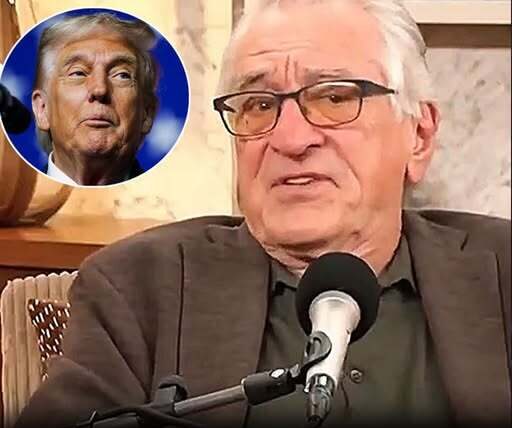
Robert De Niro Delivers Emotional Warning About Donald Trump and America’s Future
Robert De Niro’s latest remarks about Donald Trump were not delivered as a polished political statement or a distant celebrity opinion. They came across as deeply personal, emotional, and urgent, with the Hollywood legend appearing visibly shaken as he described what he believes is happening to the United States in real time.
De Niro did not limit his criticism to policy disagreements or familiar partisan arguments. His message was broader and more severe. He warned that America is being “destroyed” and described Trump as an “enemy of this country,” framing the moment as a serious threat to the nation’s democratic character.
The actor’s voice cracked as he spoke, and his eyes appeared wet while he tried to explain the depth of his concern. What began as criticism turned into something closer to a plea, as De Niro urged people not to treat the current political climate as ordinary or temporary.
A Warning Delivered With Visible Emotion
De Niro’s comments stood out not only because of what he said, but because of how he said it. He did not sound detached or performative. He sounded like someone frightened by the direction of the country and frustrated that his warnings might not be heard strongly enough.
During the podcast appearance, he spoke with the tone of a man who believes the stakes have moved beyond normal political debate. His anger was clear, but so was his sadness. The emotional weight of his words suggested that, for him, the issue is no longer only about one election, one leader, or one party.
He spoke of Trump as a figure who represents something dangerous to America’s foundations. By calling him a would-be king, De Niro suggested that the danger lies in a rejection of democratic limits, shared responsibility, and public service.
That concern became more intense as De Niro continued. Mid-sentence, he suddenly choked up, and the moment shifted from political commentary to human vulnerability. The emotion seemed to interrupt him before he could finish his thought, making the warning feel even more immediate.
From Criticism to Pleading
De Niro has criticized Trump before, but this moment carried a different tone. Rather than simply condemning one person, he appeared to be pleading with ordinary citizens to recognize what he sees as a national crisis.
He described the situation as something unfolding in real time, not as a distant possibility. His warning suggested that damage to the country is already happening and that waiting for it to correct itself would be dangerous.
The actor’s message was not only about opposing Trump personally. He also focused on the movement around him, warning that the danger does not disappear even if the figure at the center is no longer present.
That point gave his remarks a broader meaning. De Niro seemed to be saying that the country is facing not only a political candidate or former leader, but a larger pattern of division, loyalty, and power that can outlast one individual.
A Concern About America’s Democratic Foundations
At the center of De Niro’s remarks was a fear that America’s democratic foundations are under threat. He presented Trump not as a routine political opponent, but as someone whose influence challenges the basic idea of country over personal power.
His words reflected a belief that democratic life depends on more than laws and institutions. It also depends on citizens who refuse to treat any leader as untouchable, unquestionable, or above the country itself.
When De Niro spoke about Trump as an “enemy of this country,” the phrase carried the force of a moral judgment. It was not a casual insult. It was part of a larger warning that the country could lose something essential if people fail to respond.
The actor’s use of emotional language showed how deeply he views the situation. To him, this is not simply a matter of disagreement. It is a fight over the meaning of America, the future of democracy, and the kind of society people are willing to accept.
Rage Mixed With Heartbreak
One of the most striking parts of De Niro’s remarks was the way his anger shifted into heartbreak. He sounded furious, but that fury appeared rooted in fear for the country rather than personal hostility alone.
He spoke like someone who has watched the nation change and feels powerless to stop it by himself. That sense of helplessness gave his comments a more intimate tone, especially as his voice began to break.
The emotional turn made his message more than a political attack. It became a reflection of grief, frustration, and alarm from someone who believes the country is losing its way.
De Niro also framed the issue in moral terms. He spoke about lifting people up rather than dividing them, presenting that contrast as central to what America should be.
The Danger of Political Idolatry
De Niro’s warning also focused on the danger of turning politics into devotion to a single figure. He appeared concerned about the way movements can grow around personalities and continue even after the original leader is no longer at the center.
That concern was especially clear when he described the need to “neutralize” the damage. The word was part of a broader appeal for citizens to stand together against what he sees as destructive forces inside the country.
His message was not that one speech or one election would solve everything. Instead, he suggested that the damage must be confronted directly and collectively.
For De Niro, the problem is not only Trump himself, but the willingness of people to excuse, defend, or normalize behavior that he believes threatens the country’s democratic soul.
A Call for Ordinary Citizens to Act
As his remarks became more emotional, De Niro shifted from warning to responsibility. He suggested that ordinary citizens have an obligation to respond before it is too late.
His appeal was simple but forceful. He urged people to stand together, reject division, and choose the country over loyalty to a single political figure.
That call carried the tone of someone who does not believe silence is neutral. In De Niro’s view, failing to resist dangerous political behavior allows the damage to continue.
He seemed to be asking people to look beyond party identity and consider what kind of nation they want to preserve. His warning was not delivered as a campaign slogan, but as a statement of fear about the future.
A Moment That Felt Personal
The emotional nature of De Niro’s comments made the moment feel personal rather than scripted. His cracking voice and visible distress suggested that the subject had moved beyond ordinary public debate for him.
He sounded like a worried grandfather, furious and heartbroken at the same time. That human quality gave the remarks a different kind of force, because the emotion appeared to come from genuine concern.
De Niro’s career has made him one of Hollywood’s most recognizable figures, but in this moment, he was not leaning on celebrity image or cinematic drama. He was speaking as a citizen who believes the country is in danger.
His words were sharp, but the emotional pause in the middle of his comments may have been the most powerful part. It showed that the fear behind the warning was not abstract.
A Broader Warning About the Country’s Future
De Niro’s comments were ultimately about more than Donald Trump. They were about the future of America and whether citizens will recognize the seriousness of the moment he described.
He warned that the damage will not disappear on its own. That idea was central to his message, because it placed responsibility on the public rather than waiting for institutions, leaders, or time to repair the situation.
For De Niro, the country faces a choice between division and repair. He described the need to lift people up, reject political idolatry, and prevent one movement from rewriting the story of America.
His warning was emotional, direct, and deeply serious. Whether listeners agreed with him or not, the moment showed a public figure speaking with urgency about what he believes is a defining threat to the nation.
A Plea to Choose Country Over Personality
The strongest theme in De Niro’s remarks was the need to place country above any individual leader. His criticism of Trump was severe, but his broader concern was about the way citizens respond to power.
He appeared to fear that America could become vulnerable when people attach their political identity to one figure rather than to democratic principles. That fear shaped the emotional force of his warning.
By the end of his remarks, De Niro’s message had moved beyond outrage. It became a plea for people to act before damage becomes permanent.
His words left behind a clear warning: the future of the country depends not only on leaders, but on whether ordinary citizens are willing to stand together, reject division, and defend the democratic values they claim to cherish.