
Married at 15, Mother of Four by 21, and Given a $17 Guitar — The Heartbreaking Life of Loretta Lynn, the Coal Miner’s Daughter Who Changed Country Music Forever
Married at 15, Mother of Four by 21, and Given a $17 Guitar — The Heartbreaking Life of Loretta Lynn, the Coal Miner’s Daughter Who Changed Country Music Forever
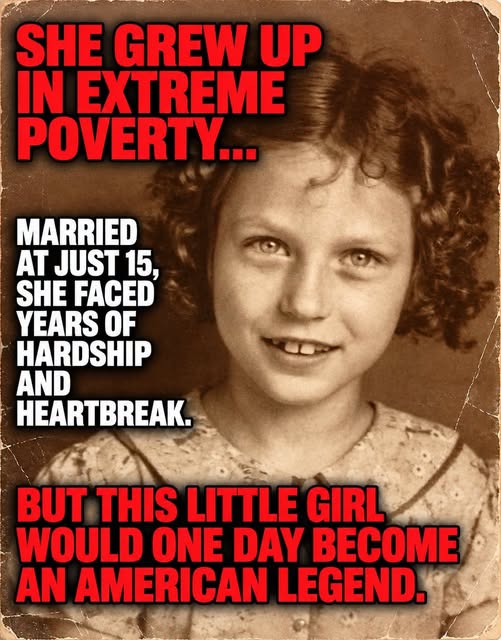
Before the world knew her as the Coal Miner’s Daughter, Loretta Lynn was a young girl growing up in poverty in the hills of eastern Kentucky.
She had no powerful connections in the music industry.
No expensive instruments.
And no reason to believe that millions of people would someday listen to songs inspired by her extraordinary life.
By the age of fifteen, she was married.
Before reaching her twenty-first birthday, she had already become the mother of four children.
Her marriage would be marked by love, instability, infidelity, and painful conflicts.
For a time, her world revolved around household responsibilities and raising children far from the mountains where she grew up.
But something remarkable was waiting to emerge.
Loretta possessed a powerful, unmistakable voice and an ability to turn ordinary experiences into songs that spoke directly to women.
Then came a simple gift from her husband.
A seventeen-dollar guitar.
It was not an expensive instrument, but it helped open a door that would change her life.
Over the following decades, Loretta Lynn became one of the most influential artists in country music history.
She recorded enduring hits, won historic awards, and inspired an acclaimed Hollywood film.
Yet her success never protected her from heartbreaking personal losses.
Behind the music stood a woman who experienced poverty, a difficult marriage, the deaths of two children, and the loss of the husband with whom she had shared nearly fifty years.
Her story is not simply one of fame.
It is the story of a woman who refused to forget where she came from, even after becoming one of the most recognizable voices in American music.
A Childhood in the Coal-Mining Hills of Kentucky
Loretta Lynn was born Loretta Webb on April 14, 1932, in Butcher Hollow, a small coal-mining community in eastern Kentucky.
She was the second of eight children.
Her father, Melvin Theodore Webb, worked as a coal miner, while her mother, Clara Marie Webb, helped maintain the household and raise their large family.
Money was often scarce.
The family lived in modest circumstances, and daily life required hard work.
For the Webb children, growing up meant sharing what the family had and learning to appreciate simple comforts.
But despite the financial difficulties, their home was filled with music.
Family members sang together, and traditional country songs were part of everyday life.
Loretta listened carefully.
Long before she understood the music business, she was absorbing the sounds and stories that would eventually shape her career.
Music Was Part of Everyday Life
In the mountains of Kentucky, music was not something reserved for concert halls.
People sang at home, at gatherings, and during ordinary moments of family life.
Loretta grew up hearing traditional Appalachian songs and country music.
She also listened to broadcasts of the Grand Ole Opry when the family could receive them on the radio.
Those performances introduced her to artists whose voices carried stories about hardship, love, disappointment, and resilience.
She was particularly influenced by country singer Kitty Wells.
But at the time, Loretta had little reason to believe she would someday join the ranks of the performers she admired.
Her childhood world was far removed from Nashville’s recording studios.

Marriage Came While She Was Still a Teenager
Loretta’s life changed dramatically when she met Oliver Vanetta Lynn, commonly known as Doolittle, Doo, or Mooney.
The couple married in January 1948, when Loretta was fifteen.
Doolittle was several years older and had recently returned from military service.
The marriage introduced Loretta to adult responsibilities at an extraordinarily young age.
Rather than continuing through the experiences many teenagers associate with growing up, she soon became a wife and mother.
Her life would be shaped by this relationship for nearly half a century.
It would also become one of the most complicated subjects in her music and personal storytelling.
She Became a Mother While Still Growing Up Herself
Loretta gave birth to her first child, Betty Sue, in November 1948.
Her son Jack Benny followed in 1949.
Two more children, Ernest Ray and Clara Marie, arrived in the early 1950s.
Before she reached twenty-one, Loretta had four young children to care for.
The family eventually grew to six children with the birth of twin daughters, Peggy Jean and Patsy Eileen, in 1964.
Raising children while managing a household demanded much of her time and energy.
At an age when many people were only beginning to consider their futures, Loretta was already responsible for a large family.
Yet the musical talent she carried from childhood remained with her.
Moving Far From Home Brought New Challenges
After marrying, Loretta and Doolittle moved from Kentucky to Washington state in search of better economic opportunities.
For Loretta, the move meant leaving the familiar mountains and communities of her childhood.
She was young, raising children, and adjusting to life far from her family.
The change was difficult.
Her days were filled with domestic responsibilities.
She had little experience of life outside the Appalachian region.
But even as her surroundings changed, she continued singing.
Music provided a connection to the home she had left behind.
It also gave her a way to express feelings and experiences that were not always easy to discuss.

The Seventeen-Dollar Guitar That Changed Her Future
One of the most famous moments in Loretta Lynn’s life involved a remarkably inexpensive guitar.
Doolittle purchased a seventeen-dollar guitar for his wife through Sears.
At the time, she was not a professional musician.
She had not built a career or developed a reputation as a recording artist.
But the instrument gave her a new way to express the music she had always carried within her.
Loretta began teaching herself to play.
She practiced and gradually learned to accompany her singing.
What began as a personal activity soon developed into something more significant.
The guitar helped her discover that the stories she knew so well could become songs of her own.
Her Husband Recognized Her Talent
Doolittle played an important role in encouraging Loretta’s early music career.
He believed she had a voice worth hearing.
He encouraged her to perform publicly and helped arrange some of her first appearances.
For someone who had spent years caring for children and managing a household, performing in front of strangers was an enormous change.
But Loretta gradually developed confidence.
She began singing with local musicians and eventually formed a group of her own.
The woman who had once sung around the house was beginning to imagine a different future.
Her musical opportunities were still limited, but the first steps had been taken.

Her Marriage Was Far From a Fairy Tale
Although Doolittle encouraged Loretta’s career, their marriage was troubled.
Loretta later spoke and wrote candidly about his infidelity, drinking, and abusive behavior.
She did not present their relationship as a perfect romance.
Instead, she described a marriage containing affection, conflict, disappointment, and long periods of emotional difficulty.
These experiences became important influences on her songwriting.
Many of her songs dealt directly with women confronting unfaithful husbands, demanding respect, or struggling with unequal expectations.
The subjects were familiar to her because she had lived through some of them.
Her honesty distinguished her from performers whose music avoided such uncomfortable realities.
She Started Writing Songs About Real Life
Loretta’s early compositions reflected the environment and relationships she understood.
Rather than building an image around glamour or an idealized version of love, she wrote about everyday experiences.
Marriage.
Jealousy.
Motherhood.
Financial struggles.
And the determination of women who wanted to be heard.
Her language was straightforward and often humorous.
She didn’t hide difficult subjects behind complicated metaphors.
That honesty eventually became one of her greatest strengths.
Listeners recognized emotions and situations that resembled their own lives.
Her First Single Arrived in 1960
In 1960, Loretta released her debut single, I’m a Honky Tonk Girl, through the small Zero Records label.
The recording marked the beginning of her professional career.
But national success did not arrive automatically.
Loretta and Doolittle traveled to radio stations, working to persuade broadcasters to play her music.
They promoted the record through personal visits and persistent effort.
The approach required long journeys and considerable determination.
But it helped introduce Loretta’s voice to audiences beyond her local community.
Eventually, the single reached the country charts.
The woman who had once believed her future was confined to household responsibilities was becoming a professional recording artist.

Nashville Opened the Door to a New Life
As Loretta’s reputation grew, Nashville became increasingly important to her career.
She signed with Decca Records and began recording music that attracted wider attention.
Her powerful voice and direct songwriting helped her stand out.
Unlike singers who relied primarily on polished romantic material, Loretta frequently addressed the realities of women’s lives.
Her songs could be confrontational.
They could also be funny, affectionate, or deeply emotional.
That range allowed her to build a distinctive identity.
She was not trying to sound like everyone else.
She was singing from the perspective of someone who knew hardship firsthand.
Patsy Cline Became an Important Friend and Influence
As Loretta established herself in Nashville, she developed a friendship with country singer Patsy Cline.
Cline was already a successful performer and offered encouragement to the younger artist.
The friendship became an important part of Loretta’s early professional experience.
Patsy helped her understand aspects of the music business and offered personal support.
But their friendship was cut tragically short.
In March 1963, Patsy Cline died in a plane crash.
Her death devastated the country music community.
For Loretta, it meant losing someone who had helped her during a formative stage of her career.
She continued honoring Cline’s memory for the rest of her life.
You Ain’t Woman Enough Helped Establish Her Reputation
In 1966, Loretta released You Ain’t Woman Enough (To Take My Man).
The song became one of her defining recordings.
It presented a female narrator who refused to remain silent when another woman threatened her marriage.
The lyrics were assertive and unmistakably direct.
For many women listening to country music during that period, the song offered a perspective they did not always hear from mainstream performers.
Loretta’s willingness to confront uncomfortable subjects helped make her distinctive.
She could combine humor and determination while addressing complicated relationships.
Her success demonstrated that audiences were eager to hear songs reflecting the experiences of ordinary women.

Don’t Come Home a’Drinkin’ Became a Major Hit
Another important breakthrough came with Don’t Come Home a’Drinkin’ (With Lovin’ on Your Mind).
The song addressed a husband’s drinking and the expectations placed on his wife.
Its subject was unusually direct for mainstream country music of the period.
Rather than presenting the woman as someone who had to tolerate her husband’s behavior, the song allowed her to express frustration and set a boundary.
The recording became a major success.
It also helped establish Loretta as a performer who was willing to discuss subjects that were often considered inappropriate for women to address publicly.
Her ability to transform personal and social tensions into popular songs became central to her career.
Coal Miner’s Daughter Told the Story of Her Childhood
In 1970, Loretta released Coal Miner’s Daughter, the autobiographical song that became her signature recording.
The song drew directly from her upbringing in Butcher Hollow.
It remembered her father’s work as a coal miner and the modest circumstances in which her family lived.
But rather than treating poverty as something to hide, Loretta presented her childhood with warmth and pride.
The recording reached number one on the country chart.
More importantly, it gave audiences a clear understanding of the woman behind the voice.
She had experienced extraordinary success, but she had not forgotten her beginnings.
The song became a lasting symbol of her identity.
She Refused to Be Ashamed of Where She Came From
By the time Coal Miner’s Daughter became a hit, Loretta was already a recognized country performer.
She had traveled far beyond the rural Kentucky community where she grew up.
Her life included recording studios, concert stages, and television appearances.
But she continued speaking openly about her childhood.
She remembered the small family home, the difficulties of coal-mining life, and the importance of music in her upbringing.
That authenticity helped audiences connect with her.
Many listeners had experienced financial hardship or grown up in working-class families.
They recognized the pride in her voice.
Her story reminded them that success did not require denying one’s past.

The Pill Challenged Expectations in Country Music
Loretta’s willingness to address controversial subjects became especially clear with The Pill.
The song, released in 1975 after an earlier recording, discussed a woman’s ability to make decisions about contraception and motherhood.
Its subject generated considerable controversy.
Some radio stations refused to play it.
Others considered the song too provocative for country music audiences.
But Loretta maintained her commitment to writing about real experiences.
For women who had faced repeated pregnancies and limited reproductive choices, the song addressed a significant issue.
Its success reinforced Loretta’s reputation as an artist willing to challenge expectations.
She Became the First Woman to Win CMA Entertainer of the Year
In 1972, Loretta achieved a historic milestone.
She became the first woman to receive the Country Music Association’s Entertainer of the Year award.
The honor recognized her extraordinary impact on the industry.
It also represented a breakthrough for female performers in a field where major recognition had often favored men.
For a woman who had grown up in poverty and entered adulthood as a teenage mother, the achievement was remarkable.
She had reached one of the highest levels of country music success without abandoning the subjects and storytelling style that made her distinctive.
The award helped establish her place in music history.
Her Partnership With Conway Twitty Produced Country Classics
Alongside her solo career, Loretta developed a celebrated musical partnership with Conway Twitty.
The pair recorded a series of successful duets beginning in the early 1970s.
Their first major collaboration, After the Fire Is Gone, became a chart-topping hit.
Other recordings included Lead Me On, Louisiana Woman, Mississippi Man, and As Soon as I Hang Up the Phone.
Their voices complemented one another, creating a sound that appealed to country music audiences.
They won multiple awards for their work as a duo.
The partnership became another defining chapter in Loretta’s career.
Her Life Became a Bestselling Book
In 1976, Loretta published her autobiography, Coal Miner’s Daughter.
The book expanded on the experiences that had inspired her famous song.
Readers learned about her childhood, teenage marriage, motherhood, and difficult path toward musical success.
She also addressed the complexities of her relationship with Doolittle.
The autobiography became a bestseller.
Its appeal extended beyond country music fans because the story contained universal themes of hardship, ambition, family, and perseverance.
Before long, Hollywood recognized its potential as a film.
Hollywood Turned Her Life Into an Acclaimed Movie
In 1980, Coal Miner’s Daughter reached movie theaters.
Actress Sissy Spacek portrayed Loretta Lynn, while Tommy Lee Jones played Doolittle.
The film followed Loretta’s journey from her childhood in Kentucky through her early musical success.
It also depicted the challenges of her marriage and the demanding responsibilities she faced as a young mother.
The movie introduced her story to audiences who may not have been familiar with country music.
Spacek’s performance received enormous praise.
She won the Academy Award for Best Actress for portraying Loretta.
The film became one of the most celebrated musical biographies of its era.
Fame Could Not Protect Her From Losing Her Son
Despite her professional success, Loretta faced devastating personal tragedy.
In July 1984, her son Jack Benny Lynn died at the age of thirty-four.
He drowned after an accident involving a river near the family’s Tennessee property.
His death was an overwhelming loss.
For Loretta, the woman who had spent so much of her early adulthood raising children, losing a son brought a kind of grief no award or career achievement could diminish.
The tragedy became part of her family’s history.
She continued making music, but the loss remained deeply personal.
Her Husband Doolittle Died in 1996
Another difficult chapter came when Doolittle Lynn died in August 1996.
The couple had been married for nearly forty-nine years.
Their relationship had included profound conflict and repeated difficulties.
Loretta had spoken openly about his drinking, infidelity, and abusive behavior.
But she had also acknowledged his encouragement during the early years of her music career.
The marriage was complicated, and Loretta never reduced it to a simple story.
After his death, she faced the emotional challenge of losing someone who had been part of almost her entire adult life.
His passing marked the end of a relationship that had shaped both her family and her songwriting.
She Experienced Another Heartbreaking Loss in 2013
Nearly three decades after losing Jack Benny, Loretta suffered another devastating family tragedy.
Her eldest daughter, Betty Sue Lynn, died in July 2013 at the age of sixty-four.
Her death was associated with complications from emphysema.
Betty Sue had been important to her mother’s life beyond their family relationship.
She had helped with aspects of Loretta’s career and had written songs recorded by her mother.
For Loretta, the loss meant saying goodbye to another child.
She had now experienced the deaths of two of her six children.
No amount of fame could make those losses easy.
She Found New Creative Energy With Jack White
In 2004, Loretta surprised audiences with the release of Van Lear Rose.
The album was produced by Jack White, known for his work with the White Stripes.
The collaboration brought together artists from different musical generations.
White admired Loretta’s songwriting and helped create a recording that emphasized her unmistakable voice.
The result attracted critical acclaim and introduced her music to younger listeners.
Van Lear Rose won the Grammy Award for Best Country Album.
For Loretta, the success demonstrated that her creativity remained powerful decades after her first recording.
She Continued Making Music Through Later Health Challenges
As Loretta grew older, she experienced health difficulties that affected her ability to perform.
In 2017, she suffered a stroke.
The following year, she experienced a fall that resulted in a broken hip.
These challenges required adjustments to her activities.
But she remained connected to music.
She continued releasing recordings, including later projects that revisited important songs from her career.
Her 2021 album Still Woman Enough demonstrated her continuing artistic presence.
Even after decades in the industry, she remained committed to the music that had transformed her life.
Her Family Remained Central to Her Story
Although Loretta became internationally famous, her identity as a mother and grandmother remained deeply important.
Her family history included joy, conflict, and devastating losses.
She had raised six children while developing one of country music’s most influential careers.
Her experiences with marriage and motherhood helped shape many of her recordings.
Those songs often resonated with women who understood the pressures of balancing family responsibilities and personal ambitions.
For Loretta, the stories were not merely fictional situations.
They frequently reflected the world she knew.
She Died Peacefully at Home in 2022
On October 4, 2022, Loretta Lynn died at the age of ninety.
Her family announced that she had passed away peacefully in her sleep at her home in Hurricane Mills, Tennessee.
The news prompted tributes from musicians, fans, and organizations across the country music industry.
Many remembered her as a pioneering female performer whose songwriting had transformed the genre.
Others celebrated her humor, directness, and unwavering pride in her rural upbringing.
Her death marked the end of an extraordinary life that had begun in a small Kentucky coal-mining community.
Loretta Lynn Changed What Women Could Sing About
One of Loretta’s greatest achievements was expanding the subjects that female country performers could address.
Her songs discussed unfaithful husbands, marital conflict, motherhood, contraception, and women’s desire for independence.
She approached those subjects with a mixture of humor, honesty, and determination.
At times, her recordings challenged prevailing social expectations.
Some generated controversy.
But her willingness to write candidly helped other female performers recognize the value of telling their own stories.
She demonstrated that women’s everyday experiences deserved a prominent place in country music.
Her Legacy Reached Far Beyond Her Awards
Loretta received numerous honors during her lifetime.
She was inducted into the Country Music Hall of Fame in 1988.
She earned Grammy Awards, country music industry honors, and national recognition for her contributions to American culture.
But her influence cannot be measured solely through awards.
She helped redefine how women were represented in country songwriting.
She made working-class experiences central to popular music.
And she preserved the stories of the Kentucky community where she grew up.
Those achievements continued resonating long after her final recordings.
The Girl With the Seventeen-Dollar Guitar Became a Legend
When Loretta first received her inexpensive guitar, there was no guarantee of success.
She was a young mother living far from her childhood home.
Her household responsibilities were demanding, and her marriage was difficult.
She had no established position in the music industry.
But the instrument helped her discover an opportunity to express herself through songwriting and performance.
Her husband encouraged her first appearances, and she gradually developed the confidence to pursue a career.
The path from local performances to Nashville success required years of determination.
Yet Loretta transformed those early opportunities into a remarkable body of work.
The Lasting Story of Loretta Lynn
Loretta Lynn’s life began in poverty in Butcher Hollow, Kentucky.
She married at fifteen and became the mother of four children while still very young.
Her relationship with Doolittle Lynn was complicated by drinking, infidelity, and abuse, but it also played a role in the beginning of her musical career.
A seventeen-dollar guitar helped her take her first steps toward songwriting and performing.
Her debut single arrived in 1960.
Over the following decades, she became one of country music’s most respected and influential artists.
Coal Miner’s Daughter celebrated her childhood.
The Pill challenged conventions.
Her collaboration with Conway Twitty produced enduring hits.
And in 1972, she became the first woman to win the CMA’s Entertainer of the Year award.
But her journey also included profound heartbreak.
She lost her son Jack Benny in 1984, her husband Doolittle in 1996, and her daughter Betty Sue in 2013.
Even through these losses and later health difficulties, she maintained a connection to music.
When she died in 2022 at ninety, she left behind far more than an extraordinary collection of recordings.
She left a story of determination, hardship, creativity, and an unwavering connection to her roots.
Millions knew Loretta Lynn as a country music legend.
But she never stopped being the girl from the Kentucky hills who learned to sing about the life she knew.
And sometimes, the most extraordinary journeys begin with something as simple as a seventeen-dollar guitar.