

Ted Kaczynski’s Path From Child Prodigy to the Unabomber
An Early Life Marked by Promise
Ted Kaczynski was born in Chicago in 1942 into a working-class Polish-American family whose life appeared ordinary from the outside. His father worked making sausages, and his mother focused intensely on giving her children opportunities she felt she had missed herself.
The family later lived in Evergreen Park, where neighbors remembered them as responsible and community-minded. They had been raised as Roman Catholics before eventually becoming atheists, and people around them saw them as parents who worked hard and invested deeply in their children.
Kaczynski also had a younger brother, David, who would later play a central role in ending one of the longest and most difficult criminal investigations in modern American history. In his early years, nothing outwardly suggested the course his life would eventually take.
At Sherman Elementary, he was described as healthy, normal, and well-adjusted. His childhood gave little visible indication of the isolation and anger that would later define him.
Academic Talent and Social Disconnection
From an early age, Kaczynski displayed exceptional intelligence. In high school, his IQ was measured at 167, and he was advanced beyond the sixth grade.
Years later, he would identify that acceleration as a major turning point in his life. Before skipping ahead, he had friends and was even viewed as a leader among his peers.
After being moved forward, however, he no longer felt at ease among students older than he was. The shift left him socially out of place, and he became a target for bullying.
He remained active in school life despite that isolation. He played trombone in the marching band and joined several clubs, including math, biology, coin collecting, and German.
Even with those activities, classmates remembered him less as a fully known person than as an intellectual presence. One former classmate later said, “He was never really seen as a person, as an individual personality … He was always regarded as a walking brain, so to speak.”
That description captured the distance others felt from him. As the years passed, the social divide appears to have widened rather than healed.
Kaczynski skipped another grade, finished high school at only 15, and earned a scholarship to Harvard. His academic success continued to accelerate, but his emotional development did not keep pace in the same way.
A classmate later described him as “emotionally unprepared.” Another memory from that period captured how unusually young he seemed for the environment he entered: “They packed him up and sent him to Harvard before he was ready,” the classmate said. “He didn’t even have a driver’s license.”

Harvard and a Difficult Period
Kaczynski entered Harvard at 16, joining an environment filled with other highly gifted students. Even there, he stood apart, known for intellectual ability but also for reserve and distance.
He graduated in 1962 with a mathematics degree. On paper, his future appeared secure and distinguished.
Yet his years at Harvard included more than classroom achievement. During his second year, he took part in a psychological study led by Henry Murray.
The study subjected participants to harsh verbal confrontations designed to undermine their beliefs and create intense psychological pressure. Murray himself described the sessions as “vehement, sweeping, and personally abusive.”
Kaczynski spent 200 hours in that experiment. In later years, his lawyers pointed to that period as a possible factor in his deepening hostility toward authority and social control.
Whatever its long-term effect, the Harvard years did not produce a sense of belonging or stability. They added another chapter to a life already marked by exceptional achievement combined with increasing emotional distance from others.
Advanced Study and a Rising Academic Career
After leaving Harvard, Kaczynski continued his studies at the University of Michigan. There, he completed both a master’s degree and a PhD in mathematics.
His work was widely admired. His dissertation received the university’s top award, and his advisor described it as “the best I have ever directed.”
Another professor summarized Kaczynski’s intellectual capacity with unusual emphasis, saying, “It is not enough to say he was smart.” The academic community saw him as someone with extraordinary potential.
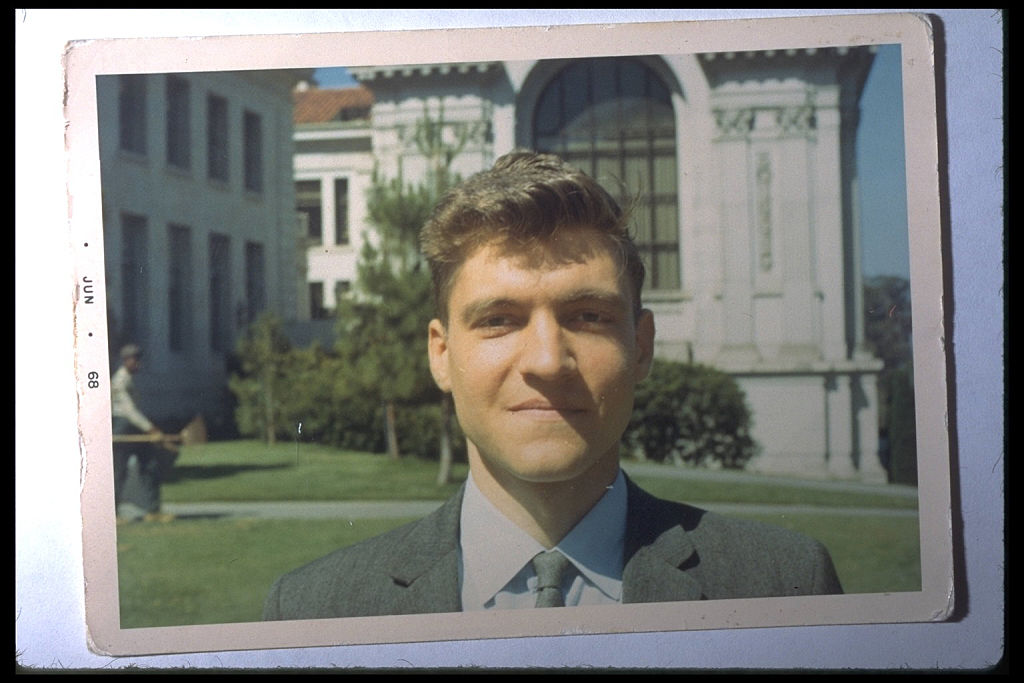
That promise quickly led to a rare professional opportunity. At just 25, he became the youngest assistant professor in the history of UC Berkeley.
Everything pointed toward a successful academic future. He had elite training, recognition from senior scholars, and a position at a major university while still in his mid-twenties.
Then, without warning, he left. On June 30, 1969, he abruptly resigned.
There was no public explanation and no long transition. Colleagues were stunned by the decision, and one later described it as “quite out of the blue,” adding that Kaczynski seemed “almost pathologically shy.”
By that point, he reportedly had no close friends and few real personal connections. The departure marked the end of a highly visible academic path and the beginning of a far more isolated life.
Retreat to Montana
After leaving Berkeley, Kaczynski returned briefly to Illinois. In 1971, he withdrew from conventional society and moved to a remote area near Lincoln, Montana.
There, he built a small cabin by hand. It had no electricity and no running water.
Inside were only the basics: a bed, a stove, a few chairs, and books. His stated goal was self-sufficiency.
He grew food, read extensively, and traveled into town by bicycle when necessary. From the outside, it could be seen as the life of a man rejecting modern convenience in favor of independence and wilderness.
Over time, however, the withdrawal took on a more hostile meaning. Kaczynski later described a 1983 moment as especially important, when he returned to an area he valued and found that a road had been cut through it.
He said, “It was from that point on I decided that, rather than trying to acquire further wilderness skills, I would work on getting back at the system.”
Even so, the movement toward violence had already begun before that point. The retreat into nature did not remain a private lifestyle choice. It became connected to a growing desire for retaliation.
The Beginning of Criminal Acts
By his own later account, Kaczynski had already been engaging in smaller acts of sabotage since 1975. These included arson and traps placed near developments.
He also immersed himself in philosophical writing, especially the work of Jacques Ellul. One book in particular,
The Technological Society
, became, in David Kaczynski’s words, his “Bible.”
His opposition to technology and modern industrial society grew into a fixed worldview. What followed was not sudden or chaotic, but deliberate and sustained over many years.
A Long Campaign of Violence
Between 1978 and 1995, Kaczynski carried out a bombing campaign that lasted nearly 17 years. During that period, 16 bombs were sent or delivered across the United States.
His targets were selected with care. He researched individuals and institutions in libraries and focused on people he believed were contributing to technological development and, in his view, to the destruction of the natural world.
The targets included universities, airlines, computer stores, and business executives. The attacks caused widespread fear and left lasting damage.
Three people were killed and 23 others were injured, many of them permanently. The first bomb in 1978 injured a university police officer in Chicago.
Another attack wounded a graduate student at Northwestern. In 1979, a bomb on American Airlines Flight 444 forced an emergency landing after smoke filled the cabin, and investigators later said the device could have destroyed the aircraft.
As the years went on, the attacks became more dangerous and the consequences more severe. The campaign drew national attention and remained unresolved for an extraordinarily long time.
The Investigation and the Manifesto
The FBI launched one of the largest investigations in its history in an effort to identify the person behind the attacks. The investigation lasted for years, involved hundreds of agents, and consumed millions of dollars.
Still, progress was limited. The devices were made from ordinary materials, fingerprints did not match existing records, and false clues were used to mislead investigators.
For nearly two decades, Kaczynski remained unidentified. That changed in 1995, when he made a demand that would alter the course of the case.
He said that if his 35,000-word manifesto were published, the attacks would stop. The text, titled
Industrial Society and Its Future
, set out his broad opposition to technology and modern social structures.
Authorities debated whether publication was the right decision. In the end, the manifesto was released.
Its publication did not end the story in the way originally expected. Instead, it provided the clue that finally broke the case open.
After reading the manifesto, David Kaczynski recognized patterns in the language and ideas. The writing sounded familiar to him, and he compared it with old letters.
He concluded that the voice behind the manifesto resembled his brother’s. After struggling with that realization, he contacted the FBI.
Specialists compared the texts and determined that the similarities were strong enough to justify decisive action. The investigation that had stalled for years suddenly had a direct path forward.
Arrest, Conviction, and Final Years
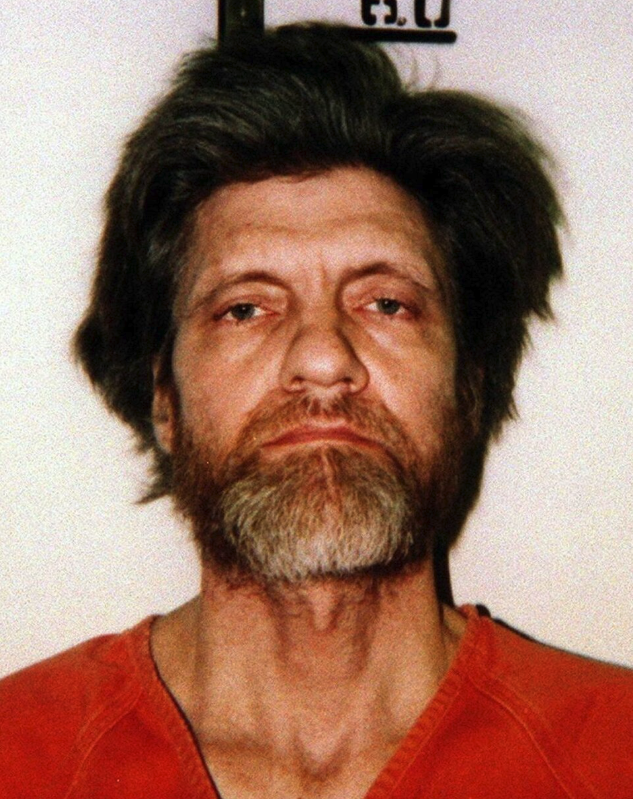
On April 3, 1996, federal agents went to Kaczynski’s cabin in Montana. Inside, they found bomb-making materials, a live device prepared for mailing, and more than 40,000 pages of handwritten journals documenting his crimes.
The journals described the attacks as experiments and recorded what he believed had succeeded or failed. One line from those writings stated, “My motive for doing what I am going to do is simply personal revenge.”
That material removed any remaining uncertainty about his role in the bombing campaign. The long search was over.
In 1998, Kaczynski pleaded guilty and was sentenced to life in prison without the possibility of parole. The case closed legally, but the questions surrounding his life never fully disappeared.
He had been a child marked by rare intellectual ability, a student propelled rapidly through elite institutions, a scholar praised at the highest levels, and then a man who withdrew from society and carried out a deadly campaign over many years.
Late in life, he was diagnosed with cancer and eventually refused treatment. Reports described him as “depressed.”
On June 10, 2023, he was found unresponsive in his prison cell. He was 81 years old.
The arc of his life remains one of the most disturbing contradictions in modern criminal history. A gifted child became a Harvard student, then a respected mathematician, then the man identified nationwide as the Unabomber.
His story continues to stand as a stark example of how extraordinary intelligence and visible promise do not necessarily prevent a life from moving toward isolation, resentment, and devastating violence.