
Cat’s Nightly Behavior Leads Owner to Discover a Serious Health Problem
How Luna’s Persistent Nighttime Warnings Helped Reveal the Truth
For nearly three months, Anna had been unable to sleep through the night. The cause did not appear to be noise from outside, stress at work, or a problem with her bedroom. Instead, her large gray cat, Luna, repeatedly woke her between three and four in the morning.
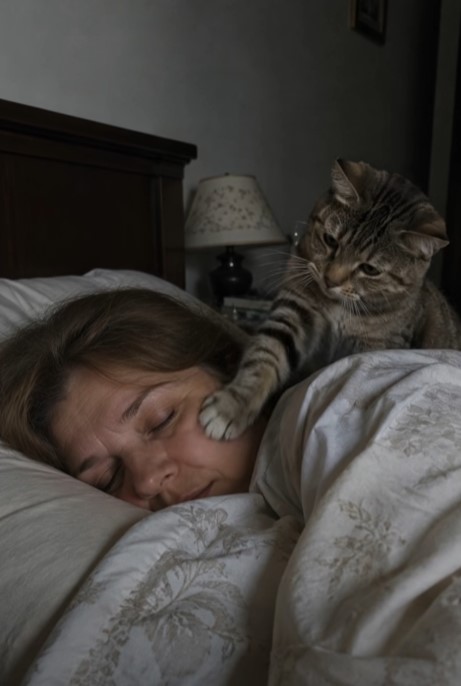
At first, Anna believed Luna had developed a behavioral problem. The cat had always been calm and affectionate, but her nighttime routine had suddenly changed. Every night, she would approach Anna’s face and gently touch her cheek with one paw.
If Anna did not respond, Luna became more persistent. She tapped harder, pulled at the blanket, and sometimes bit Anna’s hand. The behavior continued until Anna got out of bed and moved to the living room.
Once Anna settled on the couch, Luna stopped bothering her. The cat returned to the bedroom, climbed onto the empty bed, and slept on Anna’s pillow until morning.
Months of Exhaustion and Confusion
Anna could not understand why her cat wanted her out of the bedroom. The pattern was so consistent that it seemed deliberate. Luna did not ask for food, scratch at the door, or attempt to play.
The cat’s only apparent goal was to make Anna leave the bed. As soon as Anna moved to another room, Luna became quiet and relaxed.
The repeated interruptions gradually took a toll. Anna became increasingly tired and worried. She wondered whether Luna’s personality had changed or whether the cat was experiencing a mental or neurological problem.
Anna also considered the possibility that her own stress was making the situation feel worse. She consulted a therapist and was told that her poor sleep could be connected to emotional strain.
She was given a sedative, but the nightly episodes continued. Luna still woke her at almost the same time and refused to stop until Anna left the bedroom.
Eventually, Anna scheduled an appointment at a veterinary clinic. When she called, the concern in her voice was more noticeable than frustration. She did not sound angry with Luna. She sounded exhausted and afraid that something was wrong with the animal.
Luna Appeared Completely Healthy
Anna arrived at the clinic carrying Luna carefully inside a pet carrier. She was neatly dressed and appeared tense after weeks of interrupted sleep.
Luna, however, showed no obvious signs of distress. She was a large cat with thick gray fur, wide eyes, and a calm expression. She did not hiss, struggle, or behave aggressively.
During the examination, Luna’s heart rate appeared steady. Her breathing was clear, her weight was normal, and there were no immediate physical signs suggesting illness.
The examination created an important question. If Luna was healthy and calm during the day, why had she suddenly become so forceful at night?
Anna described the routine in detail. Luna first used a gentle paw, then increased the pressure if Anna did not wake. She might pull away the blanket or bite at Anna’s hand, but she stopped immediately after Anna moved to the couch.
The veterinarian began to consider whether Luna’s behavior was a reaction rather than the original problem. The cat might not have been trying to claim the bed or drive her owner away. She might have been responding to something happening while Anna slept.
Questions Shifted From the Cat to the Owner
Instead of focusing only on Luna, the veterinarian asked Anna how she felt during the nighttime incidents. Anna explained that she often woke with a pounding heart, a dry mouth, and a sensation that she could not get enough air.
She had assumed these symptoms were caused by blood pressure or anxiety. When they occurred, she placed a pill under her tongue and moved to the couch.
After resting in the living room for a while, she usually began to feel better. Because the improvement followed the move, Anna had never connected the episodes to her sleep or breathing.
The veterinarian then asked whether anyone had ever mentioned that Anna snored. Anna recalled that a neighbor had once heard unusual sounds at night.
The neighbor had noticed periods when Anna appeared to stop breathing, followed by sudden gasping. Until that moment, Anna had not considered the observation especially important.
That detail changed the direction of the conversation. Luna’s nightly behavior may have been connected to changes in Anna’s breathing, heartbeat, or movement during sleep.
The cat could not explain what she sensed, but she appeared to recognize that something was different. Her repeated attempts to touch Anna’s face and hands may have been her way of forcing a response.
A Warning That Could Not Be Ignored
The veterinarian was careful not to claim that Luna’s actions could be scientifically proven as a rescue attempt. However, the pattern suggested that the problem was unlikely to be a simple case of bad behavior.
Luna woke Anna at a similar time each night. Anna felt physically unwell when awakened. The symptoms eased after she changed position and moved to another sleeping area.
The veterinarian advised Anna to seek a medical evaluation. She was encouraged to begin with blood tests, including a check of her sugar levels, and to have her heart and nighttime breathing examined.
Anna initially struggled to accept the possibility. She had gone to the clinic expecting advice about her cat. Instead, she was being told that Luna might be reacting to a problem with Anna’s own health.
For months, Anna had interpreted the cat’s persistence as hostility or mental instability. The possibility that Luna was sounding an alarm gave the situation an entirely different meaning.
Anna agreed to arrange the recommended tests. She left the clinic with a healthy cat and a new reason to take her own symptoms seriously.
Medical Tests Reveal Multiple Concerns
One week later, Anna contacted the veterinarian again. This time, the exhaustion that had been present during the first call was less noticeable.
Anna said her blood tests had shown high blood sugar. She had also been referred to a cardiologist, who identified problems involving her heart.
Doctors further determined that Anna sometimes stopped breathing during the night. The findings were considered serious enough for additional examinations and continued medical care.
The results explained why Anna had been waking with a racing heart, dry mouth, and difficulty catching her breath. Those symptoms had not simply been caused by irritation, stress, or the cat’s behavior.
They were signs that something was happening while Anna slept. Luna’s interruptions had repeatedly brought Anna out of those episodes, even though neither the cat nor her owner understood the medical cause at the time.
Without Luna’s nightly persistence, Anna might have continued blaming the problem on stress. She had already accepted the idea that she was experiencing ordinary insomnia and had tried a sedative without improvement.
The cat’s behavior prevented the pattern from being ignored. Night after night, Luna continued waking Anna until she changed position and left the bed.
Treatment Changes the Nighttime Routine
After the medical findings, Anna began treatment. She was prescribed medication and received therapy intended to improve her sleep and address the problems identified during her examinations.
As her condition was managed, Anna began sleeping more comfortably. The frightening nighttime symptoms became less disruptive, and Luna’s behavior also changed.
The cat continued visiting Anna during the night, but she no longer struck her face, pulled away the blanket, or forced her out of the bedroom.
Instead, Luna simply lay beside her owner and purred softly. The animal that had appeared demanding and unpredictable returned to the calm behavior Anna remembered.
This change supported the belief that Luna’s earlier actions had been connected to Anna’s nighttime distress. When the episodes became less severe, the cat no longer needed to react with the same urgency.
A Misunderstood Act of Attention
Anna’s experience began with a common assumption: the animal displaying unusual behavior must be the one with the problem. Luna’s actions were disruptive, repetitive, and difficult to explain, so it seemed reasonable to suspect a behavioral disorder.
The veterinary examination showed that Luna was physically healthy. Careful questions about the timing of the behavior and Anna’s physical sensations revealed a much more serious possibility.
Luna had been closely watching her owner. When Anna’s breathing or physical state changed, the cat responded by touching her, biting her hand, and removing the blanket until she woke.
Moving to the couch may also have changed Anna’s sleeping position, allowing her to breathe more comfortably for a period. Luna then returned to the bedroom because the immediate disturbance had ended.
The cat could not diagnose high blood sugar, heart problems, or interrupted breathing. She could only react to changes she detected in the person she lived beside.
What Anna initially viewed as rejection may have been persistent concern. Luna did not want to take over the bed for the entire night. She wanted Anna to wake and move when something appeared wrong.
Listening to Unexpected Warning Signs
Changes in an animal’s behavior can have many explanations, and not every unusual action signals a medical emergency. In this case, however, the consistent timing and Anna’s physical symptoms made the pattern important.
The veterinary visit became valuable because the discussion went beyond the cat’s behavior. By asking what Anna experienced when Luna woke her, the veterinarian uncovered details that had previously been treated as unrelated.
Anna’s pounding heart, dry mouth, breathing difficulty, snoring, and episodes of gasping created a reason for further medical evaluation. The tests then revealed concerns that required treatment.
The outcome also changed Anna’s relationship with Luna. She no longer saw the cat as an aggressive alarm clock trying to remove her from the bedroom.
Instead, she understood that Luna had been responding to a frightening situation in the only way she knew. The cat used her paws, teeth, and persistence to make sure Anna opened her eyes.
Today, Anna is continuing her treatment and sleeping better. Luna remains close, but the desperate nighttime routine has ended.
The gray cat now rests beside her owner, offering quiet companionship rather than an urgent warning. What once appeared to be a troubling behavioral problem ultimately led Anna to discover that the more serious issue was not with Luna at all.