
Why No Human Remains Were Found Inside the Titanic Wreck
How Deep-Sea Scavengers and Ocean Chemistry Caused the Remains to Disappear
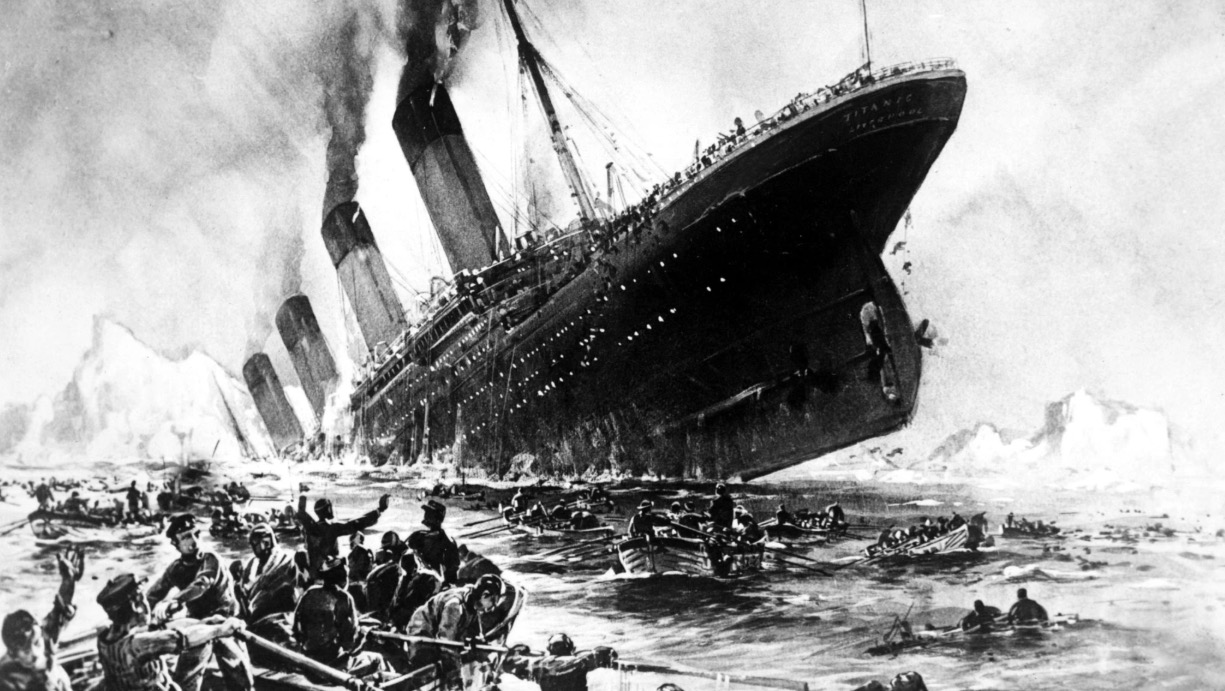
When the Titanic disappeared beneath the North Atlantic in April 1912, the disaster claimed the lives of more than 1,500 passengers and crew members. The enormous ocean liner became not only the site of one of history’s most remembered maritime tragedies, but also the final resting place of hundreds of people whose bodies were never recovered.
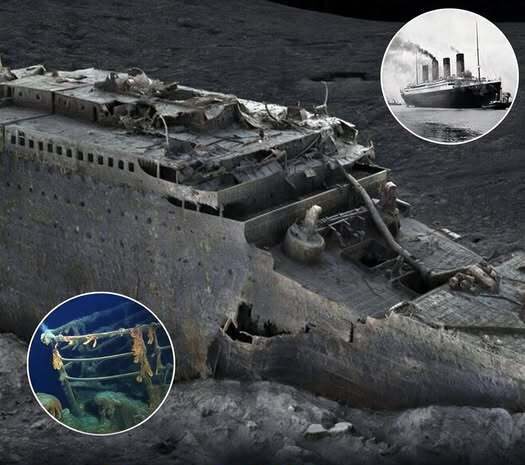
For more than seven decades, the ship remained hidden in the darkness of the deep ocean. Its location was finally discovered 73 years after the sinking, revealing a broken vessel surrounded by debris, luggage, clothing, shoes, and other personal possessions.
One expected sight, however, was completely absent. Explorers found no visible skeletons, skulls, or other recognizable human remains within the wreckage or across the surrounding seabed.
That absence has created a lasting mystery for many people. If so many victims went down with the ship, why did investigators find personal belongings but no bones?
The Titanic Became a Vast Underwater Disaster Site
The Titanic’s descent carried the ship to a depth of approximately 3,800 meters. At that level, the wreck entered an environment defined by intense pressure, near-total darkness, cold temperatures, active marine life, and unusual chemical conditions.
Many of the victims were never recovered after the sinking. Ships chartered by the White Star Line collected about 330 bodies during the weeks that followed, but more than 1,200 people remained unaccounted for.
Some victims may have been carried away from the sinking site by ocean currents. Others descended with portions of the vessel or settled among the enormous debris field created as the Titanic broke apart and struck the ocean floor.
Although the deep sea can preserve certain materials for long periods, it does not preserve everything equally. The Titanic wreck demonstrates how clothing, metal objects, ceramics, and treated leather may remain visible long after the human body has disappeared.
Marine Life Removed the Soft Tissue
The first stage in the disappearance of the victims involved the natural feeding activity of deep-sea scavengers. Fish, small marine animals, and microscopic organisms would have been drawn to organic material after the ship reached the seabed.
During the immediate weeks and months following the disaster, these organisms consumed the soft tissue. The process would have continued until little remained beyond the bones and materials that scavengers could not easily digest.
This activity is not unusual in the ocean. Organic matter becomes part of a natural recycling system in which living creatures break it down and return its nutrients to the surrounding environment.
The Titanic’s great depth did not prevent that process. Even in a cold and lightless environment, the ocean floor supports organisms capable of feeding upon material that falls from the waters above.
Once the soft tissue was gone, skeletal remains may have temporarily remained around the wreck. However, the ocean chemistry at the Titanic’s location created another destructive process that continued over many years.
Why the Bones Eventually Disappeared
The Titanic rests in water that is undersaturated with calcium carbonate. This means the surrounding water does not contain enough of the mineral needed to keep calcium-based structures stable over very long periods.
Human bones contain large amounts of calcium. When exposed to the chemical conditions found at the Titanic’s depth, skeletal material gradually begins to weaken and dissolve.
This process is associated with the Calcium Carbonate Compensation Depth, commonly known as the CCD. Beneath this chemical boundary, calcium-rich remains do not survive as they might in shallower or chemically different waters.
The water at extreme depth slowly draws away the minerals contained in bone. The process is not immediate, but over decades it can remove the physical remains that might otherwise have been discovered by later expeditions.
By the time explorers reached the Titanic in 1985, more than seven decades had passed since the disaster. That interval gave marine scavengers and deep-ocean chemistry enough time to erase recognizable traces of the victims.
The absence of skeletons therefore does not mean that bodies were never present. It reflects the long-term effect of biology, pressure, time, and water chemistry operating together on the seabed.

Why Shoes and Clothing Could Remain
Although bones disappeared, expeditions have documented pairs of shoes and boots resting together in the sediment. Their placement has often been interpreted as evidence that a person once lay in that exact location.
“We’ve seen clothing. We’ve seen pairs of shoes, which would strongly suggest there was a body there at one point,” director James Cameron told the New York Times following his 33rd dive to the site.
The position of two shoes beside one another can preserve the outline of a human presence even when the body itself is no longer visible. As the surrounding tissue and bones vanished, the footwear remained where it had settled.
Many shoes from that era were manufactured from tanned leather. The treatment used to produce leather made it more resistant to the deep-sea environment than untreated human tissue or calcium-rich bone.
This difference in preservation explains one of the wreck’s most haunting sights. Personal items survived not because the conditions were gentle, but because their materials reacted differently to the same environment.
Clothing has also been observed during expeditions. Fabric may survive in protected areas, beneath objects, or in conditions that slow its deterioration, even though much of it eventually breaks apart.
These possessions offer silent indications of the people who once carried or wore them. A pair of boots, an item of clothing, or a piece of luggage can mark a location where a passenger or crew member may have come to rest.
More Than 1,200 Victims Were Never Recovered
The scale of the loss helps explain why the Titanic continues to be viewed as a grave site. Although approximately 330 bodies were recovered in the weeks after the sinking, the majority of those who died were never returned to their families.
The North Atlantic became the final resting place for more than 1,200 missing victims. Some were likely separated from the wreck, while others may have remained inside enclosed sections of the ship or among scattered debris.
The Titanic broke apart during its descent, creating a wide underwater field of wreckage. Objects were distributed across the ocean floor rather than remaining inside one intact structure.
Even if skeletal remains survived temporarily, they would not necessarily have remained neatly contained within passenger cabins or corridors. Currents, collapsing structures, marine activity, and the movement of debris could have shifted them over time.
As the years passed, the same conditions that destroyed the bodies also continued to change the ship. Metal weakened, wooden materials disappeared, and sections of the wreck gradually collapsed.
Expeditions Confirmed the Absence of Skeletons
High-technology expeditions led by explorers including Robert Ballard and James Cameron have studied the Titanic and its surrounding debris field. Their dives documented the ship’s bow, stern, interior spaces, and the personal belongings scattered across the bottom.
Despite repeated investigations, no recognizable skeletal remains have been confirmed on the vessel. The consistent absence supports the explanation that the bodies were naturally consumed and the bones later dissolved.
The wreck has been explored with cameras, remotely operated equipment, and crewed submersibles. These missions have provided detailed views of areas that had remained completely inaccessible since 1912.
What they revealed was not a seabed filled with visible remains. Instead, explorers encountered a silent landscape in which human presence was represented indirectly through shoes, clothing, luggage, dishes, and other everyday objects.
Those objects can feel especially powerful because they once belonged to real passengers and crew members. Their survival creates a direct connection to individual lives without displaying the physical remains of the victims themselves.

The Wreck Continues to Change
The Titanic is not frozen in time. Its hull continues to deteriorate as the ocean acts upon the metal, and portions of the structure have gradually weakened since the wreck was first located.
As the ship decays, recognizable rooms and features may collapse into the surrounding debris. The process slowly changes the appearance of the site and further blends the vessel with the seabed.
The passengers and crew have already undergone that transformation on a biological level. Their remains became part of the marine environment long before modern explorers reached the wreck.
Only durable possessions were left to indicate where some of them may once have rested. These objects now carry much of the emotional weight associated with the site.
A Memorial Defined by What Is Missing
The lack of human remains does not reduce the Titanic’s importance as a memorial. Instead, the empty spaces and abandoned belongings make the tragedy feel even more solemn.
The wreck represents the lives of more than 1,500 people lost during a single night. Their physical remains may have vanished, but the circumstances of their deaths and the scale of the disaster remain deeply connected to the ship.
Rows of shoes resting in the silt provide one of the clearest reminders that the debris field was once occupied by people. They reveal the former presence of victims without showing the victims themselves.
The ocean’s ability to erase bone while preserving selected personal objects illustrates the enormous power of the natural environment. Materials that appear permanent on land can behave very differently under thousands of meters of seawater.
Biological scavengers removed the soft tissue, while calcium-poor water gradually dissolved the bones. Over 73 years, those forces left behind a wreck filled with objects but almost no direct physical trace of the passengers and crew.
The Titanic therefore remains a grave site in historical and emotional terms, even though no visible skeletons have been found. Its decks, cabins, and debris field continue to serve as a silent memorial to those who never returned.
As the hull slowly disappears, the tragedy will increasingly be remembered through surviving records, recovered objects, and the scattered possessions still resting in the deep Atlantic.
The mystery of the missing remains has a scientific explanation, but that knowledge does not make the site less haunting. The ocean reclaimed the victims completely, leaving only the ship and their belongings as faint echoes of the disaster.
The Titanic’s final landscape is defined as much by absence as by survival. No skeletons remain, yet every pair of shoes and every abandoned personal object stands as evidence of a life that ended there more than a century ago.