
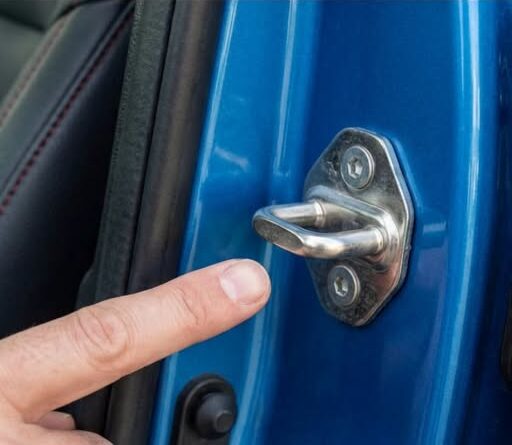
That Small Metal Loop in Your Car Door Has a Much More Important Job Than Most Drivers Realize
The Tiny Door Part Most People Never Think About
It is one of those pieces of a car that almost disappears into the background.
You may have bumped your elbow against it, caught a bag on it, or simply wondered why a cold metal loop was sticking out of the door frame in the first place.
At a glance, it can look like a simple hook or an awkward piece of hardware that exists only to annoy anyone reaching into the vehicle.
In reality, that small metal loop plays a much more important role.
It is commonly known as the door striker, and its job goes far beyond giving the door latch something to grab.
The Striker Is Part of the Door-Locking System
Every time a car door closes properly, the latch inside the door engages with the striker mounted on the body of the vehicle.
The two pieces work together.
The latch clamps onto the striker, holding the door tightly against the surrounding frame.
This is what keeps the door from simply swinging open as the vehicle moves.
It sounds like a basic function, but the importance of that connection becomes much clearer when the vehicle is placed under stress.
The Door Becomes Part of the Vehicle’s Structure
When the latch is firmly engaged around the striker, the door is not merely hanging from its hinges.
It becomes more securely connected to the rest of the body.
That connection helps the door remain aligned with the surrounding structure instead of moving independently.
During normal driving, this keeps the vehicle feeling solid.
During an impact, the same connection can become even more important.
Why Door Alignment Matters in a Crash
A vehicle cabin is designed to act as a protective space around the people inside it.
Doors are part of that protective structure.
If a door remains properly latched during a collision, it can continue contributing to the overall integrity of the passenger compartment.
The striker helps make that possible by giving the latch a strong, fixed point on the vehicle body.
Without that secure connection, the door could become a much weaker part of the surrounding structure.
Side Impacts Put Enormous Stress on Doors
In a side collision, the door is often very close to the people inside the vehicle.
There is less space between the outside impact and the passenger compartment than there is at the front or rear of many vehicles.
That makes a properly secured door particularly important.
The latch and striker help keep the door connected to the body while other structural components absorb and distribute forces.
The small metal loop therefore participates in a much larger system than its size might suggest.
Rollovers Can Test the Door System Even Further
During a rollover, the direction of force can change repeatedly.
The vehicle may strike the ground from different angles while the doors experience unusual loads.
A strong latch-to-striker connection helps the doors remain where they are supposed to be.
That matters because the passenger compartment works best when its major openings remain controlled rather than unexpectedly opening during violent movement.
The striker quietly contributes to that stability every time the door is properly closed.
Keeping the Door Closed Helps Preserve the Cabin
The importance of a car door is easy to underestimate because most people think of it primarily as an entrance.
But once closed, it becomes part of the boundary separating occupants from the outside environment.
A door that stays securely attached can help maintain the shape and enclosure of the cabin.
The striker is one of the small pieces that helps make that enclosure reliable.
It Also Matters During Completely Normal Driving
The striker is not only useful in emergencies.
It works constantly during everyday use.
One of its less dramatic but highly noticeable jobs is helping the door sit in the correct position when closed.
A properly aligned door allows weather seals to make consistent contact around the opening.
That helps keep wind, water, and outside noise from entering the cabin.
A Misaligned Door Can Quickly Become Annoying
If the striker or latch alignment is incorrect, a driver may notice problems long before understanding where they come from.
The door may require unusual force to close.
It might rattle over rough roads.
Wind noise can become more noticeable.
The seals may not press evenly against the frame.
A small alignment issue can therefore make an otherwise solid vehicle feel loose or poorly assembled.
That Familiar Solid “Click” Depends on Proper Engagement
Drivers often judge a vehicle’s build quality by how the doors feel when they close.
A smooth motion followed by a firm click gives the impression of strength and precision.
That sensation depends partly on the relationship between the latch and striker.
The latch must meet the striker at the correct position and secure itself without excessive resistance.
When everything is aligned, the closing action can feel almost effortless.
The Striker Helps Prevent Door Movement
Road surfaces constantly transmit vibration through a vehicle.
Without a secure connection, a door could shift or shake against the opening.
The striker helps hold the closed door in its intended position.
That reduces unnecessary movement and can contribute to a quieter cabin.
It is another reason a part that seems so simple can influence how refined a vehicle feels.
Its Construction Is Deliberately Strong
The striker may look like nothing more than bent metal, but it is designed to handle repeated use.
Every door opening and closing places the latch against it.
Over years of ownership, that can happen thousands of times.
The part must remain strong enough to provide a consistent anchor while resisting wear from daily operation.
Its basic appearance hides the fact that it performs a highly specific mechanical role.
Why It Is Mounted to the Vehicle Body
The striker is attached to the rigid part of the vehicle surrounding the door opening.
This gives the latch a stable point to secure against.
The hinges support one side of the door, while the latch and striker secure the other.
Together, those points control the door’s position.
This arrangement allows the door to swing freely when opened while becoming firmly connected when closed.
Its Location Makes It Convenient for Other Uses
Because the striker is strong and positioned in an accessible place, people have found other practical ways to use it.
Some accessories are designed to fit onto the striker and turn it temporarily into a step.
That can make it easier to reach a roof rack or cargo box.
Other accessories use the same area as a supportive handhold for entering or exiting the vehicle.
These products take advantage of the striker’s strength and convenient placement.
Portable Door Steps Became a Clever Example
A portable vehicle step can attach to the striker and provide a small platform outside the door opening.
This gives users extra height when loading equipment onto the roof.
The idea is simple.
Instead of adding a permanent ladder or step to the vehicle, the accessory uses an existing strong point that is already built into the body.
Once finished, the step can be removed and stored.
Mobility Handles Can Use the Same Area
Some people also use specially designed support handles that connect around the striker area.
These can provide an additional grip when getting into or out of a vehicle.
For someone who has difficulty rising from a seat, a stable handhold near the door opening can be useful.
Again, the concept depends on the fact that the striker is more substantial than it first appears.
Strength Does Not Mean It Should Be Used for Everything
The striker is strong, but that does not make it an all-purpose hook.
It was designed primarily for the vehicle’s door-latching system.
Improvised uses can place forces on it in directions or amounts that were not intended.
Hanging very heavy objects from it or repeatedly using it as a general-purpose anchor may not be a good idea.
Its durability should not be confused with unlimited capacity.
It Is Not a Clothes Hanger
Because of its shape, the striker can tempt people to hang bags, clothes, cables, or other objects from it.
Light temporary use may seem harmless, but turning it into a permanent storage hook can interfere with the area around the door.
Objects can become trapped when the door closes or create unnecessary stress on the hardware.
The part works best when it is left clean and unobstructed.
It Is Definitely Not a Gym Bar
Its sturdy appearance can also encourage people to pull on it, hang from it, or test how much weight it can support.
That misses the purpose of the component.
The striker is engineered to work with the door latch, not to function as exercise equipment.
Applying unnecessary forces can potentially affect alignment or damage surrounding hardware.
There is little reason to test a safety-related component just because it looks strong.
Keeping It Clean Can Help the Mechanism Work Smoothly
Because the striker is exposed whenever the door opens, dirt and grime can collect around it.
Road dust, mud, grease, and debris can accumulate over time.
Keeping the area reasonably clean makes it easier to notice unusual wear or damage.
It also helps prevent debris from interfering with the latch area.
A quick visual check during routine cleaning is usually enough to notice whether anything looks unusual.
Wear Can Reveal an Alignment Problem
If the latch is repeatedly contacting the striker incorrectly, visible wear may develop.
Scraping, unusual marks, or difficulty closing the door can suggest that the alignment has changed.
That does not necessarily mean the striker itself has failed.
The door hinges, surrounding structure, or latch position may also affect how the pieces meet.
But unusual wear should not simply be ignored if the door no longer closes normally.
Door Sag Can Change How the Striker Is Used
Over time, a heavy vehicle door may begin to sit slightly differently because of wear in the hinge area or other alignment changes.
If that happens, the latch may no longer meet the striker exactly where intended.
The driver might notice that the door needs to be lifted, slammed, or pushed harder than before.
Those symptoms can be signs that something in the door system needs attention.
Rattling Is Another Clue
A door that rattles while driving can sometimes indicate that it is not being held firmly enough in the closed position.
Because the striker helps control that position, its relationship with the latch is worth considering.
A loose-feeling door can also affect weather sealing and noise.
What begins as a small annoyance may therefore point toward a larger alignment issue.
Wind Noise Can Be Connected to Door Position
When a door sits correctly, the surrounding seals are compressed evenly.
If alignment changes, air may find a path through areas where the seal is no longer making proper contact.
The result can be whistling or rushing sounds at higher speeds.
Drivers often assume the rubber seal itself is the only possible cause.
Sometimes the way the door is sitting in the opening is equally important.
The Striker Is Easy to Ignore Because It Usually Works
Many of the most important mechanical parts in a vehicle receive little attention precisely because they perform their jobs quietly.
The striker does not light up.
It does not require the driver to press a button.
There is no display showing its status.
It simply waits inside the door frame until the latch closes around it.
When it works correctly, there is almost no reason to notice it.
Its Simplicity Is Part of Its Effectiveness
The design is straightforward.
A strong fixed anchor meets a mechanical latch.
The door closes.
The latch captures the striker.
The two components hold the door securely in place until the handle releases the mechanism.
It is a simple idea that has enormous practical value.
Modern Vehicles Depend on Many Small Components Working Together
No single piece of hardware creates vehicle safety on its own.
Doors, hinges, latches, strikers, pillars, seats, restraints, and other components all contribute to the passenger compartment.
The striker should therefore be understood as one part of a coordinated system.
Its importance comes from how it interacts with everything around it.
A Tiny Part Can Carry a Serious Responsibility
The contrast is what makes the striker interesting.
It is small enough to be overlooked.
It is simple enough to look unimportant.
Yet it helps determine whether the door closes correctly, stays aligned, seals properly, and remains connected to the body when forces increase.
That is a considerable responsibility for a piece of metal many drivers never think about.
It Helps Keep the Cabin Feeling Solid
In ordinary life, drivers are more likely to notice comfort benefits than crash-related ones.
A properly secured door does not shake or buzz unnecessarily.
It closes with confidence.
The weather seals do their job.
Wind remains outside.
The cabin feels quieter and more substantial.
The striker contributes quietly to all of those everyday details.
And When Things Go Wrong, Its Role Becomes More Serious
During a side impact or rollover, the importance of keeping major body openings controlled becomes much more obvious.
The door system is subjected to forces far beyond anything encountered during normal driving.
A properly engaged latch and striker connection helps the door remain part of the surrounding structure instead of becoming an uncontrolled weak point.
That is why this small component deserves more respect than its appearance suggests.
One Glance at Your Door Frame Tells a Bigger Story
The next time you open your vehicle door, take a moment to notice the small metal striker mounted in the frame.
It may look ordinary.
It may even be the same part you have bumped into countless times without knowing its name.
But every time the door closes, that little piece is doing several jobs at once.
It gives the latch a secure anchor.
It helps keep the door aligned.
It supports proper sealing.
And under severe conditions, it contributes to keeping the door connected to the vehicle’s body.
A Small Piece of Metal With a Much Bigger Purpose
The door striker is a perfect example of how automotive design often hides important functions inside ordinary-looking parts.
Most drivers will never need to think about it during an emergency.
That is exactly how it should be.
Its job is to remain quiet, strong, and dependable while thousands of miles pass beneath the tires.
Treat it gently, avoid turning it into an improvised heavy-duty hook, and pay attention if the door begins closing or aligning differently.
That cold little loop in the frame may look like one of the least interesting parts of the vehicle.
But every time the latch closes around it, it is helping your door behave like part of the car rather than just a panel hanging from hinges.
And in the moments when strength matters most, that simple connection can become far more important than most drivers ever realize.