
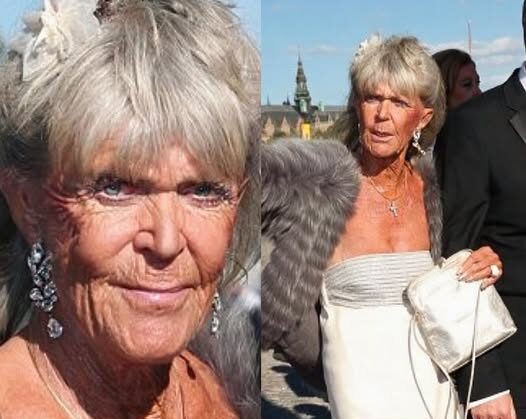
Princess Birgitta of Sweden Lived by Her Own Rules While Remaining One of Europe’s Most Unconventional Royals
A Royal Life That Never Fit the Usual Mold
Princess Birgitta of Sweden spent much of her life balancing two worlds.
On one side stood royal tradition, inherited status, public duty, and the expectations that came with belonging to one of Europe’s most prominent royal families.
On the other stood something much more personal.
Freedom.
Independence.
And a determination to build a life that reflected her own personality rather than simply following the path expected of her.
She Was the Older Sister of Sweden’s King
Birgitta was the second child of Prince Gustaf Adolf and Princess Sibylla.
She was also the older sister of King Carl XVI Gustaf, who later became Sweden’s reigning monarch.
From birth, she belonged to a world of extraordinary privilege and public attention.
Yet her life would eventually look very different from the formal image many people associate with royalty.
She Grew Up as One of the Famous “Haga Princesses”
Birgitta and her sisters became widely known to the Swedish public as the “Haga Princesses.”
The nickname connected them closely with Haga Palace, where they spent part of their childhood.
For the public, the princesses represented a recognizable royal generation.
They were photographed, followed, and discussed from an early age.
But Birgitta would later show that being born into such a visible family did not mean she intended to spend her entire life defined by ceremony.
Royal Protocol Never Completely Defined Her
Even while surrounded by titles and tradition, Birgitta developed a reputation for independence.
She did not seem interested in building a life that revolved entirely around palace responsibilities.
Instead, she pursued education and physical activity.
That path alone set her apart from the stereotype of a princess expected to remain primarily within a ceremonial role.
She Studied Movement Sciences
Birgitta completed studies connected to movement sciences.
The choice reflected her strong interest in sport and physical training.
Rather than treating education as merely another expected step in royal life, she turned that interest into practical work.
She became a gymnastics teacher.
A Princess Who Worked as a Gymnastics Instructor
The idea of a royal princess working as a regular gymnastics instructor challenged traditional expectations.
Birgitta was not simply attending athletic events as an honorary guest.
She had training of her own.
She taught.
She worked in an area that required discipline, physical knowledge, and direct contact with ordinary people outside palace life.
Sport Was a Serious Part of Her Identity
Birgitta’s interest in athletics went well beyond casual recreation.
She became a decorated athlete.
She was also a national fencing champion.
That achievement reinforced the image of a princess whose identity included competition, physical strength, and personal ambition.
Fencing Required a Different Kind of Royal Discipline
The sport demanded precision.
It demanded patience.
It required speed, control, and confidence.
Those qualities suited someone who would later become known for living independently and resisting the idea that royal life needed to follow a single approved model.
Her Marriage Preserved Her Royal Status
In 1961, Birgitta married German Prince Johann Georg of Hohenzollern.
The marriage was important not only personally but also in terms of royal tradition.
Because she married within royalty, she remained the only one of her sisters to retain her official Royal Highness status.
That distinction gave her a unique position within the family.
She Remained Royal Without Living a Conventional Royal Life
Birgitta’s title remained.
Her connection to the Swedish royal family remained.
Her place in European aristocracy remained.
But over time, the way she actually lived became increasingly independent.
She demonstrated that maintaining royal status did not necessarily require living continuously within the formal structures normally associated with it.
By the 1990s, Her Life Took Another Major Turn
Birgitta and Johann Georg eventually separated amicably.
Instead of returning to a more traditional royal setting, she made a dramatically different choice.
She moved permanently to Mallorca, Spain.
The Mediterranean island would become her home for more than three decades.
Mallorca Offered a Different Kind of Life
The move represented much more than a change of address.
It placed Birgitta far from the colder climate and formal atmosphere associated with Scandinavian court life.
In Mallorca, she could live according to a more relaxed rhythm.
She spent much of her time enjoying the sunshine, playing golf, and participating in community and charity activities.
Golf Became One of Her Great Passions
Sport remained central to Birgitta long after her fencing years.
In Mallorca, golf became a defining part of her life.
She played regularly.
She also became involved in organizing charity golf tournaments.
The activity combined competition, social connection, and fundraising.
Her Life in Spain Was Deliberately Independent
Birgitta did not abandon her royal identity.
But she also did not allow that identity to dictate every detail of her daily life.
She built routines far away from Sweden.
She formed a public image that was less formal than many other members of royal families.
And she spent decades living in a place she had chosen for herself.
She Still Returned for Major Royal Occasions
Birgitta’s independence did not mean cutting herself off from her family.
She continued to appear at important royal gatherings.
Weddings and major family events brought her back into the public eye.
Whenever she returned, she often attracted considerable attention.
Her Presence Was Difficult to Ignore
Birgitta was remembered as warm, direct, and colorful.
She did not disappear quietly into the background simply because she had spent years outside Sweden.
Her personality remained strong.
Her appearances carried the energy of someone who had experienced royal life but had never allowed it to suppress her individuality.
King Carl XVI Gustaf Remembered Her as “Outspoken and Colorful”
Her brother’s description captured much of what made Birgitta distinctive.
She was not known for presenting a distant or overly controlled public image.
She spoke directly.
She had a strong personality.
And she developed a reputation for living without excessive concern about whether every choice fit traditional royal expectations.
That Personality Made Her Stand Out Among European Royals
Royal families are often associated with restraint.
Public statements are carefully considered.
Appearances are planned.
Behavior is frequently shaped by centuries of protocol.
Birgitta’s life suggested a more flexible possibility.
She Did Not Need to Reject Royalty to Reject Some of Its Constraints
Birgitta remained a princess.
She retained her title.
She remained connected to Sweden’s royal family.
Yet she also built a life outside the conventional royal center.
That balance made her unusual.
Her Story Was Not About Abandoning Tradition Completely
She understood the family and institution into which she had been born.
She participated in important royal moments.
She maintained her position.
But she refused to treat tradition as a complete blueprint for her personal life.
That Was Especially Significant for a Woman of Her Generation
Birgitta was born into a period when expectations surrounding royal women were particularly structured.
Marriage, public appearances, family responsibility, and social position often defined the available path.
Choosing education, professional work, competitive sport, separation, and an independent life abroad created a noticeably different story.
Her Early Career Showed That Independence Before Mallorca
It would be easy to see her relocation to Spain as the moment she became unconventional.
But the pattern began much earlier.
Her decision to study movement sciences already reflected personal direction.
Her work as a gymnastics instructor strengthened that independence.
Her fencing success demonstrated personal ambition beyond royal ceremony.
She Was Never Defined Only by Her Family Name
Being the sister of a king would have been enough to make Birgitta famous.
Yet her own life produced a separate identity.
She became known for sport.
She became known for Mallorca.
She became known for speaking and behaving with a degree of freedom that many people did not necessarily expect from a princess.
Her Marriage Connected Two Royal Houses
Her 1961 marriage to Prince Johann Georg of Hohenzollern placed her within another prominent European royal lineage.
That union reinforced her formal position.
Because the marriage remained within royalty, Birgitta retained the style of Royal Highness.
That was not the case for her sisters in the same way.
Yet Her Personal Life Eventually Moved Away From Formal Expectations
The couple’s later separation did not result in Birgitta retreating from public life.
Instead, she created a stable and independent life in Spain.
The decision reflected her willingness to acknowledge that personal happiness did not always align with the original structure of royal marriage.
She Chose Mallorca and Stayed There
This was not a temporary escape.
It became her permanent home.
More than 30 years of her life were spent on the island.
That length of time shows how deeply the move reflected her own preferences rather than a passing change.
The Mediterranean Lifestyle Suited Her
The sunshine.
The golf courses.
The social life.
The distance from the constant formality of court.
All of it offered Birgitta a way of living that seemed better matched to her personality.
She Could Still Be a Princess Without Living in a Palace
That may be one of the strongest themes running through her story.
Her title did not disappear when she moved.
Her family did not disappear.
Her history did not disappear.
But the daily structure surrounding those things changed completely.
Her Life Offered a Different Model of Royal Identity
Royalty is often portrayed as a choice between absolute duty and complete rejection.
Birgitta’s experience suggested another possibility.
A person could remain connected to tradition while still carving out substantial personal freedom.
She Did Not Need to Sit at the Center of Court Life to Remain Relevant
Decades in Spain did not erase public interest in her.
When she returned to Sweden for major occasions, people noticed.
Her distance may even have strengthened the distinctive quality of her appearances.
She represented a familiar member of the royal family who had chosen a visibly different path.
Her Warmth Helped Shape the Way People Remembered Her
Birgitta was not only remembered for independence.
She was also remembered for personality.
The description “outspoken and colorful” suggests someone who brought energy into a world often associated with restraint.
That combination helped make her memorable.
She Showed That Royal Women Could Have Individual Lives
For generations, royal women were often expected to fit themselves carefully around dynastic responsibilities.
Birgitta’s life did not follow that pattern perfectly.
She built professional interests.
She competed in sport.
She relocated abroad.
She separated from her husband and continued living independently.
None of Those Choices Removed Her Royal Identity
That is what made her example so unusual.
She did not have to stop being Princess Birgitta in order to become simply Birgitta as well.
The two identities existed together.
Sport Remained One of the Clearest Symbols of Her Independence
Gymnastics, fencing, and later golf all required active participation.
They were not ceremonial interests.
They involved training, movement, competition, and discipline.
That practical, physical side of her personality contrasted strongly with traditional images of royal life.
Her Charity Golf Activities Added Another Dimension
Birgitta’s time on the golf course was not always purely recreational.
She also organized charity tournaments.
That allowed her to combine personal enjoyment with causes and community activity.
Even outside Sweden, her royal profile could still be used in a way that benefited others.
Distance Did Not Mean Disinterest
Living in Mallorca did not mean Birgitta stopped caring about her family or Sweden.
She continued returning when major events required her presence.
Her life simply placed a greater boundary between formal royal responsibilities and personal everyday existence.
That Boundary May Have Been Central to Her Happiness
Many people born into public families struggle with the difference between identity and obligation.
Birgitta’s solution appeared to be physical as well as emotional.
By living away from the royal center, she created space for herself.
Her Story Resonates Because Royal Life Is Often Seen as Restrictive
The glamour of monarchy can obscure the expectations placed on those born into it.
Public appearances.
Family responsibilities.
Tradition.
Protocol.
Constant observation.
Birgitta Demonstrated That Personal Freedom Could Still Exist
She did not rewrite the institution of monarchy.
She did not need to.
Instead, she rewrote the practical shape of her own life.
That Choice Became More Powerful Over Time
A temporary act of independence can be dismissed as rebellion.
More than three decades of independent life cannot.
Birgitta’s years in Mallorca became proof that her choices were deliberate and lasting.
She Built a Life That Reflected Her Own Priorities
Sunshine mattered.
Sport mattered.
Friendship mattered.
Personal freedom mattered.
Royal identity remained part of the picture, but it was no longer the entire frame.
That Is Why Her Life Felt Unusual Without Being a Complete Break From Tradition
Birgitta did not reject her family.
She did not discard her title.
She did not disappear from major royal occasions.
Instead, she demonstrated that participation and independence could exist together.
Her Brother’s Tribute Captured That Complexity
Calling Birgitta “outspoken and colorful” was not simply a comment on personality.
It reflected the broader way she had lived.
She had been visible.
She had made unconventional choices.
And she had rarely allowed those choices to be hidden behind excessive formality.
Her Life Also Shows How Different Members of the Same Royal Family Can Be
King Carl XVI Gustaf’s role required continuity, ceremony, and public responsibility at the highest level.
Birgitta’s position allowed greater flexibility.
She used that flexibility extensively.
Her story became a contrast within the same family between constitutional duty and personal autonomy.
She Took Advantage of the Freedom Available to Her
Rather than simply enjoying the privileges of being royal, Birgitta actively made choices about how she wanted to live.
That distinction matters.
Independence is not only about having options.
It is about using them.
Her Move to Mallorca Was Perhaps the Clearest Example
Remaining in Sweden would have been easy to explain.
Moving permanently to Spain required a more personal justification.
Birgitta chose the life that suited her.
Then she stayed with that choice for decades.
Her Later Years Reflected Continuity More Than Reinvention
The athletic princess became the golf-loving princess.
The young woman who had pursued movement sciences became the older royal who still valued an active lifestyle.
The same independence appeared in different forms throughout her life.
She Never Seemed Interested in Becoming a Symbol of Rebellion
There is an important difference between living independently and deliberately trying to shock people.
Birgitta’s choices appear to have been primarily about building the life she wanted.
The fact that those choices challenged expectations was secondary.
That May Be Why Her Story Feels So Enduring
She was not simply rejecting something.
She was choosing something.
A profession.
A sport.
A place to live.
A way of moving through the world.
Her Example Expanded the Idea of What Royalty Could Look Like
A princess did not necessarily need to spend every day inside a palace.
She could teach gymnastics.
She could compete in fencing.
She could move to an island.
She could spend decades playing golf.
She could remain royal while refusing to be defined entirely by royalty.
The Public Continued to Recognize Her Because She Remained Herself
Titles create recognition.
Personality creates memory.
Birgitta had both.
Her connection to the Swedish throne made her significant.
Her independence made her distinctive.
Her Life Was a Reminder That Lineage Does Not Have to Determine Every Choice
Birth defines where a royal begins.
It does not necessarily define every decision that follows.
Birgitta’s life became a long demonstration of that principle.
She Carried Tradition Without Allowing It to Become a Cage
That balance was perhaps her greatest achievement.
She could honor her background while still pursuing personal happiness.
She could remain part of the monarchy without making court life the center of her existence.
For Many People, That Is Why Her Story Matters
Royal lives are often discussed in terms of obligation.
Birgitta introduced another idea.
Choice.
Her life showed that inherited expectations and personal freedom do not always have to exist in direct conflict.
She Built a Life Beyond the Palace Walls
From Haga Palace to sports halls, fencing competitions, royal ceremonies, golf courses, and the island of Mallorca, Birgitta’s life moved through dramatically different settings.
Each stage revealed another part of her character.
She Was Born a Princess but Refused to Be Only a Princess
She was a daughter.
A sister.
An athlete.
A teacher.
A wife.
A golfer.
A charity organizer.
And for more than three decades, an independent woman who had chosen Spain as home.
Her Royal Title Remained, but Her Life Was Her Own
That is the lasting contradiction that made Princess Birgitta so compelling.
She belonged to one of Europe’s most traditional institutions while living with a degree of independence rarely associated with royal life.
She retained the formal style of Royal Highness while building a daily existence far removed from palace routine.
Her Story Was Ultimately About Personal Courage
It takes confidence to live differently when millions of people know who you are.
It takes even more confidence when your family represents tradition itself.
Birgitta repeatedly made choices that reflected her own priorities.
She Left Behind a Different Kind of Royal Legacy
Not every royal legacy is defined by constitutional responsibility or major state occasions.
Some are defined by personality.
By independence.
By the willingness to create a life outside inherited expectations.
Princess Birgitta Showed That Royalty and Freedom Could Coexist
Her life began at Haga Palace.
It eventually settled under the sun of Mallorca.
Between those two places came education, sport, marriage, family, public appearances, separation, charity work, and decades of personal independence.
Through it all, she remained recognizably herself.
That May Be the Most Memorable Part of Her Story
Birgitta never needed to abandon her heritage in order to claim her freedom.
She carried both.
She remained part of Swedish royalty while choosing a life that reflected her own interests, temperament, and priorities.
In doing so, she offered a rare example of how tradition can remain part of a person’s identity without controlling every part of their future.