
The Extraordinary Friendship Between Casey Anderson and an 800-Pound Grizzly Bear
An Unlikely Bond Begins
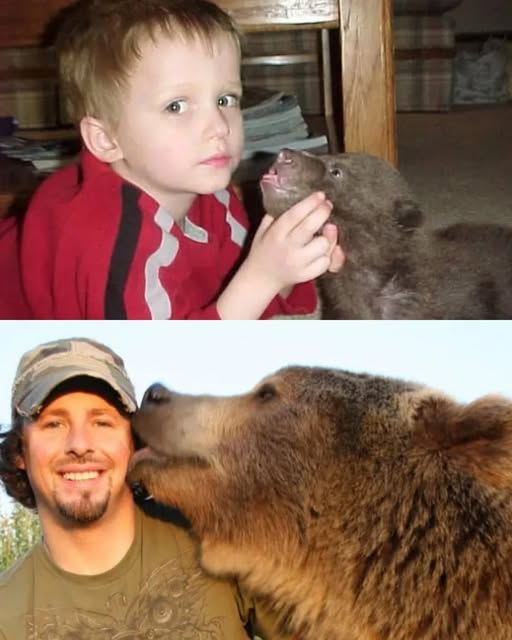
Companionship is often associated with familiar domestic animals, but naturalist and filmmaker Casey Anderson formed a friendship of a completely different scale. His closest animal companion was an 800-pound grizzly bear named Brutus.
Their relationship began when Brutus was still a vulnerable cub. He had been abandoned at an overcrowded wildlife park and faced an uncertain future.
Anderson had already dedicated himself to helping wildlife and could not accept the possibility that the young bear might be destroyed. He intervened and took responsibility for Brutus, determined to provide the cub with safety and a meaningful life.
His goal was not to turn Brutus into a captive attraction. Anderson wanted him to grow with the freedom and dignity appropriate for a bear rather than being treated merely as a curiosity for human entertainment.
That decision became the beginning of an unusual friendship. What started as an effort to save one vulnerable animal eventually developed into a bond that attracted attention far beyond the wildlife community.
Growing Together Through the Years
Brutus changed dramatically as he matured. The small cub grew into an enormous grizzly capable of towering over people while standing on his hind legs.
His physical strength was unmistakable. He became powerful enough to crush a tree trunk, a reminder that even a bear raised around humans remains a formidable wild animal.
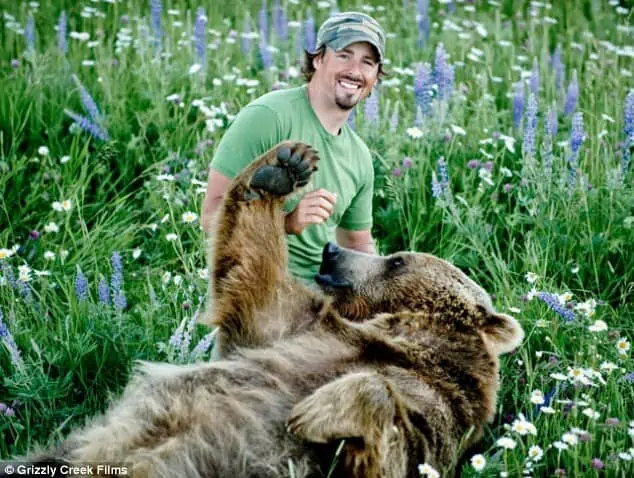
Despite that strength, Brutus behaved with remarkable gentleness around Anderson. The trust established during his earliest years continued as he grew into an adult.
The pair spent time swimming in rivers and hiking through the Montana wilderness. They also shared meals, creating moments that looked almost impossible to those unfamiliar with their history.
Anderson described the bond in deeply personal terms. “He’s my best friend,” Anderson once told Good Morning America. “He gives me unconditional love.”
Brutus was never simply an animal under Anderson’s care. Their years together had allowed the bear to become part of his family and an important presence in his daily life.
A Brother Rather Than a Pet
Anderson did not view Brutus as a conventional pet. The bear’s role in his life was closer to that of a brother and trusted companion.
This distinction was important because their relationship was not based on ignoring Brutus’s nature. Anderson understood that Brutus remained a grizzly, even though their history had created an exceptional degree of familiarity and trust.
The depth of their relationship became especially visible when Anderson married actress Missi Pyle, known for appearing in Charlie and the Chocolate Factory. Brutus was given an unforgettable place in the ceremony.
Wearing a tuxedo bowtie, the towering grizzly served as Anderson’s best man. His presence reflected how firmly he had become woven into the couple’s family life.
For Anderson, choosing Brutus was not a stunt designed to create a memorable photograph. It was a natural acknowledgment of the animal who had shared so many important years with him.
Brutus Joins the Family Table
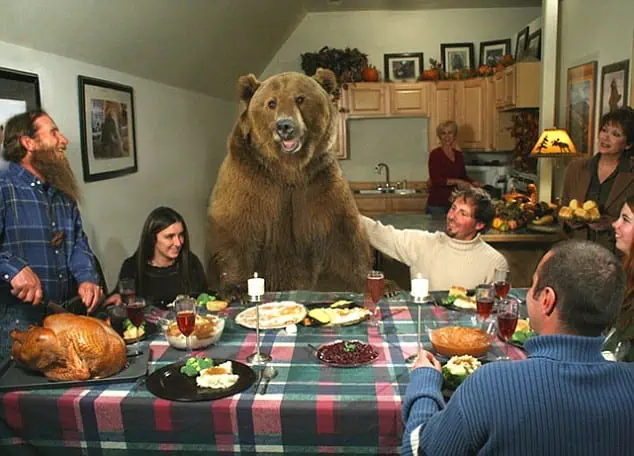
Brutus was also included in family gatherings at the Anderson home. He was not brought forward as a spectacle but welcomed as a familiar member of the household’s extended family.
Thanksgiving could include an additional place for the bear near his human companions. Brutus enjoyed pumpkin pies while receiving the attention that naturally followed his presence.
Anderson explained the arrangement simply. “He’s always included,” Anderson said. “If the family gathers, Brutus is part of it.”
For people seeing these moments from the outside, the scenes could appear carefully arranged or too unusual to be genuine. The idea of an enormous grizzly sitting near a family table seemed almost unbelievable.
National Geographic confirmed that the interactions were not staged. The extraordinary closeness visible between Anderson and Brutus reflected the authentic relationship they had developed over time.
Those family moments revealed a quieter side of the bear. Beyond his size and power, Brutus displayed the familiarity of an animal who recognized the people around him and understood his place within their lives.

Challenging Fear of Grizzly Bears
Grizzly bears are commonly viewed as unpredictable and dangerous animals. Their strength and reputation can make fear the first response people have when encountering stories about them.
Anderson wanted to challenge the belief that this fearful image represented everything there was to understand about bears. His experience with Brutus had shown him animals capable of intelligence, sensitivity and complex emotional behavior.
Through the National Geographic documentary Expedition Grizzly, Anderson worked to present another side of the species. The project examined grizzlies as living creatures rather than reducing them to symbols of danger.
“Bears are misunderstood,” Anderson explained. “They’re not monsters. They’re complex, sensitive animals who just want to be left in peace.”
His message did not deny their power or suggest that wild bears were harmless. Instead, it encouraged people to recognize that fear alone could not provide a complete understanding of their behavior.
Anderson believed that bears were capable of empathy and loyalty. He even described seeing Brutus’s eyes fill with tears during moments of sadness or stress.
For Anderson, those emotional reactions provided another reason to reconsider the assumption that meaningful feelings belonged exclusively to humans. Brutus’s behavior repeatedly challenged the idea that a wild animal could be understood only through instinct and danger.
A Year Among Yellowstone’s Grizzlies
Anderson and Brutus spent a year filming among the grizzly bears of Yellowstone National Park for the documentary. The experience required them to live close to the wilderness Anderson had spent years trying to understand.
The work was physically demanding. Their days included snowstorms, while nights were spent beneath the open sky.
Living and filming in those conditions removed much of the distance that normally separates people from the natural world. Anderson observed the realities of grizzly life while continuing to deepen his connection with the environment.
The year was not designed around comfort. It involved long periods in rugged conditions, where weather and wildlife determined the rhythm of each day.
For Anderson, those challenges were inseparable from the purpose of the project. Understanding bears required patience, proximity and a willingness to experience the landscape on its own terms.
Brutus remained central to that journey. Their relationship helped Anderson communicate his larger belief that grizzlies possessed qualities often overlooked when people focused only on their physical power.

The Creation of Montana Grizzly Encounter
Anderson’s experiences inspired him to establish Montana Grizzly Encounter, a sanctuary created for rescued bears. The facility was intended to provide safety, freedom and dignity to animals unable to live independently in the wild.
Brutus became the heart of the sanctuary. His history represented the compassionate purpose behind the project and demonstrated what could happen when a threatened animal was given protection.
The sanctuary allowed visitors to see grizzlies beyond the frightening image commonly attached to them. It created an opportunity to observe the animals while learning about their intelligence, behavior and emotional complexity.
Brutus became an especially powerful ambassador because his life had been shaped by both vulnerability and extraordinary trust. Once an abandoned cub facing an uncertain fate, he grew into the defining presence of a sanctuary dedicated to rescued bears.
His relationship with Anderson also showed that compassion could create a connection across the divide between humans and wild animals. That bond did not erase their differences, but it encouraged respect for them.
Missi Pyle’s Connection With Brutus
Missi Pyle shared Anderson’s affection for Brutus. She came to know him as a gentle and curious bear whose clumsy behavior could bring humor into ordinary moments.
Brutus became part of her professional world as well as her family life. He appeared in her film Pretty Ugly People, displaying the same calm presence that had made his bond with Anderson so remarkable.
Pyle described his natural charisma with humor. “He’s got presence,” she joked. “And he doesn’t need makeup.”
His appearance demonstrated how comfortable Brutus could remain around the people he trusted. Even under the unusual conditions surrounding a film production, his calm personality remained visible.
The relationship between Pyle and Brutus added another dimension to his role within the family. He was not connected only to Anderson but had become a familiar and valued companion to those closest to him.

Understanding Is Not the Same as Taming
Anderson’s relationship with Brutus was never intended to promote the idea that grizzly bears should be kept as pets. His larger message centered on understanding wild animals rather than attempting to domesticate them.
Brutus’s circumstances were exceptional. He was rescued as a cub and cared for within an environment built around his safety and the needs associated with his species.
Their friendship demonstrated coexistence, but it did not erase the boundaries required when dealing with powerful wildlife. Respect remained essential to every aspect of Anderson’s approach.
“Bears don’t want to hurt us,” Anderson says. “They just want to live their lives. If we can see them for what they are — intelligent, emotional, magnificent — we might finally learn to share this world instead of conquering it.”
This perspective placed responsibility on people to reconsider how they respond to wildlife. Instead of assuming domination was necessary, Anderson encouraged observation, respect and the protection of natural lives.
His work with Brutus showed that understanding begins by recognizing an animal’s true nature. Compassion does not require pretending a grizzly is harmless or treating it as a person.
It requires acknowledging the bear’s strength, needs and instincts while also recognizing its capacity for trust, curiosity and emotional connection.
A Lasting Symbol of Respect
Brutus became a symbol of what could happen when fear was replaced by informed compassion. His enormous frame made an immediate impression, but his calm temperament revealed why Anderson considered him a friend and family member.
At the sanctuary, visitors could learn that kindness and respect were not limited to relationships between humans. Children encountering Brutus’s story were introduced to a view of wildlife grounded in humility rather than domination.
The friendship between Anderson and Brutus was extraordinary because it crossed a divide that most people consider impossible. One was a filmmaker and naturalist, while the other was an immensely powerful grizzly bear.
Their connection began with a vulnerable cub in need of protection and developed into years of companionship. They shared wilderness journeys, family gatherings, meals and important personal milestones.
Brutus stood beside Anderson at his wedding, became part of Thanksgiving celebrations and helped communicate a broader message through documentary work. His life became closely tied to the sanctuary created to give other rescued bears dignity and security.
Anderson’s story was never simply about proving that he could stand close to a grizzly. Its meaning came from his willingness to see Brutus as an individual worthy of care and understanding.
Their friendship offered a lesson about humanity’s relationship with nature. Wild animals do not have to be conquered or transformed into entertainment before their lives can be valued.
Sometimes the most meaningful response to the wild is not to tame it. It is to respect it, protect it and make the effort to understand what fear might otherwise prevent people from seeing.