
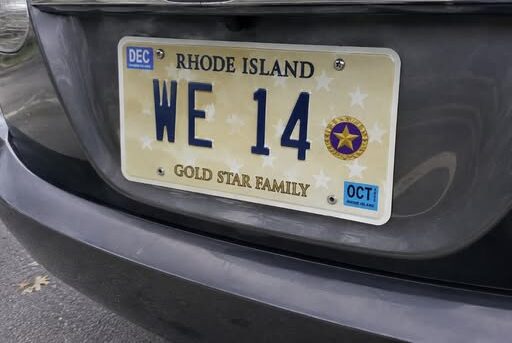
What a Gold Star on a License Plate Really Means
A Small Symbol With a Powerful Story
License plates often contain colors, emblems, numbers, and special designs that represent organizations, causes, professions, or personal interests.
Among the most meaningful of these symbols is a gold star.
To someone unfamiliar with its history, the star may appear to be a decorative detail. In reality, it carries a solemn message connected to military service, family loss, and remembrance.
A Gold Star license plate generally identifies a family whose loved one died while serving in the military.
It represents a sacrifice that extends beyond the fallen service member to the parents, spouses, children, siblings, and other relatives left behind.
The symbol is therefore not intended as an ordinary badge of pride. It is a public acknowledgment of grief, duty, and a life given in service.
The Meaning Behind the Gold Star
The gold star signifies that a member of the family made the ultimate sacrifice in military service.
When displayed on a vehicle, it quietly communicates that the driver or another eligible relative has experienced a profound loss connected to the armed forces.
The symbol honors the character and commitment of the person who died.
It also recognizes the family members who continue living with the consequences of that loss.
For many families, the Gold Star is deeply personal.
It may represent a son or daughter, husband or wife, parent, sibling, or another close relative whose absence remains present in daily life.
Although the plate is visible to strangers, the full story behind it often belongs only to the family.
The Gold Star Tradition Began With a Blue Star
The history of the Gold Star is closely connected to the Blue Star Service Banner.
The Blue Star tradition began during World War I through the efforts of Army Captain Robert L. Queisser of the Ohio 5th Infantry.
In 1917, Captain Queisser had two sons serving on the front lines.
He wanted a visible way to honor their military commitment and to recognize other families whose loved ones were also serving.
His idea became the Blue Star Service Banner.
The design featured a white background surrounded by a red border, with a blue star placed in the center.
Each blue star represented one family member serving in the military.
A Banner Displayed in a Family Window
Captain Queisser placed the banner in the window of his home.
The display allowed neighbors and visitors to see that members of his family were serving their country.
The idea quickly attracted attention.
Other military families began creating and displaying similar banners.
Before long, the Blue Star Service Banner appeared in homes throughout Ohio.
The symbol also spread into churches, businesses, schools, and other community spaces.
It gave families a shared visual language through which they could express pride, concern, and support for loved ones serving far away.
Ohio Formally Recognizes the Blue Star Banner
By September 1917, the Blue Star Service Banner received formal recognition in the Ohio Congressional Record.
That recognition helped establish the banner as more than a private family display.
It became a broader symbol of public support for military personnel and the families waiting for them to return.
During wartime, families often had limited information about the conditions their loved ones faced.
The banner served as a visible reminder that military service affected entire communities.
Behind every blue star was a household living with hope, anxiety, and uncertainty.
How the Gold Star Was Introduced
As families began receiving news that some service members would not return home, the need for another symbol emerged.
The Women’s Committee of the Council of National Defense proposed a way to recognize those who had died in service.
The committee suggested that mothers wear black armbands containing a gold star for each fallen loved one.
The black fabric represented mourning.
The gold star honored the life and sacrifice of the person who had died.
President Woodrow Wilson approved the proposal on May 28.
The gold star gradually became associated with families who had lost someone in military service.
Why Gold Was Chosen
The gold star carried a different meaning from the blue star.
A blue star indicated that a loved one was actively serving.
A gold star indicated that the service member had died.
The change in color communicated both loss and honor.
Gold was not selected to celebrate death.
It represented the value placed on the sacrifice and memory of the fallen individual.
For grieving families, replacing or covering a blue star with a gold one marked a painful transition from waiting for a loved one to mourning that person permanently.
The Symbol Spread Through Military Families
As the practice became better known, more families adopted the gold star.
Service banners were modified to reflect the death of relatives who had served.
The symbol appeared in homes and community settings where the blue stars had previously represented those still on active duty.
Each gold star carried a specific family story.
Some represented young men and women who had left home for the first time.
Others represented spouses, parents, or siblings whose service had become a defining part of family life.
Together, the stars created a national tradition of remembrance.
The Formation of American Gold Star Mothers, Inc.
In 1928, a group of 25 mothers traveled to Washington, D.C.
Their purpose was to establish American Gold Star Mothers, Inc.
Each woman understood the grief associated with losing a child in military service.
By forming an organization, they created a community for mothers united by a loss that others could not always fully understand.
The organization helped preserve the meaning of the Gold Star tradition.
It also gave grieving mothers a collective voice and a way to honor their children through remembrance and service.
Over time, the name Gold Star Mother became widely recognized as a title associated with extraordinary sacrifice.
Families Added Gold Stars to Service Banners
Gold Star families adapted the earlier Blue Star Service Banner to reflect their losses.
A gold star was added when a relative serving in the military died.
The new symbol did not erase the person’s service.
Instead, it transformed the banner into a memorial.
A family that had once displayed a blue star in hope might later display gold in remembrance.
The banner became a visible record of both service and sacrifice.
For communities, seeing a gold star in a window was a reminder that war had reached directly into a nearby home.
Gold Star Mother’s Day Is Established
In 1936, Congress designated the final Sunday of September as Gold Star Mother’s Day.
The observance was created to honor mothers who lost sons or daughters in military service.
It recognized that the cost of service was carried not only by those in uniform but also by the families who survived them.
Gold Star Mother’s Day provided a national occasion for remembrance.
It also helped ensure that the sacrifices represented by the gold star would remain part of public memory.
The observance continues the connection between the original Blue Star Service Banner and the Gold Star tradition that developed from it.
A Day Centered on Mothers and Memory
For Gold Star mothers, remembrance is not limited to a single date.
The loss is present throughout the year in family traditions, empty chairs, photographs, birthdays, and anniversaries.
However, the national observance gives communities an opportunity to acknowledge that grief publicly.
It also offers a moment to recognize the strength of mothers who continue honoring their children while carrying a permanent absence.
The day does not attempt to lessen their sorrow.
It affirms that their loved ones and their sacrifice have not been forgotten.
How the Symbol Reached License Plates
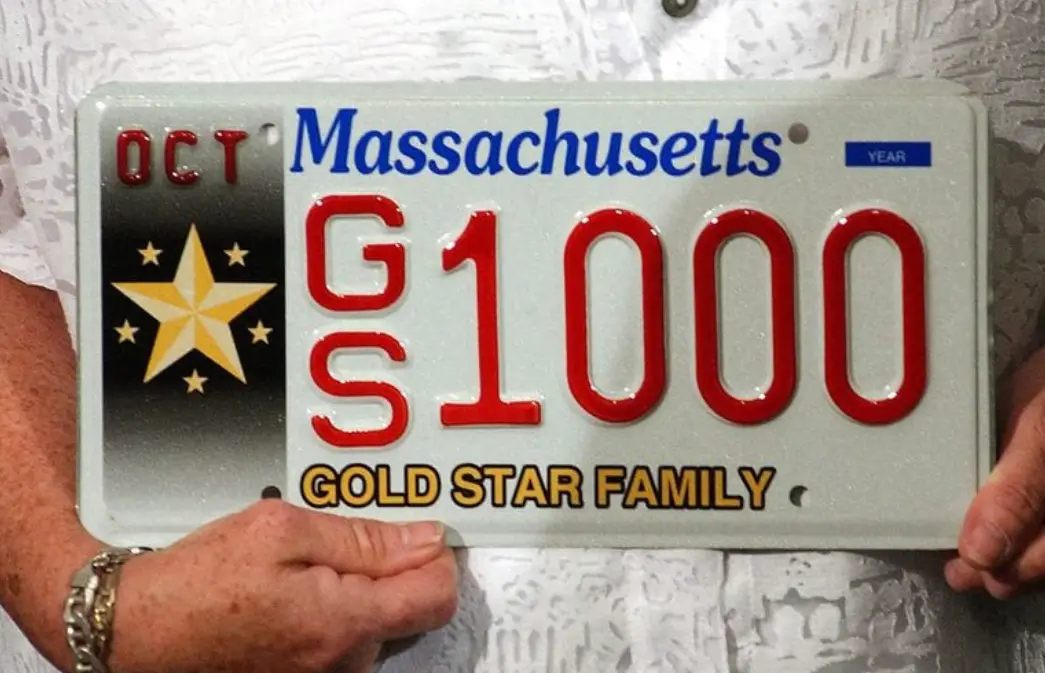
As the Gold Star became an established national symbol, states began creating special license plates for eligible military families.
These plates allowed families to display the emblem on their vehicles.
The design varies depending on the state, but the meaning remains connected to military loss.
The plate can serve as both a memorial and a public sign of recognition.
It honors the fallen service member while acknowledging the family’s connection to that sacrifice.
For some relatives, displaying the plate becomes a meaningful way to carry the loved one’s memory into everyday life.
Eligibility Rules Differ From State to State
There is no single nationwide application process governing every Gold Star license plate.
Each state determines its own eligibility requirements and procedures.
Some states allow parents, spouses, siblings, and grandchildren to apply.
Other states limit eligibility to spouses, parents, siblings, and children.
Because the rules are not identical everywhere, applicants must review the requirements in the state where the vehicle is registered.
Documentation may be required to establish both the military loss and the applicant’s relationship to the fallen service member.
Applying for a Gold Star Plate
The application process commonly begins with a state motor vehicle agency or another designated office.
The family member may need to complete a special form and provide supporting records.
These documents help confirm eligibility for the Gold Star designation.
The exact materials requested can vary.
For that reason, families are encouraged to check the current procedures in their own state before applying.
Understanding the local rules can prevent delays and ensure that the correct documentation is submitted.
Why Eligibility Is Carefully Defined
A Gold Star plate carries a serious and specific meaning.
It is not a general military-support symbol or a decoration available to anyone who admires the armed forces.
Eligibility rules help protect the significance of the designation.
They ensure that the plate is connected to a verified family relationship and a genuine military loss.
This preserves respect for those whose names and stories stand behind the symbol.
It also prevents the Gold Star from losing its meaning through casual or inappropriate use.
The Plate Tells Only Part of the Story
When another driver sees a Gold Star plate, they may understand that the family has experienced a military loss.
They will not know the full circumstances.
The fallen person may have been a parent, child, sibling, or spouse.
The family may have lived with that loss for many years or may still be facing its earliest and most painful stages.
The plate does not reveal the service member’s personality, dreams, relationships, or the memories preserved by those left behind.
It offers only a quiet invitation to recognize that a sacrifice occurred.
A Public Memorial in Everyday Traffic
Most memorials are placed in cemeteries, parks, public buildings, or military spaces.
A Gold Star license plate is different because it moves through everyday life.
It appears in grocery store parking lots, on highways, outside schools, and near family homes.
The symbol brings remembrance into places that may otherwise feel ordinary.
It reminds observers that military loss is not limited to ceremonies or historic anniversaries.
It remains part of the daily lives of surviving families.
Respecting the People Behind the Symbol
Seeing a Gold Star plate should inspire respect rather than curiosity that becomes intrusive.
Some families may be comfortable discussing their loved one.
Others may find unexpected questions painful.
The plate communicates remembrance, but it does not create an obligation for the driver to share private details.
A quiet acknowledgment may be more appropriate than asking for the full story.
The most important response is understanding that the symbol represents a real person and a family living with loss.
The Difference Between Blue Star and Gold Star Families
Blue Star and Gold Star symbols are closely connected, but they represent different circumstances.
A Blue Star generally identifies a family with a loved one currently serving in the military.
A Gold Star identifies a family whose loved one died in military service.
The blue star reflects active service and the hope of a safe return.
The gold star reflects sacrifice and remembrance.
Both symbols recognize that military duty affects entire families, not only the person wearing the uniform.
The Emotional Weight of Changing a Star
For families using a service banner, changing a blue star to gold can be one of the most painful acts imaginable.
The original blue star may have been displayed with pride and hope.
It represented a loved one serving far from home and the expectation that the family would eventually be reunited.
Gold changed that meaning permanently.
It acknowledged that the person would not return.
The visual change was small, but the emotional reality behind it was enormous.
Gold Star Mothers Preserved the Tradition
American Gold Star Mothers, Inc. played an important role in ensuring that the meaning of the symbol endured.
The mothers who established the organization understood that remembrance required more than private grief.
They created a lasting structure through which families could support one another and honor the people they had lost.
The organization helped keep public attention focused on sacrifice, service, and the continuing needs of surviving relatives.
Its existence also showed that grief could be transformed into fellowship and purposeful remembrance.
A Tradition Born From Family Love
The Gold Star tradition did not begin as a government branding campaign.
It grew from the actions of families searching for ways to honor loved ones in uniform.
Captain Queisser displayed a blue star because his sons were serving.
Military families followed because they understood the same mixture of pride and fear.
The gold star emerged when some of those families faced permanent loss.
What began in home windows gradually became part of national remembrance.
The Role of Community Recognition
Military families can experience forms of sacrifice that are difficult for others to see.
Long separations, uncertainty, and fear may remain behind closed doors.
When a service member dies, the grief can also become isolated from everyday public life.
The Gold Star creates a visible connection between the family and the wider community.
It asks society to remember that the cost of military service continues after official ceremonies end.
More Than a Decoration
The gold star should never be mistaken for a casual design choice.
Its history is rooted in war, mourning, and family sacrifice.
Each time it appears on a license plate, banner, or memorial, it carries the legacy of those earlier traditions.
It represents someone who served and did not return.
It also represents the people who continue carrying that person’s memory.
A Symbol of Both Grief and Pride
Gold Star families often live with emotions that cannot be reduced to one simple description.
There may be deep pride in the loved one’s courage and commitment.
At the same time, there is grief over a future that was lost.
The symbol holds both realities.
It honors service without hiding the human cost.
That balance is one reason the Gold Star remains so powerful.
Why the History Still Matters
Understanding the history behind the Gold Star changes the way the symbol is seen.
It connects a modern license plate to families who displayed service banners during World War I.
It recalls the mothers who wore black armbands bearing gold stars.
It remembers the 25 women who traveled to Washington, D.C., in 1928 to establish American Gold Star Mothers, Inc.
It also connects to the congressional recognition of Gold Star Mother’s Day in 1936.
These events transformed a simple star into a lasting national symbol.
A Reminder That Sacrifice Reaches Beyond the Battlefield
Military service is performed by individuals, but its consequences are shared by families.
Parents wait for children.
Spouses maintain homes during long absences.
Children grow while a parent serves far away.
Siblings carry concern alongside pride.
When a service member dies, each of these relationships is permanently changed.
The Gold Star acknowledges that wider circle of sacrifice.
What to Remember When You See One
The next time a Gold Star appears on a license plate, it is worth pausing to understand what it means.
The driver may be carrying the memory of someone whose service ended in death.
The symbol may represent years of grief, pride, and remembrance.
It may also be one of the family’s most visible ways of ensuring that their loved one is not forgotten.
No dramatic response is required.
Simple respect is enough.
A Legacy Carried Forward
The journey from the Blue Star Service Banner to the modern Gold Star license plate reflects more than a century of military family history.
It began with a father honoring two sons serving during World War I.
It grew as communities adopted the blue star to recognize those in uniform.
It changed when families needed a symbol for loved ones who died.
Gold Star mothers then organized to preserve their children’s memory and support one another.
States later carried the symbol onto license plates, allowing eligible relatives to display it in daily life.
A Star That Asks the Country to Remember
A Gold Star plate is small enough to pass unnoticed in traffic.
Yet its meaning is larger than the vehicle carrying it.
It represents military service, family devotion, national remembrance, and a loss that cannot be undone.
The symbol exists because families refused to let the sacrifices of their loved ones disappear from public memory.
Gold Star Mothers and other surviving relatives continue that tradition today.
Through banners, observances, organizations, and license plates, they preserve the names and legacies of those who served.
The next time a gold star appears on the road, remember that it is not merely decoration.
It is a quiet memorial moving through the world—a sign that someone served, someone was lost, and a family continues to remember.