
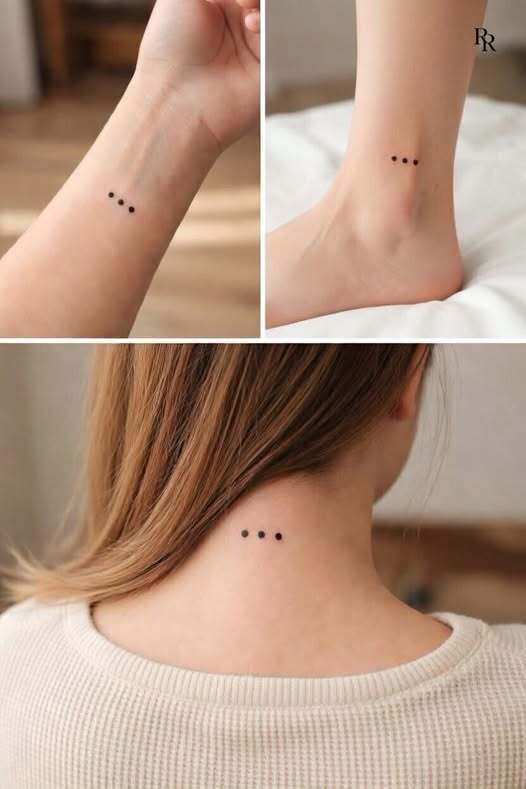
What Three-Dot Tattoos Can Mean and Why Context Matters
Small Marks With Powerful Associations
Three tiny tattooed dots can be easy to miss. They may appear near the thumb, across the hand, beside a finger, or along the knuckles, looking more like an accidental mark than a deliberate symbol.
Despite their simple appearance, these dots can carry complicated meanings. In some environments, they are connected to loyalty, silence, rebellion, imprisonment, and survival.
The design does not have one universal definition. Its meaning can change depending on the person wearing it, the placement of the tattoo, the surrounding culture, and the circumstances in which it was received.
For one individual, the dots may represent a difficult past. For another, they may express belonging, resistance, personal hardship, or a private message that outsiders were never intended to understand.
A Symbol That Can Communicate Without Words
Tattoos have long been used to preserve memories, express identity, and signal membership. A design does not need to be large or detailed to communicate something important.
The three-dot tattoo is a clear example of how a minimal image can hold a much larger story. Its power often comes from the fact that the symbol appears ordinary to people who do not recognize its possible associations.
In certain circles, three dots can quietly distinguish insiders from outsiders. The tattoo may function as a sign that the wearer understands a particular set of unwritten expectations.
Those expectations can involve loyalty, secrecy, shared danger, or the belief that certain information must remain protected. The dots may therefore represent much more than appearance or personal style.
The Connection to Silence and Loyalty
One interpretation links the three dots to the familiar idea of “see no evil, hear no evil, speak no evil.” Within some prison and criminal subcultures, that idea can take on a more serious and restrictive meaning.
Instead of serving as a general moral lesson, the symbol may become a reminder not to cooperate with authorities, reveal information, betray associates, or violate the rules of a group.
In this setting, silence may be treated as proof of loyalty. The tattoo can symbolize a promise to protect secrets even when doing so creates personal consequences.
Such a promise may be rooted in fear, trust, pressure, identity, or survival. The same marks can represent pride to one wearer and an unwanted burden to another.
Because these meanings develop inside tightly connected communities, an observer may never understand the full significance. The tattoo can remain visible while the story behind it stays hidden.
Three Dots and the Idea of “Mi Vida Loca”
Another widely recognized interpretation is connected to the phrase “Mi Vida Loca,” meaning “my crazy life.” In some Latin American communities, the three dots may be used to express a life shaped by disorder, risk, struggle, or rebellion.
The phrase can suggest that the wearer has experienced an unpredictable path. It may reflect acceptance of a difficult lifestyle, recognition of past chaos, or identification with people who have faced similar circumstances.
For some, the dots become a badge of toughness. They may communicate that the individual has lived through dangerous situations and does not deny the experiences that helped shape them.
For others, the tattoo may be less about celebration and more about acknowledgment. It can represent a period of life marked by instability, hardship, and choices that carried lasting consequences.
The words “Mi Vida Loca” can also reveal the tension within the symbol. A life described as crazy may contain excitement and belonging, but it can also include loss, regret, danger, and isolation.
A Record of Time and Confinement
In some cases, dots may be used as a personal record of time spent incarcerated. Additional marks can represent years behind bars or periods of confinement that the wearer survived.
When used this way, the skin becomes a private timeline. Each mark can preserve a chapter of life that may otherwise be difficult to explain.
The tattoo may serve as evidence of endurance. It can remind the wearer of time lost, hardship survived, or a period that permanently changed how the person sees the world.
However, the exact meaning cannot be determined by counting dots alone. Similar designs may be used for completely different reasons, and personal interpretations can vary widely.
A mark that represents imprisonment for one person may symbolize friendship, loss, spirituality, or personal change for someone else. Appearance alone does not provide certainty.
Why Placement Can Affect Interpretation
The location of a tattoo can influence how it is perceived. Three dots placed near the thumb, between the fingers, or along the knuckles are often more visible than the same design hidden beneath clothing.
A visible placement may suggest that the symbol was meant to be recognized. It can act as a quiet signal exchanged between people who understand the possible code behind it.
At the same time, hand tattoos are difficult to conceal. A decision made during one stage of life may continue attracting attention years later.
The wearer may change, but the placement remains noticeable during job interviews, public interactions, family gatherings, and ordinary daily activities.
This visibility can turn a once-meaningful symbol into a continuing reminder of a past the individual no longer wishes to represent.
The Danger of Assuming One Meaning
Although three-dot tattoos can be associated with prisons or criminal subcultures, it is important not to treat every wearer as part of those worlds. Symbols often travel beyond their original settings.
Someone may choose the tattoo without knowing its historical associations. Another person may use the dots to honor loved ones, represent personal values, or complete a decorative design.
Others may have received the tattoo during a troubled period and later abandoned the beliefs connected to it. A mark on the skin does not automatically reveal a person’s current character.
Judging someone solely by a tattoo can create misunderstanding and unfair suspicion. The same design can carry several meanings, and sometimes it may have no connection to criminal activity at all.
Context remains essential. Personal history, cultural background, placement, surrounding tattoos, and the wearer’s own explanation all matter more than a quick visual assumption.
When a Past Symbol Affects the Present
A tattoo can remain long after the circumstances that inspired it have ended. This can create difficulties for people trying to rebuild their lives or move away from harmful environments.
Visible dots may attract suspicion from employers, strangers, authority figures, or community members who recognize only the most troubling interpretation.
The wearer may face lost opportunities even after changing direction. A symbol once connected to protection or belonging can later become an obstacle.
This experience can be especially painful when the tattoo represents decisions made under pressure, during confinement, or at a young age. The design may continue telling an old story that no longer reflects the person carrying it.
For some, the marks become a source of regret. For others, they remain a reminder of survival and the distance traveled since that period.
Belonging, Fear, and the Need for Identity
Symbols often become powerful because people want to belong. In difficult environments, a shared tattoo can create a sense of protection, connection, and identity.
The three dots may show that someone has faced the same dangers, followed the same rules, or survived the same institutions as others in a group.
That sense of belonging can feel meaningful when the outside world seems hostile or indifferent. A small mark can offer recognition in a place where trust is rare.
However, belonging can also come with demands. Loyalty may require silence, obedience, or acceptance of consequences that continue far beyond the original environment.
The tattoo can therefore reflect both connection and control. It may represent the comfort of being accepted while also revealing the pressure to remain tied to a code.
A Personal Story Hidden in Plain Sight
The most striking feature of the three-dot tattoo is its simplicity. There are no detailed images, long phrases, or obvious explanations.
Its meaning often remains hidden in plain sight. Most people may overlook the marks entirely, while someone familiar with the symbol may immediately notice them.
That contrast gives the tattoo much of its mystery. It can be almost invisible to the wider public while carrying deep importance within a specific community.
Behind the dots may be stories of loyalty, danger, regret, pain, rebellion, or survival. The marks may recall people, places, and experiences that the wearer rarely discusses.
Even when the original meaning fades, the tattoo remains part of the individual’s visible identity. It becomes a lasting connection between who the person was and who they are trying to become.
More Than Three Drops of Ink
Three dots may seem too small to hold much meaning, yet symbols do not depend on size. Their significance comes from the experiences, beliefs, and relationships attached to them.
For some wearers, the tattoo communicates a vow of silence. For others, it represents “Mi Vida Loca,” time survived in confinement, or a life shaped by risk and instability.
It can be worn with pride, carried with regret, or viewed as a permanent reminder of choices made under difficult circumstances.
The design can also be misunderstood. Not everyone with three dots shares the same history, and no tattoo should be treated as unquestionable evidence about a person’s life.
Ultimately, the marks reveal how human beings use even the smallest symbols to preserve identity and experience. A few dots can contain pain, belonging, defiance, memory, and the hope that a person will eventually be seen as more than the past written on their skin.