
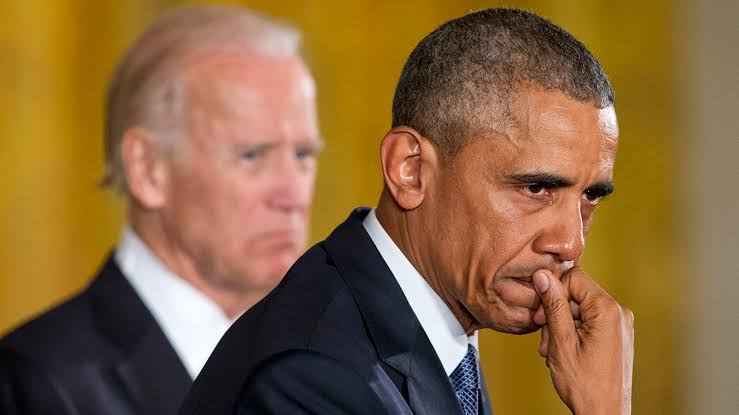
The Moments Barack Obama Couldn’t Hold Back His Emotions — From Family Heartbreak to National Tragedy
During his years as president of the United States, Barack Obama became known for his composed manner, carefully delivered speeches, and ability to address difficult national issues.
But there were moments when even the demands of the presidency could not conceal his emotions.
Some came during periods of national tragedy. Others were deeply personal, involving the loss of loved ones, his appreciation for his family, or memories of people who had shaped his life.
At times, his voice trembled. On other occasions, he struggled to continue speaking or openly wiped away tears.
These moments revealed a more personal side of a president whose public responsibilities often required him to remain calm under extraordinary pressure.
From his farewell address to the devastating events at Sandy Hook Elementary School, several occasions stood out for the powerful emotions they brought to the surface.
The Civil Rights Legacy of Dorothy Height
Dorothy Height was one of the most respected figures in the American civil rights movement.
Often described as the “Godmother of American civil rights”, she dedicated much of her life to advancing equality and fighting discrimination.
Her activism placed her alongside some of the most influential leaders in American history.
She participated in the civil rights movement during the era of Martin Luther King Jr. and remained committed to the struggle for equal rights for decades afterward.
What made her legacy especially remarkable was the length of her dedication.
Height continued advocating for the causes she believed in well into her nineties.
Her work demonstrated that meaningful social change often requires persistence across generations.
She died in 2010 at the age of 98, leaving behind a lifetime of public service.
Her legacy represented the long struggle for civil rights that helped shape the America in which Obama eventually became president.
While her story is distinct from the occasions when Obama publicly displayed strong emotions, it forms part of the broader history of service, equality, and leadership that influenced his presidency.
The Sandy Hook Tragedy That Shook the Nation
One of the most painful moments of Obama’s presidency followed the tragedy at Sandy Hook Elementary School in December 2012.
Twenty children, aged six and seven, and six educators lost their lives in the attack carried out by Adam Lanza.
The event devastated families and deeply affected communities throughout the United States.
For Obama, the tragedy was particularly difficult to address.
He was speaking not only as president but also as a father.
The loss of so many young lives brought an overwhelming sense of grief to the country.
During his remarks following the attack, Obama tried to offer comfort to the families whose lives had been permanently changed.
He spoke about the collective sorrow felt by Americans and acknowledged the suffering of those directly affected.
In one emotional message, he said:
“I can only hope it helps for you to know that you’re not alone in your grief,”
He continued:
“We have wept with you, we’ve pulled our children tight.”
His words reflected the difficulty of finding comfort in circumstances where no speech could undo what had happened.
The tragedy became one of the defining emotional challenges of his time in office.
When the President Spoke as a Father
The Sandy Hook tragedy carried a personal dimension for Obama because of his role as a parent.
Throughout his presidency, he often discussed the importance of family and the responsibility adults have toward children.
His response to the tragedy reflected those concerns.
He acknowledged the instinct many parents felt to hold their children closer after hearing the news.
It was a reminder that national tragedies can affect people far beyond the communities where they occur.
Parents across the country were confronted with the vulnerability of children and the uncertainty that can accompany everyday life.
Obama’s emotional remarks helped communicate the depth of the nation’s grief.
Rather than focusing exclusively on political responsibilities, he spoke about the human consequences of the tragedy.
That distinction made the moment especially memorable.
It showed how difficult it can be for a national leader to separate public duties from personal emotions.
The Farewell Speech That Brought Him to Tears
Another unforgettable emotional moment occurred when Obama delivered his farewell address in Chicago in January 2017.
After eight years as president, he was preparing to leave the White House.
The speech marked the conclusion of a significant chapter in his political career.
But one of its most memorable passages had little to do with policy or political achievements.
It concerned his family.
As Obama spoke about his wife, Michelle, and their daughters, Sasha and Malia, his emotions became increasingly visible.
He reflected on the importance of their support and the sacrifices they had made during his presidency.
His daughters had spent important years of their childhood growing up in the public eye.
Michelle had stood beside him throughout the demands of national leadership.
As he acknowledged them, the speech became deeply personal.
Then he delivered a line that captured the emotion of the moment:
“Of all that I’ve done in my life, I’m most proud to be your dad,”
The statement reflected a priority that extended beyond his political accomplishments.
For Obama, being a father remained one of the most meaningful responsibilities of his life.
Why His Family Tribute Resonated
Political leaders are often remembered for major decisions, public speeches, and their influence on history.
But Obama’s farewell remarks emphasized a different kind of achievement.
He spoke about his family with visible affection and gratitude.
The emotional moment offered an insight into the personal relationships that had supported him throughout his presidency.
For many viewers, the speech was memorable because it connected a major political transition with an experience that families everywhere could understand.
Careers change.
Public responsibilities come to an end.
But relationships between parents and children continue.
Obama’s words expressed that distinction in a way that felt deeply personal.
The farewell address was not simply the conclusion of his presidency.
It was also an opportunity to acknowledge the people whose lives had been closely connected to his years in office.
The Loss of His Grandmother Before the 2008 Election
Long before his farewell speech, Obama experienced another deeply emotional moment during his first presidential campaign.
His grandmother, Madelyn Dunham, died on November 3, 2008.
Her death came just one day before the presidential election.
It was an extraordinarily difficult time for Obama.
He was approaching one of the most important moments of his political career while mourning someone who had played a significant role in his life.
The timing meant that personal grief and public responsibility collided.
During a campaign speech at the University of North Carolina, Obama spoke about his grandmother’s death.
He told the audience:
“She has gone home,”
He also acknowledged that her passing was “hard to talk about”.
His words conveyed the difficulty of continuing a presidential campaign while coping with such a personal loss.
For someone whose schedule was dominated by public events and political responsibilities, there was little opportunity to step away from the spotlight.
Yet the grief was unmistakable.
A Personal Loss During a Historic Campaign
The death of Madelyn Dunham was especially poignant because it occurred so close to Election Day.
Obama was approaching a moment that would determine whether he became president.
At the same time, he was grieving the loss of a family member who had been important throughout his life.
Those circumstances created an emotional contrast.
His campaign represented ambition, possibility, and a future that remained uncertain.
His grandmother’s death represented the loss of someone who had helped shape his past.
The moment demonstrated that major public achievements do not protect people from personal sorrow.
Even during the most demanding stages of a presidential campaign, family relationships can remain at the center of a person’s emotional life.
Obama’s remarks showed the difficulty of carrying grief while continuing to fulfill obligations that could not easily be postponed.
Remembering Senator Daniel Inouye
In December 2012, Obama also paid tribute to Senator Daniel Inouye, a longtime political figure from Hawaii.
Inouye served in the United States Senate from 1963 until his death in 2012.
His decades of public service made him one of the country’s most experienced lawmakers.
For Obama, however, Inouye represented something beyond a distinguished political career.
Both men had connections to Hawaii.
Obama had grown up with an awareness of Inouye’s achievements and the example he provided.
During remarks honoring the senator, Obama reflected on how Inouye’s career had influenced his own understanding of what was possible.
He said:
“The way he commanded the respect of an entire nation, I think it hinted to me what might be possible in my own life,”
The tribute highlighted the importance of representation and the influence that one person’s achievements can have on another generation.
For Obama, Inouye was not merely a colleague.
He was someone whose example had helped shape his sense of possibility.
The Emotional Weight of Honoring a Public Servant
Funeral tributes can be particularly challenging for political leaders.
They require speakers to reflect on an individual’s achievements while also acknowledging the grief of family members, colleagues, and friends.
Obama’s remarks about Inouye combined those responsibilities with a personal reflection.
He connected the senator’s achievements to his own journey.
That connection gave the tribute a meaning beyond the formal recognition of a public career.
It illustrated how leaders can inspire people they may never fully realize they have influenced.
Inouye’s decades in public service had demonstrated that people from different backgrounds could earn national respect.
Obama’s reflection suggested that such examples can have a lasting impact.
They can help younger generations imagine opportunities that once seemed distant.
The Tears That Accompanied His Call for Gun Law Changes
In January 2016, Obama returned publicly to the subject of gun violence.
During an announcement concerning measures intended to address gun-related deaths, he reflected on the children who had lost their lives at Sandy Hook.
More than three years had passed since the tragedy.
But the memories remained emotionally powerful.
As he discussed the victims, Obama became visibly upset.
He said:
“Every time I think about those kids, it gets me mad,”
The statement reflected both sorrow and frustration.
Obama had repeatedly advocated for changes to American gun laws.
But efforts to secure broader legislative reforms had faced substantial political opposition.
The issue remained one of the most contentious subjects of his presidency.
For Obama, the inability to achieve the changes he wanted was a source of disappointment.
One of His Greatest Presidential Frustrations
In a 2015 BBC interview, Obama identified his inability to secure what he described as common-sense gun laws as one of the most significant frustrations of his presidency.
His comments reflected the difference between proposing changes and obtaining the political support necessary to enact them.
Gun policy involves deeply held disagreements about public safety, individual rights, and the responsibilities of government.
Those disagreements made legislative progress difficult.
But Obama’s emotional response in January 2016 demonstrated how personally he regarded the issue.
When he spoke about the Sandy Hook victims, the discussion moved beyond political strategy.
It returned to the lives lost and the families affected.
His tears became one of the most widely remembered images from that announcement.
They also showed how certain events can remain emotionally significant long after the initial public response has faded.
When Aretha Franklin’s Performance Moved Him
Not all of Obama’s memorable emotional moments involved grief or national tragedy.
One particularly touching occasion took place during a tribute to songwriter Carole King in Washington in 2015.
Barack and Michelle Obama attended the event, which celebrated King’s contributions to American music.
Among the performers was Aretha Franklin, widely celebrated as the Queen of Soul.
Franklin delivered a powerful rendition of “(You Make Me Feel Like) A Natural Woman”.
Her performance became one of the most memorable parts of the evening.
As Franklin sang, Obama appeared deeply moved.
The moment was captured on video and later attracted millions of views online.
Unlike the solemn occasions when Obama addressed loss and tragedy, this was a moment shaped by music and admiration.
It demonstrated that powerful emotions can emerge from beauty and artistic expression as well as sorrow.
The Power of Music to Bring Out Emotion
Music has a remarkable ability to connect with listeners.
A familiar melody can evoke memories.
A powerful vocal performance can create an emotional response even among people who are accustomed to maintaining a composed public appearance.
Aretha Franklin’s performance provided one such moment.
Her interpretation of the song combined vocal strength with emotional expression.
For Obama, the performance appeared to carry particular meaning.
Viewers noticed his reaction, and the recording circulated widely.
The occasion offered a contrast to the more serious emotional moments of his presidency.
It showed a leader responding to the power of music rather than the demands of a national crisis.
And it became another example of how public figures can reveal personal emotions in unexpected circumstances.
Why These Moments Remain Memorable
Looking back at these occasions, a common theme emerges.
Obama’s strongest public emotions were often connected to family, loss, responsibility, or admiration for others.
His grandmother’s death brought personal grief into the final days of a presidential campaign.
The Sandy Hook tragedy confronted him with the suffering of families who had lost children.
His tribute to Daniel Inouye reflected gratitude for a public servant whose achievements had influenced him.
His farewell address revealed the importance of Michelle, Sasha, and Malia in his life.
And Aretha Franklin’s performance demonstrated how deeply music could affect him.
These were very different circumstances.
But each showed a dimension of the person behind the presidency.
They also challenged the assumption that political leadership always requires emotional distance.
A President Remembered for More Than His Speeches
Barack Obama’s presidency involved difficult decisions, major political disagreements, and historic events.
His public speeches remain an important part of how many people remember those years.
But some of the most widely recalled moments were not defined by political arguments.
They were defined by emotion.
Sometimes it was sadness.
Sometimes it was gratitude.
Sometimes it was frustration at the difficulty of preventing future tragedies.
And sometimes it was the simple joy of hearing an extraordinary musical performance.
These experiences offered glimpses of the human responsibilities and relationships that continued alongside his political career.
They reminded viewers that even people occupying the highest offices must navigate the same fundamental emotions that shape ordinary lives.
The Moment That May Have Meant the Most
Of all the emotional occasions associated with Obama, his farewell tribute to his daughters remains especially memorable.
It came after eight years of presidential responsibility.
He had delivered countless speeches and participated in some of the most consequential political events of his generation.
Yet when reflecting on what mattered most to him personally, he turned to his family.
His message to Sasha and Malia placed fatherhood above the achievements of public office.
That sentiment helped explain why his voice became emotional.
He was not speaking only as a former president preparing to leave office.
He was speaking as a father reflecting on the years he had shared with his children.
And for many people watching, that made the moment particularly moving.
The Human Side of Leadership
Public figures are often expected to project confidence and composure.
Presidents, in particular, must communicate stability during difficult circumstances.
But emotional moments can reveal something that formal speeches sometimes cannot.
They show the personal impact of responsibility, grief, love, and remembrance.
Throughout his political career, Obama experienced occasions when those emotions became visible.
His reactions did not erase the disagreements surrounding his presidency.
Nor did they resolve the difficult issues he addressed.
But they provided a more personal perspective on the challenges he faced.
From the heartbreaking loss of his grandmother to his tears over Sandy Hook and his emotional farewell to his daughters, Barack Obama’s most memorable personal moments revealed that even the presidency could not separate him from the feelings that define ordinary human experience.
And perhaps that is why these moments continue to be remembered.
They were reminders that behind every public office is a person with family relationships, personal memories, and emotions that cannot always be hidden.
Which of Barack Obama’s emotional moments do you remember most clearly?