
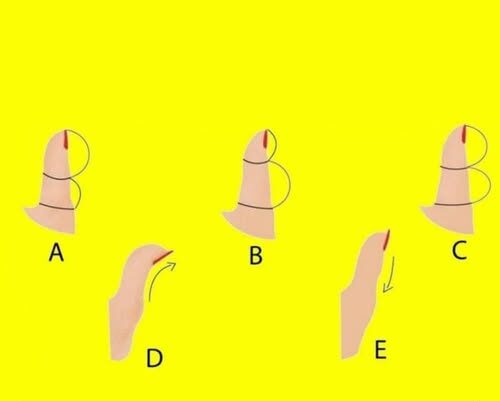
What Your Thumb Shape Might Say About Your Personality
An Interesting Idea Rooted in Tradition
Have you ever taken a closer look at your hands and wondered if they might reveal something about who you are? Across different cultures and traditions, people have long believed that certain physical features can reflect aspects of personality.
One of the most fascinating of these ideas comes from palmistry—the practice of interpreting the lines and shapes of the hands. While it’s not based on scientific evidence, many people enjoy exploring it as a fun and reflective way to think about their own traits and behaviors.
Among all the features of the hand, the thumb is often considered especially meaningful. In traditional interpretations, the thumb is linked to qualities like willpower, flexibility, and decision-making.
Why the Thumb Stands Out
The thumb plays a unique role in how we use our hands. It gives us the ability to grip, hold, and interact with the world around us. Because of this, it has symbolically been connected to control, independence, and personal strength.
In palmistry, the shape and flexibility of the thumb are believed to reflect how a person approaches life—whether they tend to lead, adapt, plan, or go with the flow.
Straight Thumb: Confidence and Leadership Tendencies
A straight thumb, one that extends outward with little to no curve, is often associated with confidence and a strong sense of direction. People with this thumb type are commonly described as decisive and clear in their thinking.
They may prefer structure and organization, and often feel comfortable taking responsibility in different areas of life. Whether at work or in personal situations, they are often seen as reliable and capable of making firm decisions.
These individuals may also value independence and prefer to rely on their own judgment. Their ability to stay focused can help them work toward long-term goals with determination.
Flexible Thumb: Adaptable and Open to Change
A flexible or “bendy” thumb, which can easily move backward or outward, is often linked to adaptability. People with this thumb type are typically described as open-minded and comfortable with change.
They may find it easier to adjust to new environments or unexpected situations. This flexibility can be especially helpful in creative or social settings, where quick thinking and communication are important.
These individuals are often seen as easygoing and cooperative. They may enjoy exploring new ideas and are usually willing to consider different perspectives before making decisions.
Balanced Thumb: A Mix of Stability and Flexibility
Some people have a thumb that falls somewhere in between—neither very stiff nor extremely flexible. This balanced type is often associated with a combination of practicality and adaptability.
Individuals with this thumb shape may be able to adjust when needed while still maintaining a sense of structure and direction. They can be both thoughtful and responsive, making them well-suited for a variety of situations.
This balance can help them approach challenges with both logic and openness, allowing them to find solutions that work in different circumstances.
Long vs. Short Thumb: Different Approaches to Decisions
In addition to flexibility, palmistry also considers the length of the thumb.
A longer thumb is sometimes linked to strong willpower and a more analytical approach. People with longer thumbs may take time to think things through before making decisions and often prefer planning ahead.
A shorter thumb, on the other hand, is often associated with a more spontaneous and intuitive style. These individuals may rely more on instinct and may be comfortable making quicker decisions.
Both styles have their strengths, and neither is better than the other—it simply reflects different ways of approaching life.
What These Interpretations Really Mean
It’s important to remember that these ideas come from traditional beliefs and are not supported by scientific research. They should be seen as a fun way to reflect on personality rather than a definitive explanation of who someone is.
Personality is shaped by many factors, including life experiences, environment, and personal choices. Physical traits alone cannot determine how someone thinks or behaves.
A Fun Way to Reflect on Yourself
Even though palmistry is not scientific, many people enjoy it as a form of self-reflection. Looking at your thumb shape and considering these interpretations can be a lighthearted way to think about your habits, strengths, and preferences.
You might recognize certain traits that resonate with you, or you might simply enjoy comparing your thumb with friends and family to see how the descriptions differ.
In the end, it’s less about finding exact answers and more about exploring interesting perspectives.
Your Personality Is More Than a Physical Feature
While it’s fun to explore ideas like this, your personality is far more complex than any single physical characteristic. It is shaped over time through experiences, relationships, and personal growth.
So whether your thumb is straight, flexible, or somewhere in between, what matters most is how you think, act, and connect with the world around you.
Still, the next time you look at your hands, you might see them a little differently—and enjoy the curiosity that comes with it.