
Trump Ends Contentious NBC Interview After Clash Over California Vote Counting
Interview Takes a Sharp Turn During Discussion on Elections
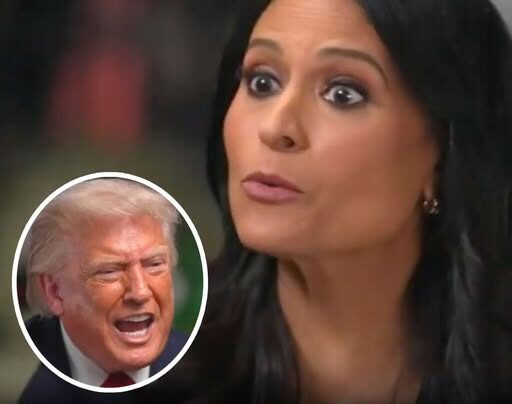
A televised interview between President Donald Trump and NBC journalist Kristen Welker came to an abrupt and highly publicized conclusion after a heated disagreement over California’s election procedures.
The exchange unfolded during an appearance on NBC’s Meet the Press, where the conversation focused on election integrity, ballot counting, and concerns surrounding voting systems.
What began as a policy discussion gradually evolved into a tense back-and-forth as both participants challenged each other’s positions on how elections are conducted in California.
The disagreement centered on the state’s practice of continuing to count ballots after Election Day, a process that has frequently drawn criticism from Trump.
Trump Raises Concerns About Ongoing Ballot Counting
During the interview, Trump argued that California’s election procedures were problematic because vote counting continued several days after voters had cast their ballots.
He suggested that extended counting periods could create concerns about confidence in election outcomes.
Referencing the situation in California, Trump stated, “It’s happening again right now in California.”
He continued by emphasizing the length of the counting process, adding, “This is happening right now. It’s four days.”
The president used the discussion to revisit broader concerns he has expressed in the past regarding election administration and voting procedures.
His comments echoed criticisms he has repeatedly voiced about election systems and vote tabulation practices.
Welker Defends California’s Voting Process
Welker responded by pointing out that California’s election procedures include widespread mail-in voting and that ballot counting often continues after Election Day as part of the established process.
She noted that the state’s approach to counting votes is not unusual within its election framework.
Responding directly to Trump’s criticism, Welker said, “That’s how they vote in California.”
The discussion then shifted toward evidence supporting allegations that election results were being manipulated.
Welker pressed Trump to explain the basis for his claims and sought clarification regarding what proof existed to support them.
Debate Intensifies Over Evidence
As the conversation continued, Welker challenged the president to provide specific evidence supporting his assertions.
Trump responded by explaining that his conclusions came from what he had personally observed and heard.
“All I have to do is look, and I listen,” he said.
Welker immediately disputed that explanation and questioned whether observation alone constituted proof.
She replied, “That’s not evidence.”
The exchange marked a turning point in the interview, with the tone becoming noticeably more confrontational.
Both participants continued to defend their positions as the discussion moved further away from a standard policy debate and toward a direct argument over facts and credibility.
Personal Criticism Enters the Conversation
Following the disagreement over evidence, Trump shifted his criticism toward the media.
He accused journalists of acting dishonestly and directed those remarks toward Welker during the interview.
“They’re crooked. Just like you’re crooked,” Trump said.
Welker quickly rejected the accusation while attempting to continue the discussion.
“To be fair, I’m not crooked. But let’s continue.”
Rather than moving on, Trump responded with an additional criticism.
“You’re either crooked or you’re stupid,” he replied.
The exchange further heightened tensions and underscored the increasingly strained atmosphere of the interview.
As both participants continued discussing election-related topics, it became apparent that the conversation was nearing a breaking point.
Trump Signals the End of the Interview
Moments later, Trump indicated that he no longer wished to continue the interview.
Expressing frustration with the discussion, he announced that he was ready to conclude the conversation.
“Let’s call it quits because I’ve had enough. Thank you, darling. Have a good time,” he said.
Welker attempted to continue asking questions and maintain the interview.
However, Trump interrupted and expanded his criticism beyond the interview itself, directing his comments toward the media as a whole.
He referenced the conditions under which the interview had been conducted, noting that portions of the conversation took place in rainy weather.
“I’ve sat in the rain with you for an hour, on and off in the rain, and I’ve given you enough time,” Trump said.
He then argued that problems within the press were damaging public trust.
“You ought to straighten out your press, because you know what? A country can never be great with a dishonest press.”
Departure Captured on Camera
After making those remarks, Trump appeared ready to leave the set.
He turned his attention toward members of his team who were positioned behind the cameras.
The president then signaled that the interview was over.
“Come on, let’s go,” he said.
Shortly afterward, he stood up and walked away, bringing the interview to an unexpected conclusion.
The abrupt ending immediately drew attention because televised interviews with sitting presidents rarely conclude in such a manner.
Video clips of the exchange quickly circulated online, generating widespread discussion across social media platforms.
Online Reaction Follows the Interview
The dramatic conclusion prompted reactions from viewers across the political spectrum.
Supporters and critics alike shared clips of the confrontation, with many focusing on the sharp disagreement over election procedures and the personal exchanges between Trump and Welker.
The interview became a major topic of discussion online as users debated the substance of the arguments and the manner in which the conversation ended.
Much of the attention centered on the final minutes of the interview, when the discussion shifted from policy issues to direct criticism between the president and the journalist.
The footage spread rapidly, increasing interest in the full interview and its broader implications.
Communication Continued After the Broadcast
Although the televised conversation ended on a tense note, communication between Trump and Welker did not completely stop afterward.
Welker later revealed that she had spoken with the president following the broadcast.
She noted that both acknowledged the difficulties created by the weather conditions during the interview.
Rain had complicated portions of the discussion and added an additional challenge to the production.
Reflecting on those circumstances, Welker stated, “I spoke with President Trump on Saturday and we both acknowledged the complications during the interview posed by the rain.”
Her comments suggested that despite the public disagreement, both parties recognized the unusual conditions surrounding the event.
Plans for Another Interview
Welker also disclosed that Trump had agreed to participate in another Meet the Press interview in the future.
The revelation indicated that the contentious exchange had not ended the possibility of future conversations between the president and the program.
While no details regarding timing or topics were provided, the announcement suggested that additional interviews could take place despite the confrontation.
The prospect of a future appearance attracted attention because of the dramatic way the latest interview had concluded.
Observers noted that political interviews often involve sharp disagreements, but it is less common for them to end with one participant walking away before the discussion is formally completed.
A Familiar Pattern in Trump’s Relationship With the Media
The exchange represents another chapter in Trump’s long and often contentious relationship with journalists and major news organizations.
Throughout his political career, he has frequently criticized members of the press and accused certain media outlets of unfair coverage.
At the same time, reporters have continued to challenge his statements and press him for evidence regarding claims related to elections, policy decisions, and other major issues.
Those confrontations have often produced some of the most closely watched moments of his public appearances.
The latest interview followed a similar pattern, beginning with questions about public issues before evolving into a dispute over facts, evidence, and media credibility.
As public reaction continues, the exchange has renewed discussion about the relationship between political leaders and journalists, as well as the role of the press in questioning statements made by elected officials.
The interview’s dramatic ending ensured that the conversation extended far beyond the television broadcast itself, becoming another widely discussed moment in the ongoing debate over politics, media, and public trust.