
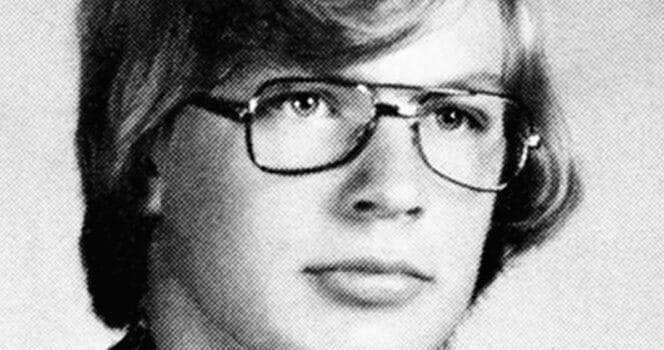
Jeffrey Dahmer’s Childhood and the Path That Led to One of America’s Most Notorious Murder Cases
From a Troubled Childhood to a Shocking Criminal Legacy
Photographs from childhood often capture moments of innocence, family hope, and ordinary happiness. That familiarity can become deeply unsettling when the child in an old picture later becomes associated with acts of extreme violence.
Jeffrey Lionel Dahmer was born in Milwaukee, Wisconsin, in May 1960. His parents were young adults beginning their family, with his father studying chemistry and his mother working as a teletype machine instructor.
They welcomed their first son with expectations that his life would follow a normal and promising path. During his earliest years, Dahmer was described as energetic, cheerful, and lively.
A Noticeable Change During Early Childhood
Members of the family later noticed a shift in Dahmer’s personality shortly before his fourth birthday. He underwent surgery for a double hernia, and afterward, the previously outgoing child reportedly became quieter and more withdrawn.
As he approached school age, he appeared increasingly uneasy and emotionally distant. By the time he entered school at six, he was reportedly struggling with feelings of abandonment and resentment toward his younger brother.
His home environment was also marked by instability. His father’s academic responsibilities frequently kept him away, while his mother experienced depression, hypochondria, and periods of serious emotional distress.
Arguments between Dahmer’s parents occurred regularly. His mother spent long periods in bed, demanded considerable attention, and attempted suicide at least once.
Dahmer later described growing up without a dependable sense of security. He did not feel certain that his parents would remain together or that the household would continue as a stable family unit.
Friends Remembered a Different Side
Despite the tension at home, Dahmer was not completely isolated during his early years. He had neighborhood friends and was remembered by some as enjoyable company.
One childhood acquaintance, Ted Lee, recalled, “He was a fun kid to be around as a child.”
Those memories presented a sharp contrast to what would later become known about Dahmer’s private interests and adult crimes. As he grew older, his behavior gradually became more troubling.
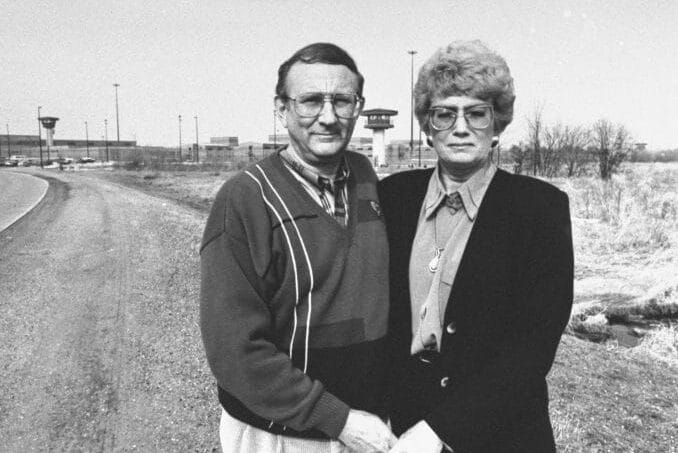
A Growing Fascination With Animal Bones
Dahmer developed an intense interest in bones and animal remains during childhood. Some believed this fascination began when he was about four years old and watched his father remove animal bones from beneath the family home.
The sound the bones made appeared to excite him. Dahmer referred to them as his “fiddlesticks” and became increasingly curious about locating and examining other skeletal remains.
He began searching for bones and studying the bodies of animals. His interest eventually expanded beyond collecting remains and included dissecting animals to examine their internal structures and skeletons.
When the family moved to Bath Township, Ohio, the wooded surroundings provided him with more opportunities to continue these activities. He created a small hut near the family’s property where he stored insects, bones, and preserved specimens.
Some of the remains were kept in jars containing formaldehyde. His father interpreted the activity as scientific curiosity and showed him methods for cleaning and preserving animal bones.
Dahmer quickly adopted those techniques. What appeared to his father to be an interest in biology became part of a much darker and increasingly obsessive pattern.
The Behavior Becomes More Disturbing
As Dahmer entered adolescence, he began collecting dead animals found along roads. He dissected the remains and buried some of them near his hut.
At times, he placed animal skulls on makeshift crosses. By age 15, he had decapitated a dog, attached its body to a tree, and placed its head on a stick.
His behavior was no longer limited to quietly examining bones. The treatment of animal remains reflected a growing fixation on death, dismemberment, and control.
At the same time, Dahmer began drinking heavily. By 14, he was hiding alcohol in his jacket and referring to it as “my medicine.”
Alcohol soon became a regular part of his life. His drinking continued while his family situation deteriorated and his parents moved toward divorce.
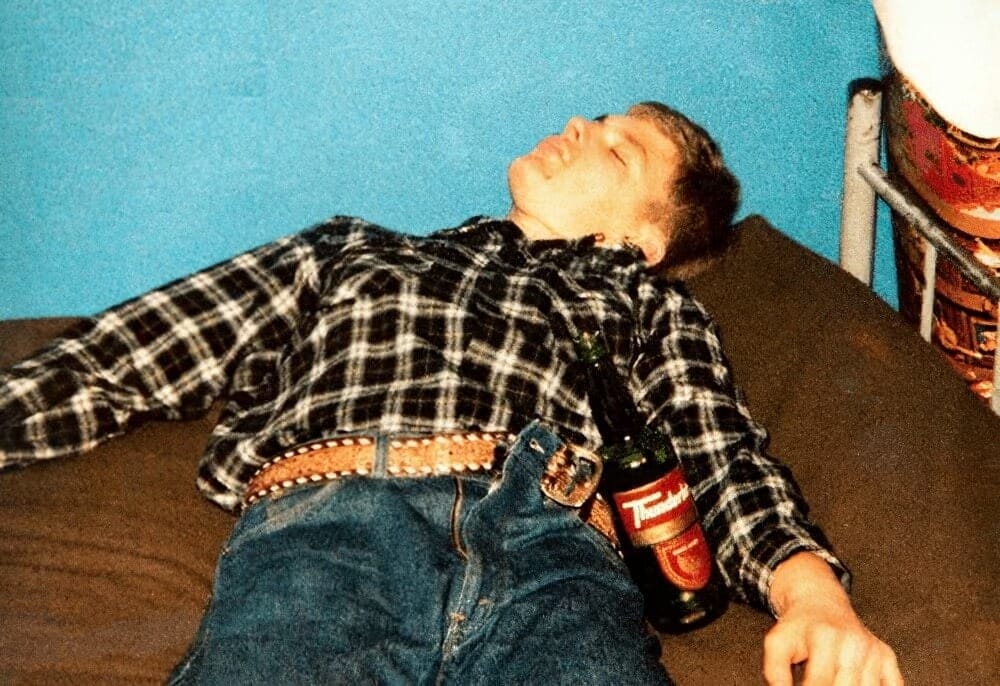
Strange Conduct During High School
In high school, Dahmer attracted attention through unusual performances and disruptive pranks. He sometimes pretended to experience seizures, stumbled through hallways, and made strange noises to amuse classmates.
He also imitated the speech and movements of a man with cerebral palsy whom he said his mother had once employed as an interior decorator. The imitation was cruel, but some teenagers treated it as comedy.
The reactions from other students appeared to encourage him. He would interrupt classes indirectly by looking through windows, passing open doors, or making noises while trying to remain beyond a teacher’s view.
Former classmate John Backderf remembered one of the sounds Dahmer repeatedly made.
“He would bleat like a sheep,” Backderf said.
“Sometimes he did it loud. He knew it cracked us up.”
To many students, these actions seemed like the behavior of an odd class clown. Beneath the performances, however, Dahmer’s drinking, isolation, and violent compulsions were becoming more severe.
Left Alone After His Parents’ Divorce
Dahmer’s parents eventually ended their marriage following years of conflict. The separation became bitter, and the household broke apart during a critical period in his life.
He graduated from high school in May 1978. By then, his mother had left the family home and taken his younger brother with her.
Dahmer, who was 18, remained alone in the house. His father was also living elsewhere, leaving the teenager without close supervision during the weeks immediately following graduation.
The isolation created an opportunity for the violent fantasies he had been developing to become real. Only a few weeks after finishing school, he committed his first murder.
The First Killing in June 1978
On June 18, 1978, Dahmer picked up a hitchhiker. The encounter ended with the young man becoming Dahmer’s first known murder victim.
The crime marked the beginning of a killing period that would continue for 13 years. Dahmer eventually murdered 16 additional young men.
Many of the victims were given sedatives before being strangled. Dahmer then dismembered several of their bodies and kept human remains.
His crimes included necrophilia and cannibalism. He also attempted to create victims who would remain alive but completely compliant by drilling into their skulls and injecting acid into their brains.
The violence remained hidden for years. During that time, Dahmer continued targeting young men while avoiding permanent detection by authorities.
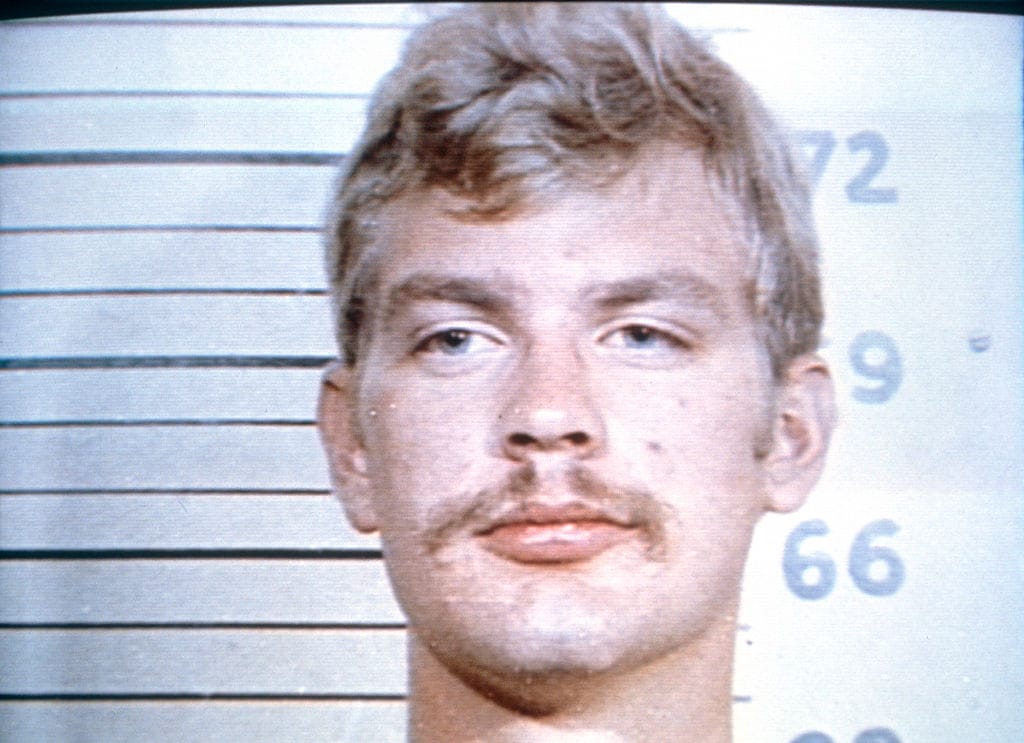
An Intended Victim Escapes
Dahmer’s crimes finally came to an end on July 22, 1991. One of the men he intended to kill managed to escape from his apartment.
The man encountered police and brought officers back to the residence. What they discovered inside exposed the scale and severity of Dahmer’s crimes.
Authorities found photographs showing dismembered bodies. They also discovered severed heads stored in a refrigerator and numerous human remains kept throughout the apartment.
The evidence directly connected Dahmer to a series of murders that had remained unsolved. The investigation revealed that the quiet child once fascinated by animal bones had become responsible for one of the most disturbing murder cases in American history.
Dahmer became widely known as the Milwaukee Cannibal. His crimes later became the subject of extensive public discussion and were dramatized in Netflix’s Monster.
Dahmer’s Death in Prison
Jeffrey Dahmer’s life ended violently on November 28, 1994. He was 34 years old when another inmate, Christopher Scarver, beat him to death in prison.
Scarver later claimed that God had instructed him to kill Dahmer. The death generated intense public reaction because of the horror associated with Dahmer’s crimes and the suffering endured by the victims’ families.
Dahmer’s mother, Joyce, responded angrily to the public and media attention surrounding her son’s death.
“Now is everybody happy? Now that he’s bludgeoned to death, is that good enough for everyone?” she said.
Families Respond to the News
Relatives of Dahmer’s victims expressed different emotions after learning that he had been killed. Some viewed his death as a form of relief, while others said it did nothing to reduce their grief.
For several families, Dahmer’s death meant that he could no longer experience punishment for the lives he had taken. Their own loss, however, would continue permanently.
Catherine Lacy, the mother of victim Oliver Lacy, described how the killing intensified her pain.
“The hurt is worse now, because he’s not suffering like we are.”
The district attorney who prosecuted Dahmer cautioned the public against treating Scarver as a hero. Dahmer had committed horrific crimes, but his death at the hands of another inmate was still an act of murder.
A Childhood Image With a Terrifying Legacy
Dahmer’s life continues to attract attention partly because of the contrast between his early appearance and the brutality of his later actions. Childhood photographs show an ordinary-looking boy whose future could not have been predicted from an innocent smile.
His early years included family conflict, emotional withdrawal, alcohol abuse, cruelty toward animals, and an escalating preoccupation with bones and death. These details became widely examined after his arrest, as people attempted to understand how his violent behavior developed.
None of those childhood circumstances diminish the responsibility he carried for murdering 17 young men. The victims and their families remained at the center of the tragedy long after Dahmer’s arrest and death.
The case left a lasting warning about how private compulsions, severe isolation, substance abuse, and escalating violence can remain concealed behind an outwardly ordinary life. It also demonstrated that the public’s fascination with a notorious killer must never overshadow the individuals whose lives were taken.
:::