
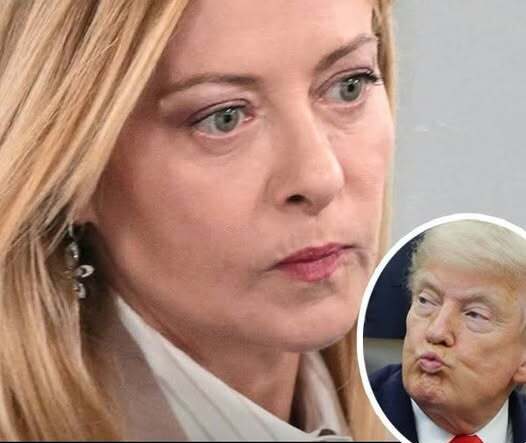
Trump’s “Begged” Photo Claim Triggers Diplomatic Clash With Giorgia Meloni
A Photo Dispute Becomes a Political Flashpoint
The confrontation began with a remark that sounded personal, but quickly grew into something much larger.
Donald Trump claimed that Giorgia Meloni had “begged” him for a photo and that he agreed only out of pity. The comment immediately struck a nerve in Rome, where Italy’s prime minister responded with open anger.
Within hours, Meloni pushed back publicly, accusing the US president of lying. Her answer was sharp, direct, and unmistakably political: “Italy and I never beg”.
What might have seemed like a minor argument over a photograph at the G7 soon developed into a serious diplomatic dispute. The exchange exposed tensions that had already been building between Washington and Rome, turning one public insult into a symbol of a much deeper breakdown.
Meloni’s Response Signals More Than Personal Offense
Meloni’s reaction was not limited to defending herself against an embarrassing claim. Her words carried the weight of national pride and political frustration.
By saying “Italy and I never beg”, she framed the dispute as an insult not only to her personally, but also to the country she represents. The statement suggested that Trump’s version of events was, in her view, an attempt to diminish both her leadership and Italy’s standing.
The tone of the response showed that the Italian prime minister was unwilling to let the matter pass as another offhand political remark. Instead, she treated it as a public challenge to her dignity and authority.
That decision changed the meaning of the controversy. It was no longer simply about whether a photograph had been requested. It became a question of respect between allies.
Italy’s Foreign Minister Cancels US Visit
The political fallout moved quickly beyond words.
Italy’s foreign minister scrapped a planned visit to the United States after Trump’s remarks. The cancellation sent a clear message that Rome saw the comments as more than a social-media quarrel or a passing diplomatic irritation.
By calling the remarks an insult to the entire country, Italy’s foreign minister raised the dispute to a national level. The decision to cancel the trip indicated that the government wanted Washington to understand the seriousness of the offense.
Diplomatic visits are often used to repair tension, maintain communication, and keep alliances stable. Canceling one has the opposite effect. It turns private displeasure into public protest.
That is why the move mattered. It showed that Italy was no longer willing to quietly absorb Trump’s comments while continuing normal diplomatic routines.
A Fragile Alliance Under Pressure
The dispute over the photo landed at a moment when relations between Washington and Rome were already strained.
The two governments had been dealing with months of resentment over several issues. The argument did not create the tension from nothing. It exposed what had already been weakening beneath the surface.
Among the points of friction was Italy’s refusal to support Trump’s bombing of Iran. That disagreement touched on one of the most sensitive areas of any alliance: military action and the expectation of political backing from partners.
For Washington, lack of support from an ally can be viewed as hesitation or disloyalty. For Rome, refusing support may have been a matter of national judgment and political independence.
The disagreement over Iran added a serious strategic layer to what later appeared as a personal dispute. It showed that the conflict between Trump and Meloni was not limited to tone or image. It involved questions of foreign policy and alliance discipline.
The Sicily Air Base Dispute Adds to the Tension
Another source of resentment involved a strategic air base in Sicily.
The clash over the base added further pressure to the relationship between the two governments. Military facilities carry enormous symbolic and practical importance, especially when they involve cooperation between allied countries.
A dispute over such a site can easily become a test of sovereignty, influence, and mutual trust. For Italy, the issue may have touched on control and national interest. For Washington, it may have involved access, strategy, and expectations from a partner.
Because the air base was already part of the broader tension, Trump’s remark about Meloni did not arrive in isolation. It landed on top of unresolved frustration.
That made the photo controversy more explosive. A single comment became a release point for anger that had been accumulating over time.
The Pope Becomes Part of the Wider Rift
The dispute was further complicated by a bizarre fight over the Pope’s moral authority.
The involvement of such a sensitive subject added another unusual layer to the already strained relationship. Arguments touching on religious authority, national identity, and international politics can be difficult to contain once they enter public debate.
For Italy, any conflict involving the Pope can carry special emotional and symbolic force. For Washington, the issue may have become another point of disagreement in an already tense relationship.
This episode, like the disputes over Iran and Sicily, contributed to a wider sense that trust was being chipped away piece by piece.
By the time Trump made his claim about the photograph, the relationship between the two leaders had already been weakened by repeated clashes.
Two Right-Wing Leaders in Open Conflict
The confrontation is especially striking because Trump and Meloni are both right-wing leaders.
On paper, their political alignment might have suggested a warmer relationship. Both leaders occupy similar ideological space in their domestic politics, and that would normally create expectations of cooperation rather than confrontation.
Instead, the dispute has revealed a power struggle between them. The clash suggests that shared political identity does not always translate into personal trust or diplomatic harmony.
Meloni’s anger appears rooted in the belief that an ally should not publicly humiliate her. Trump’s remark, as she presented it, was not just rude. It was a distortion that harmed her image and challenged Italy’s dignity.
The result is a rare and open conflict between leaders who might otherwise have been expected to stand together.
Why the Photo Became a Symbol
The photograph itself became powerful because it stood for something larger than the image.
In diplomacy, public gestures matter. A handshake, a seat at a table, a shared appearance, or a photo can communicate status, respect, and alliance strength.
Trump’s claim that Meloni “begged” for a photo suggested dependence and neediness. His added claim that he agreed out of pity made the comment even sharper.
For Meloni, accepting that version of events would have meant allowing a public image of weakness to stand. Her denial was therefore both personal and political.
The photo became a symbol of who held power in the relationship. Was Meloni being portrayed as a leader seeking approval, or was Trump using the moment to assert dominance over an ally?
That question explains why the dispute grew so quickly.
Friends, Adversaries, and Public Humiliation
One of the most damaging elements of the controversy is the perception that Trump reserves some of his harshest words for allies.
Meloni’s response reflected a broader frustration with being humiliated by someone who should be on her side. In alliances, criticism from friends can cut deeper than criticism from opponents because it carries a sense of betrayal.
When adversaries attack, governments expect it. When allies do, the damage is different. It creates doubt about loyalty, reliability, and mutual respect.
That is why Trump’s comment produced such a strong reaction in Italy. The issue was not only the content of the remark, but the fact that it came from a partner.
The controversy suggested that the alliance had reached a point where public insults could no longer be dismissed as political theater.
A Diplomatic Rupture, Not a Passing Spat
The cancellation of official travel confirmed that the matter had become a diplomatic rupture.
If the dispute had remained only a war of words, it might have faded quickly. But once government action followed, the confrontation gained institutional weight.
Italy’s decision to pull back from engagement with Washington showed that officials wanted consequences attached to Trump’s remarks. It also suggested that Rome believed silence would make the insult appear acceptable.
That shift is important because diplomatic relationships often survive disagreements through controlled language and private communication. In this case, the disagreement moved into public view and escalated rapidly.
The result is an alliance under visible strain, with both personal pride and national interest now tied together.
Months of Resentment Reach the Surface
The photo dispute may be the most visible part of the conflict, but it is not the whole story.
The deeper issue is the accumulation of resentment between the two governments. Italy’s position on Iran, the argument over Sicily, and the fight involving the Pope all contributed to an atmosphere of mistrust.
Each disagreement weakened the relationship a little more. None of them, alone, necessarily had to break the alliance. Together, they created the conditions for a small public insult to trigger a much larger reaction.
That is why the controversy has become so politically significant. It shows how fragile the relationship had become before the photo argument even began.
When alliances are healthy, leaders can absorb awkward moments and move on. When they are already damaged, even one sentence can cause a crisis.
The Alliance Faces an Uncertain Moment
The clash between Trump and Meloni now leaves Washington and Rome facing a difficult moment.
Both governments remain tied by shared interests, but the public dispute has made cooperation more complicated. Personal trust between leaders matters in diplomacy, and this episode has clearly damaged that trust.
Meloni’s response showed that she is prepared to defend her image and Italy’s dignity even at the cost of open confrontation with Washington. Trump’s remarks, meanwhile, have intensified the sense that the relationship is being shaped as much by personal rivalry as by policy.
The future of the alliance will depend on whether the two sides can contain the damage or whether the dispute becomes another turning point in a longer deterioration.
For now, a single photograph has become the focus of a much bigger story. What began as a petty-sounding quarrel has exposed a poisoned relationship, a wounded alliance, and two leaders unwilling to back down.