
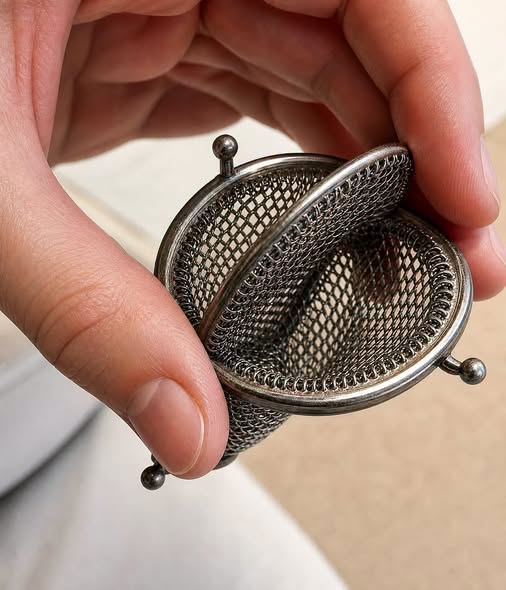
Victorian Silver Purses Reveal the Elegance and Craftsmanship of a Bygone Era
These Ornate Accessories Combined Everyday Function With Remarkable Nineteenth-Century Design
The Victorian era, which lasted from 1837 to 1901, remains closely associated with elaborate fashion, refined craftsmanship, and an extraordinary attention to decorative detail.
During this period, accessories were not simply added to complete an outfit. They often reflected personal taste, social expectations, artistic trends, and the level of craftsmanship valued by Victorian society.
Among the many accessories associated with the era, silver purses stand out as particularly distinctive examples of beauty combined with practical purpose.
More than a century later, these carefully made objects continue to attract antique collectors, historians, museum curators, and people interested in decorative arts.
Their engraved surfaces, intricate clasps, delicate chains, and carefully finished interiors offer a glimpse into both Victorian fashion and everyday life.
Accessories Played an Important Role in Victorian Fashion
Victorian clothing was often designed as part of a complete presentation rather than as an isolated garment.
Hats, gloves, jewelry, fans, parasols, purses, and other accessories were selected to coordinate with formal clothing and everyday outfits.
Small details mattered.
An accessory could complement a particular dress, reflect a fashionable artistic movement, or demonstrate the owner’s appreciation for fine materials and skilled workmanship.
Unlike many modern accessories that are replaced as trends change, well-made Victorian pieces were often intended to remain useful for years.
Silver purses fitted naturally into this approach because they were decorative enough for social occasions while also providing a convenient place to carry small necessities.
What Was a Victorian Silver Purse?
A Victorian silver purse was typically a compact handbag or coin purse constructed from sterling silver, silver-plated metal, or another decorative metal designed to resemble silver.
The size and shape varied considerably depending on how the purse was intended to be used.
Some were small enough to carry coins, folded banknotes, calling cards, keys, handkerchiefs, sewing accessories, or other personal belongings.
Others were designed specifically for evening wear and formal social events.
Some compact versions could be attached to a chatelaine, a decorative waist chain used by Victorian women to carry useful household or personal items.
Because many purses were finished by hand, individual pieces frequently display subtle differences in their engraving, construction, and decorative details.
The Craftsmanship Could Be Exceptionally Detailed
One of the main reasons Victorian silver purses remain admired today is the amount of skilled labor involved in creating them.
Silversmiths could spend many hours shaping metal, forming patterns, polishing surfaces, and adding decorative elements.
Common techniques included hand engraving, repoussé, chasing, pierced filigree work, embossing, scrollwork, and ornamental borders.
Repoussé allowed craftspeople to create raised designs in the metal, while chasing was used to refine or add detail to the surface.
Filigree-style work could produce delicate open patterns, giving the purse a lighter and more intricate appearance.
Instead of leaving broad metal surfaces plain, Victorian artisans often treated the entire purse as a canvas for decoration.
The result could be a miniature work of art that was also sturdy enough for regular use.
Floral Motifs Were Especially Popular
Flowers appeared frequently in Victorian decorative arts, and silver purses were no exception.
Roses, lilies, ivy, leaves, and other botanical forms could be engraved or embossed across the surface.
These designs reflected the Victorian fascination with nature and ornamental symbolism.
Floral patterns could range from delicate, restrained borders to elaborate compositions covering nearly the entire purse.
Vines and leaves were also useful decorative elements because their flowing forms could follow the curves and edges of the metal.
This gave artisans the ability to create designs that felt integrated into the shape of the purse rather than simply added afterward.
Nature Inspired More Than Floral Decoration
Victorian artisans also drew inspiration from birds, butterflies, woodland scenes, and other natural subjects.
Such motifs reflected a broader nineteenth-century interest in the natural world.
Some purses featured highly stylized versions of these subjects, while others used more recognizable forms.
Even small decorative sections could contain carefully engraved leaves, feathers, branches, or wings.
Because the available surface was limited, the finest examples demonstrate how much detail skilled silversmiths could fit into a relatively small object.
Historic Design Revivals Influenced Their Appearance
Victorian decorative design did not follow one single visual style.
The era was influenced by several artistic revivals, and silver accessories often reflected those changing preferences.
Gothic Revival designs could include pointed arches, ornamental tracery, and patterns inspired by medieval architecture.
Rococo Revival pieces frequently emphasized flowing curves, elaborate scrolls, and decorative flourishes influenced by eighteenth-century French design.
Classical inspiration also appeared in the form of symmetrical borders, wreaths, columns, and other motifs associated with ancient Greek and Roman art.
These different influences meant that Victorian silver purses could vary greatly in appearance while still belonging to the same historical period.
Beauty Did Not Replace Practicality
Although many surviving Victorian silver purses are now admired primarily as decorative antiques, they were created to be used.
Practical features were therefore an important part of their design.
Many included secure clasps, hinged openings, chain handles, internal compartments, or flexible construction that made them easier to carry.
The inside could be lined with silk, velvet, or satin.
These soft materials protected coins and other small personal belongings while also adding a sense of luxury.
In some examples, the clasp itself became one of the most decorative parts of the purse.
It might feature floral engraving, scrollwork, a monogram, or small ornamental stones.
Victorian Women Carried Them to Many Social Occasions
For middle- and upper-class women, carefully chosen accessories were an important part of social presentation.
Silver purses could accompany their owners to afternoon tea, church services, concerts, theater performances, weddings, shopping trips, social visits, and holiday gatherings.
They were generally much smaller than the large handbags commonly used today.
Rather than carrying a wide range of possessions, a woman might bring only a few essential items.
The purse therefore needed to be compact while still serving its purpose.
Its appearance also mattered because it was visible as part of the overall outfit.
Not Every Purse Was Made From Sterling Silver
Sterling silver was an important material for higher-quality examples, but it was not the only material used.
Manufacturers also produced purses from silver plate and German silver, a nickel-based alloy that does not actually contain silver.
Some pieces incorporated gilt accents or gold-filled decorative details.
More luxurious examples could include mother-of-pearl, enamel work, semi-precious stones, decorative chains, or ivory accents.
Ivory is commonly encountered on certain historical objects, although its trade is subject to modern restrictions.
The materials used in a purse can provide clues about its intended market, quality level, and method of production.
Silver Purses Were Sometimes Given as Meaningful Gifts
Beyond their everyday usefulness, Victorian silver purses could also carry sentimental significance.
They were sometimes presented as gifts for weddings, birthdays, engagements, anniversaries, graduations, and family celebrations.
A finely made purse could become a personal keepsake rather than a disposable fashion accessory.
Many families preserved such items and passed them down from one generation to another.
Because silver is durable, numerous examples have survived for well over a century.
Some still retain their original clasps, chains, linings, or engraved details.
Collectors Examine Several Important Features
Victorian silver purses remain popular among antique enthusiasts, and collectors often study several details before evaluating a piece.
Condition is one of the most important considerations.
A purse that retains original hardware, decorative elements, chains, clasps, and interior materials can be especially desirable.
Wear is expected on an object of this age, but significant damage or replacement parts may influence collector interest.
Collectors also pay close attention to the quality of the decoration.
Unusual engravings, rare motifs, highly detailed metalwork, or particularly sophisticated craftsmanship can make a purse stand out.
Hallmarks Can Reveal Important Information
Many antique silver objects carry hallmarks or maker’s marks.
These markings may identify the manufacturer, indicate silver purity, provide information about the date of production, or suggest the country where the piece was made.
For collectors and historians, these small stamps can be extremely useful.
They help establish historical context and can assist in determining whether a piece is consistent with a particular period or maker.
Because markings may be extremely small or worn with age, careful examination is often necessary.
Provenance Can Add Another Layer of Interest
A Victorian purse with a documented ownership history can be especially interesting to collectors.
Family records, old photographs, written notes, or other documentation may connect an object to a particular person or household.
This history, often referred to as provenance, can transform a decorative object into something with a more specific human story.
Even without documented provenance, however, the design and construction of a purse can still reveal much about the period in which it was created.
Proper Care Helps Preserve Antique Silver
Victorian silver purses require careful handling because their age makes certain components more vulnerable than they once were.
Storing them in a dry environment can help reduce deterioration.
Clean hands or cotton gloves may be used when handling particularly delicate examples.
Acid-free storage materials can also help protect original linings and other fragile components.
Excessive polishing should generally be avoided because repeated abrasion can gradually wear away engraved details and alter the surface.
Major repairs are best approached cautiously, particularly when original hinges, clasps, chains, or decorative elements remain intact.
For valuable or historically important pieces, professional conservation may be preferable to aggressive restoration.
Collectors Often Appreciate Original Patina
Not every sign of age is considered a flaw.
Many antique collectors value the natural patina that develops on silver over time.
This surface appearance can help communicate the age and history of an object.
Removing every trace of tarnish may make a piece appear brighter, but excessive cleaning can also reduce the sense of historical character.
The goal of preservation is therefore often to protect the purse rather than make it appear completely new.
Each Purse Provides a Small Connection to Victorian Life
One of the most appealing qualities of these objects is their connection to everyday history.
A worn clasp suggests repeated use.
A slightly faded lining may reflect decades of handling.
An engraved monogram may hint at the identity of a former owner.
Every small detail can serve as evidence that the purse was once carried as an ordinary part of someone’s life.
Unlike many mass-produced modern accessories, numerous Victorian examples were individually finished by hand.
That means even purses based on similar patterns can contain small differences that give each object its own character.
Museums Continue to Preserve Victorian Accessories
Victorian silver purses can now be found in decorative arts museums, historical collections, antique exhibitions, estate collections, and private collections around the world.
They are often displayed alongside jewelry, fans, chatelaines, and other personal accessories from the nineteenth century.
Together, these objects help illustrate how people dressed, socialized, traveled, and carried everyday possessions.
For historians, small accessories can sometimes reveal details that larger historical records overlook.
They provide evidence of manufacturing techniques, artistic preferences, social customs, and changing ideas about fashion.
Their Appeal Has Lasted for More Than a Century
Fashion has changed dramatically since the Victorian era, but finely made silver purses continue to attract attention.
The combination of durable materials, artistic metalwork, historical associations, and practical design gives them an enduring quality.
They also represent a period when even small everyday possessions could receive an extraordinary level of decorative attention.
A simple purse could become a carefully engraved object featuring floral motifs, elaborate borders, intricate clasps, luxurious linings, and delicate chains.
That combination of usefulness and artistry helps explain why these accessories remain so collectible today.
A Lasting Example of Victorian Craftsmanship
Victorian silver purses are far more than old handbags preserved from another century.
They reflect the values of an era that placed great emphasis on craftsmanship, presentation, and decorative design.
Whether discovered in an antique collection, displayed in a museum, or inherited through a family, each surviving example carries traces of the world in which it was created.
Their engraved surfaces and carefully constructed interiors demonstrate the extraordinary skill of nineteenth-century artisans.
At the same time, their practical features remind us that these beautiful objects were once part of ordinary daily routines.
For collectors, historians, and admirers of decorative arts, Victorian silver purses remain timeless examples of how craftsmanship can transform a simple personal accessory into a lasting piece of history.