
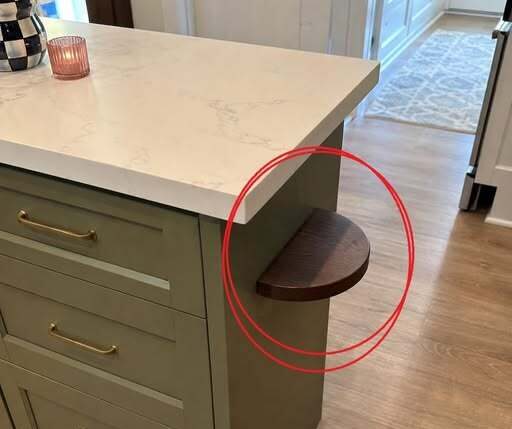
What the Small Rounded Shelf on a Kitchen Island Is Really Used For
A Small Feature With a Practical Purpose
At first glance, the small rounded ledge attached to the side of a kitchen island can seem confusing. It is not large enough to act as a seat, it does not sit low enough to work as a step, and it is not positioned like the main countertop where food is prepared.
Even though it may look like an odd design choice, this little shelf usually has a simple purpose. It is commonly used as a light-duty landing spot, a small display ledge, or a decorative detail added to the end of the island.
It is not meant for heavy storage, climbing, or sitting. Instead, it gives the kitchen island a small extra surface that can be useful in everyday moments without taking up the space of a full cabinet or counter extension.
What This Kitchen Island Shelf Is For
A small side shelf on a kitchen island is usually designed to add just a little function to an otherwise blank side panel. Instead of leaving the end of the island completely plain, the designer may add a curved ledge to make the island feel more finished and custom.
In daily use, this type of shelf can work as a temporary resting place for small items. Someone might place a coffee mug there while talking in the kitchen, set down a phone while unloading groceries, or use it as a quick spot for keys and sunglasses when coming in from outside.
It can also hold a small decorative item, such as a vase, candle holder, plant, or bowl. During casual entertaining, it may serve as a convenient place for a drink, napkin, or small appetizer plate.
The easiest way to understand it is to think of it as a tiny pause spot. It is not a full counter, and it is not a storage area. It is simply a small ledge for items that only need to be nearby for a short time.
Part Function, Part Design Detail
Kitchen islands often have side panels that can look plain if nothing is added to them. Some homeowners and designers use that space for open shelves, wine storage, cookbook slots, towel bars, or decorative paneling.
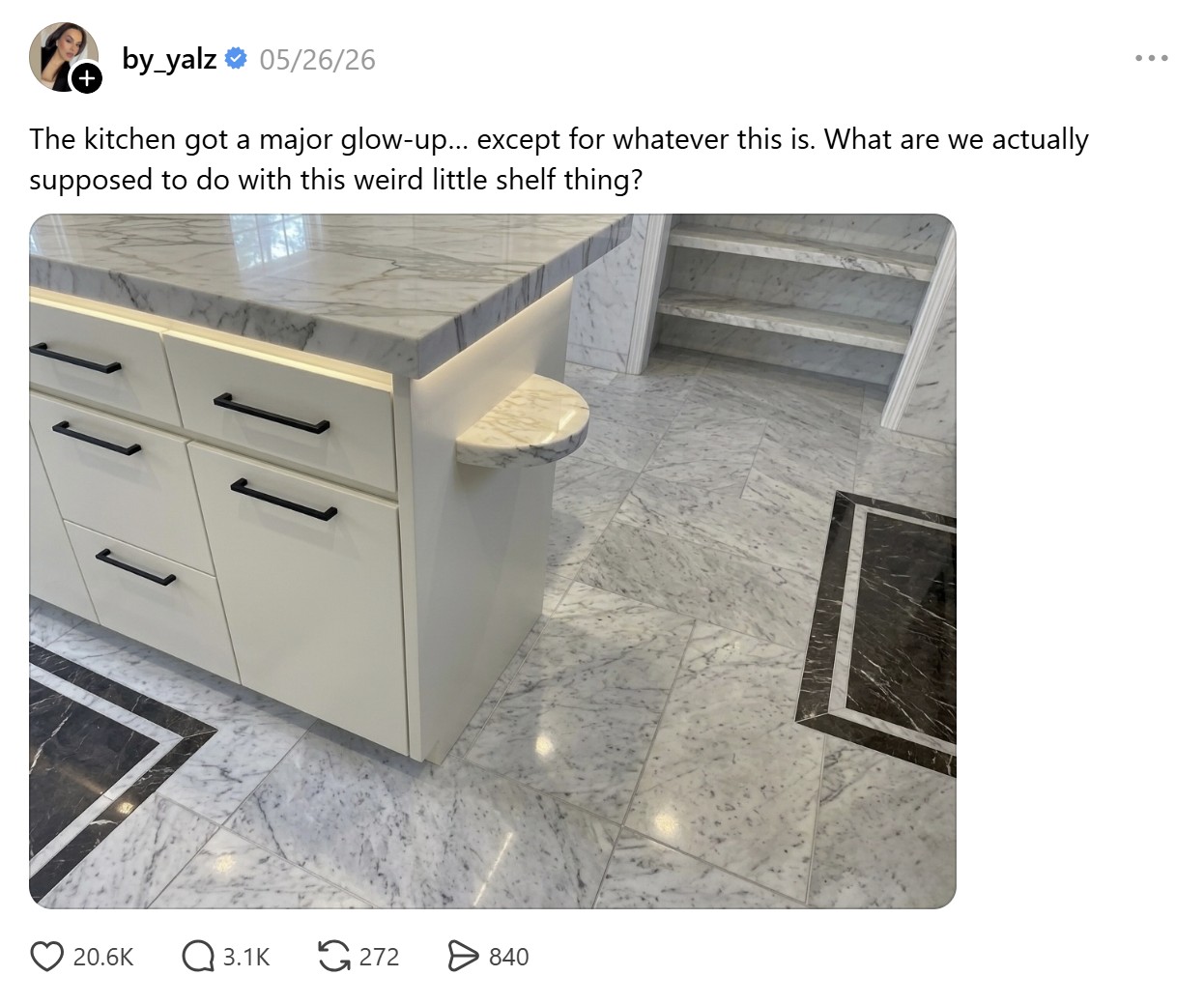
In this case, the island appears to have a rounded stone shelf instead. The curved shape helps soften the hard edge of the island, while the matching material connects it visually to the countertop.
That means the ledge is not only about storage or usefulness. It is also a design feature meant to make the island look more intentional.
The small shelf gives the side of the island a little personality. It turns an otherwise unused end panel into something that feels custom, even if the practical purpose is fairly limited.
Can It Be Used for Serving?
Yes, but only for light serving. A shelf like this can be helpful when people are gathered around the kitchen island during coffee, breakfast, or a casual get-together.
A guest could set down a glass, a small plate, or a napkin without crowding the main countertop. It may also work for a small appetizer dish or a decorative serving bowl during a relaxed gathering.
However, it should not be treated like a full serving station. It is too small and too shallow for large platters, heavy dishes, stacks of plates, or anything that needs a stable full-depth surface.
The best way to describe it is as a drink ledge rather than a prep counter. It can support small items for a short time, but it is not designed to replace the main island surface.
Can It Be Used for Storage?
The shelf can be used for storage in a limited way, but it is not ideal for everyday clutter. Because it is open, narrow, and positioned on the side of the island, anything placed there will be visible right away.
A small bowl for keys, a little tray, a plant, or a cookbook currently being used could work well. One attractive item can make the shelf look purposeful.
Too many items, however, can make it look messy very quickly. Since the shelf sticks out from the island, it can also become easy to bump into if it is near a busy walkway.
For that reason, the best use is usually one small item at a time. It should feel intentional, not like a place where random objects pile up.
What Not to Put on This Shelf
Even if the ledge is made from stone, that does not automatically mean it can hold heavy weight. The strength of the shelf depends on how it is attached to the island, not only on the material itself.
It should not be used as a seat, step stool, or perch for children. No one should climb on it, sit on it, or lean their full body weight against it.
Heavy appliances should also be avoided. A mixer, air fryer, large pot, or stack of dishes may place too much strain on the shelf, especially if it is only supported from one side.
Hot pans should not be placed there either. A small ledge like this is not the safest location for cookware coming directly from the oven or stove.
Breakable items should be used with care as well. Because the shelf is on the side of the island, a glass vase, delicate bowl, or fragile decoration could be knocked off accidentally if someone brushes against it.
Why Placement Matters
The placement of the shelf can make a big difference in how useful it feels. If it is located in a quiet corner of the kitchen, it may be a charming and practical detail.
If it is near a walkway, however, it may become more awkward. Kitchen islands need enough clearance around them so people can move comfortably, open cabinets and drawers, and pass through without feeling crowded.
A protruding shelf can look attractive, but it can also become a hip-bumper if it sits directly in a traffic path. That does not necessarily mean the shelf is a mistake, but it does mean it should be used carefully.
Keeping the shelf tidy and low-risk is the best approach. It should not hold anything sharp, unstable, heavy, or easily breakable if people often walk close to it.
The Best Way to Use It
The most practical use for this shelf is as a small decorative landing ledge. A shallow bowl, a small vase, or a simple tray can make it look like a deliberate part of the kitchen design.
For people who entertain, it can also work nicely as a temporary drink spot. A guest standing near the island could place a glass there while talking or serving themselves food.
The key is restraint. One item can make the ledge look stylish and useful, while several items can make it look cluttered.
A small shelf like this works best when it feels calm and intentional. It should add convenience without becoming a storage problem.
Why It May Have Been Added
This type of feature is often included to make a kitchen island look more custom. Instead of ending the island with a flat side panel, the rounded shelf adds shape, texture, and visual interest.
The curved edge can also soften the look of the island. Kitchens are full of straight lines, hard corners, cabinets, counters, and appliances, so a rounded element can make the space feel less rigid.
If the ledge uses the same stone as the countertop, it also helps tie the design together. That repeated material can make the island feel more finished.
In that sense, the shelf is not only about what it holds. It is also about how it changes the overall look of the island.
It Is Useful, but Only in the Right Way
The small rounded shelf on the side of a kitchen island is not useless, but it is not meant to do everything. It is best understood as a small landing spot for light, temporary use.
It can hold a phone, keys, a drink, a coffee mug, a small plant, or a simple decorative piece. It can also serve as a casual ledge during gatherings, especially when people are standing around the kitchen.
What it should not do is support heavy objects, body weight, large dishes, hot cookware, or clutter. Using it that way could make it unsafe or make the kitchen look messy.
When used thoughtfully, this little shelf can be a charming detail. It gives the island a more custom feel while offering just enough surface space for small everyday moments.
So while the ledge may look mysterious at first, its purpose is fairly simple. It is a small side shelf meant for light use, decoration, and convenience, not a seat, step, or major storage area.