
The Unusual World of Stinkhorn Mushrooms: Nature’s Strangest Forest Discovery
A Curious Sight After the Rain
Walking through a forest after rainfall often reveals hidden details of nature that go unnoticed during dry conditions. Among these discoveries, one of the most surprising is a peculiar fungus that seems almost out of place in its surroundings.
At first glance, it may resemble something unfamiliar or even unsettling, standing out sharply against leaves, soil, and fallen wood. This is commonly known as a stinkhorn mushroom, a unique organism that often sparks curiosity and surprise in equal measure.
Its unusual appearance and strong presence make it one of the most talked-about fungi among those who encounter it in natural settings.

An Uncommon Beginning Beneath the Soil
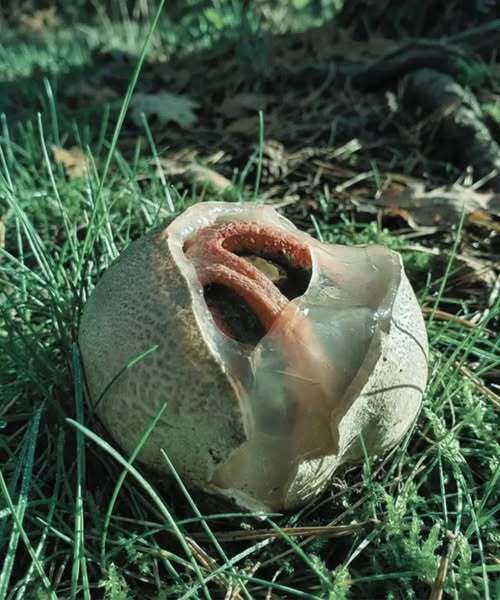
The life cycle of this mushroom begins in a form that can easily be overlooked. Before it emerges above the ground, it develops as a rounded structure partially hidden beneath soil or grass.
This early stage has a smooth, rubbery surface and is often referred to as an “egg” due to its shape. Inside, a complex structure is already forming, waiting for the right conditions to develop further.
When examined more closely, the interior reveals layers that will eventually become the mature mushroom. This stage can appear unusual, but it is simply part of the organism’s natural growth process.
Rapid Growth That Happens Almost Overnight
One of the most remarkable features of this fungus is how quickly it grows. Once conditions are favorable, the outer layer of the egg splits open, and the mushroom begins to rise from within.
This process can happen within hours, transforming from a hidden form into a tall structure in a very short time. In some cases, the growth is noticeable within a single morning.
This rapid development is one of the reasons people are often surprised to find it suddenly appearing where nothing was visible the day before.
A Distinctive Scent With a Purpose
Another defining characteristic of this mushroom is its strong odor. As it reaches maturity, it produces a scent that is difficult to ignore.
While the smell may seem unpleasant, it serves an important role in the mushroom’s life cycle. Instead of relying on air currents to spread spores, this fungus uses insects as part of its natural process.
The surface of the mushroom contains a sticky substance that holds spores. Insects are drawn to the scent, land on the surface, and then carry the spores away as they move through the environment.
This method allows the fungus to reproduce efficiently while continuing its role within the ecosystem.
A Unique Appearance That Draws Attention
The structure of this mushroom is unlike many others found in forests. Its tall shape and textured surface make it easy to spot once it has fully developed.
The top portion often appears coated, adding to its unusual look and making it stand out even more among natural surroundings.
Because of its distinct form, it frequently becomes a topic of discussion when discovered. People encountering it for the first time often pause to examine it more closely, intrigued by how different it appears from other plants and fungi.
Its Role in the Natural Environment
Despite its unusual features, this fungus plays a valuable role in nature. It helps break down organic material such as fallen leaves, wood, and other natural debris.
This process contributes to soil enrichment and supports the cycle of nutrients within forest ecosystems. By assisting in decomposition, it helps maintain balance in the environment.
Without organisms like this, natural materials would accumulate more slowly, and ecosystems would not function as efficiently.
Why It Often Surprises People
The combination of rapid growth, unique shape, and strong scent makes this mushroom particularly memorable. It often appears suddenly and looks very different from what most people expect to find outdoors.
These qualities can make it seem unusual or even startling at first. However, once understood, it becomes a fascinating example of how diverse and creative natural processes can be.
Its presence is simply another reminder that the natural world includes many forms that are unfamiliar but entirely normal within their environment.
Is It Safe to Be Around?
Although it may look unusual, this mushroom is not harmful to people. Being near it or observing it does not pose a danger.
Its strong scent may be unpleasant, but it is part of its natural design rather than a sign of risk. As with any wild organism, it is best to observe rather than disturb it.
Understanding its role and behavior can help reduce any initial concern and turn the experience into an opportunity to learn more about nature.
A Natural Example of Diversity
This fungus demonstrates how varied and unexpected life forms can be within a single environment. Its growth pattern, structure, and reproduction method all reflect the adaptability of nature.
While it may appear unusual at first, it serves a clear purpose and contributes to the health of the ecosystem around it.
Recognizing this helps shift the perspective from surprise to appreciation, highlighting the importance of even the most unexpected organisms.
Final Thoughts
The stinkhorn mushroom stands out as one of the more unusual discoveries in the natural world. Its sudden appearance, rapid growth, and distinctive features make it hard to ignore.
Yet beyond its striking presence, it plays a meaningful role in maintaining ecological balance. It supports the breakdown of organic material and helps sustain the environment in quiet but important ways.
For those who encounter it, what may first seem strange can quickly become an interesting glimpse into the complexity and diversity of nature.