
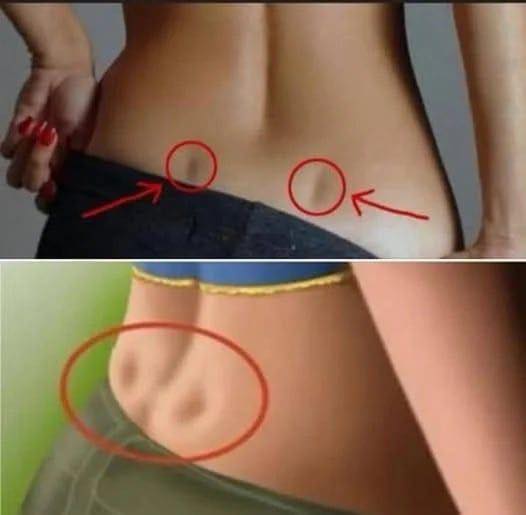
Understanding Lower Back Dimples: A Natural Variation of the Human Body
What Draws Attention to These Features
Small indentations located on the lower back often capture attention due to their distinct appearance. Commonly referred to as Venus dimples or Apollo dimples, these features are widely discussed and sometimes misunderstood.
Despite the fascination surrounding them, their significance is far more straightforward than many assume. They are not indicators of attractiveness, superiority, or physical condition. Instead, they are simply one of many natural variations in human anatomy.
The Anatomy Behind the Indentations
These dimples appear in a specific area of the lower back, positioned over a bony point in the pelvis. In individuals who have them, the skin in this region is more firmly connected to underlying structures.
This connection can create a visible indentation, depending on how the skin and tissue interact with the bone beneath. In others, the same anatomical area exists without forming visible dimples.
The difference does not reflect any deficiency or advantage. It is simply a variation in how the body is structured.
Factors That Influence Their Appearance
Several physical characteristics play a role in whether these dimples are visible. These include bone structure, ligament placement, and the distribution of body fat.
Bone structure determines the shape and positioning of the pelvis. Ligament attachment affects how tightly the skin is anchored in that region. Fat distribution can either highlight or soften the appearance of underlying contours.
These elements are largely influenced by genetics and are not something a person can fully control or modify.
Misconceptions and Popular Beliefs
Over time, these lower back indentations have been surrounded by various assumptions. Some consider them a sign of beauty, while others associate them with fitness or health.
In reality, these interpretations are not grounded in biological meaning. The presence or absence of dimples does not provide insight into a person’s physical condition or lifestyle.
They are not a marker of strength, nor do they indicate overall wellness. Treating them as such can create unnecessary pressure around appearance.
Can Their Visibility Change?
While the underlying structure that creates these dimples is fixed, their visibility can vary to some extent. Changes in body composition may influence how pronounced they appear.
Lower levels of body fat can make the dimples more noticeable by reducing the layer of tissue covering the area. Increased muscle tone in the lower back and glutes may also enhance the contours of the region.
However, these changes do not guarantee the appearance of dimples. Some individuals will not develop them regardless of fitness level or body composition.
The Role of Exercise and Physical Training
Although exercise cannot create these dimples if the anatomical structure does not support them, it can still improve overall body function and strength.
Focusing on the posterior chain—the group of muscles along the back of the body—offers multiple benefits. This includes improved posture, better spinal support, and a reduced risk of injury.
Strength training exercises such as deadlifts, glute bridges, back extensions, and core stabilization movements contribute to these outcomes. These exercises enhance performance and physical resilience, regardless of visible changes.
Shifting the Focus Away from Appearance
There is a growing tendency to turn specific physical traits into goals. Lower back dimples have, at times, been treated as something to achieve or maintain.
This perspective can shift attention away from what truly matters. The human body is designed to function, adapt, and support daily life, not to meet a narrow visual standard.
When appearance becomes the primary focus, it can overshadow the broader value of health, strength, and consistency.
A Balanced Approach to Physical Health
A more sustainable approach involves focusing on functional improvements rather than isolated features. Building strength, maintaining mobility, and supporting overall well-being provide lasting benefits.
Consistency in physical activity, combined with balanced nutrition and recovery, supports the body in a meaningful way. These practices contribute to long-term health rather than temporary visual changes.
Whether or not visible dimples develop along the way is incidental and should not define progress.
Understanding Natural Variation
Human bodies vary widely in structure and appearance. Features like lower back dimples highlight this diversity rather than define a standard.
Recognizing these differences helps shift the conversation from comparison to understanding. No single feature determines value, and no absence signals a shortcoming.
Accepting natural variation allows for a healthier relationship with one’s own body.
Why These Details Should Not Define Standards
It is easy for small physical traits to become amplified through social attention. Over time, they may be perceived as ideals rather than neutral characteristics.
However, such standards are often arbitrary and disconnected from function or well-being. Elevating them can lead to unrealistic expectations and unnecessary dissatisfaction.
Maintaining perspective helps prevent these minor details from taking on disproportionate importance.
Final Perspective
Lower back dimples are a simple anatomical feature shaped by structure and genetics. They do not reflect health, ability, or personal worth.
The body’s primary role is to support movement, strength, and daily function. Prioritizing these aspects leads to more meaningful and sustainable outcomes.
Focusing on balance, consistency, and overall well-being ensures that physical development remains grounded in purpose rather than appearance.
In the end, visible traits—whether present or absent—are only a small part of a much larger picture.