
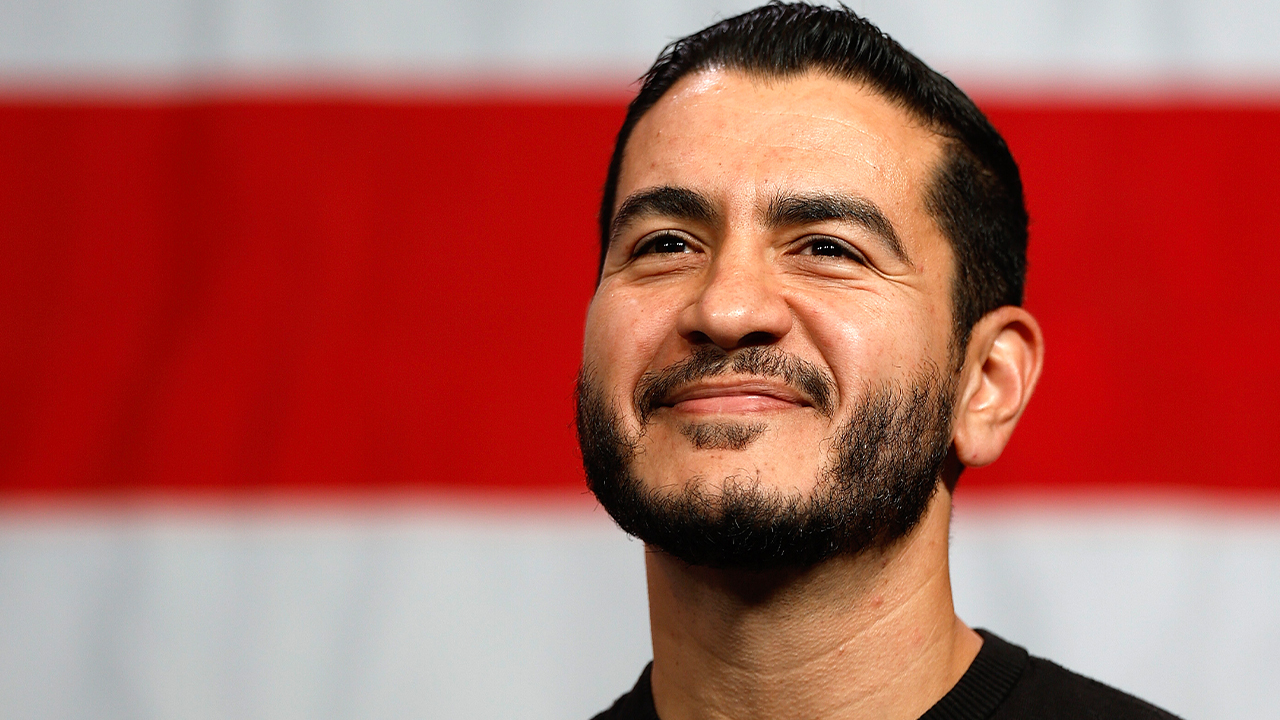
Abdul El-Sayed Opens Up About His Wife, Two Daughters and the Heartbreaking Moments He Missed as a Father
Behind the Political Campaigns and Public Appearances Is a Husband and Father Who Says His Family Has Taught Him Some of Life’s Most Important Lessons
For Abdul El-Sayed, returning home after time away from his family can bring two powerful emotions at once: happiness at seeing the people he loves and sadness over the moments he cannot get back.
Known for his work in public health and politics, El-Sayed has spent much of his professional life speaking about issues affecting communities and families. But behind his public responsibilities is a deeply personal story involving his wife, Dr. Sarah Jukaku, and their two daughters, Emmalee and Serene.
His reflections on marriage and fatherhood reveal a different side of the public figure. They describe a relationship that began during college, a partnership built through years of change, and the unexpected emotions that came with becoming a parent.
Perhaps most touching is his description of a simple moment with his baby daughter. After initially feeling like a supporting character in the earliest weeks of fatherhood, one small smile changed the way he understood his place in her world.
It was an ordinary family moment, but its meaning stayed with him.
A Love Story That Began at the University of Michigan
Long before political campaigns and public appearances became part of his life, Abdul El-Sayed met Sarah Jukaku while they were students at the University of Michigan.
Their relationship developed during a period when both were still discovering their ambitions and preparing for adulthood. Rather than waiting until every aspect of their futures was settled, they chose to build a life together while continuing to grow as individuals.
The couple married while they were still students, beginning a partnership that would eventually include demanding professional careers, parenthood, and the challenges of public life.
In a 2006 interview with The Michigan Daily, Jukaku recalled the words El-Sayed used when proposing marriage.
“We’re still growing, now we can grow together.”
The sentiment captured something important about their relationship. Marriage was not presented as the end of personal development but as a commitment to experience life’s changes alongside one another.
Years later, that idea of growing together would remain central to the way El-Sayed described his wife and their shared experiences.
Sarah Jukaku Built Her Own Career While Supporting Their Family
Although El-Sayed is the more publicly recognizable figure, his wife has pursued a demanding professional path of her own.
Dr. Sarah Jukaku is a psychiatrist, a career that involves understanding emotional well-being, human behavior, and the challenges people experience throughout their lives.
Alongside her professional responsibilities, she is also the mother of the couple’s two daughters, Emmalee and Serene.
El-Sayed has publicly expressed gratitude for the stability and support she has provided during periods when his campaigning required him to spend time away from home.
His reflections acknowledge that a political career affects more than the person appearing at events or traveling between communities. It also changes the daily routines of the family members who remain at home.
For a household with young children, those routines can include school, meals, bedtime, unexpected illnesses, and countless other responsibilities that rarely attract public attention.
El-Sayed’s appreciation for his wife reflects his awareness that maintaining family life during demanding professional periods requires considerable effort.
The Marriage That Helped Shape His Emotional Understanding
In his memoir, El-Sayed reflected on his wife’s quiet confidence and the influence she has had on his emotional development.
He described learning from the way she approached life and relationships, suggesting that their marriage helped him better understand feelings and experiences that he had not always recognized as clearly.
These reflections present marriage as something more complicated and meaningful than simply sharing a home or raising children together.
Over time, partners learn how the other person responds to stress, disappointment, uncertainty, and success. They also discover that supporting someone does not always mean solving a problem.
Sometimes it involves listening, recognizing another person’s perspective, and making space for emotions that are difficult to express.
For El-Sayed, his wife’s influence appears to have been an important part of that learning process.
The couple’s relationship began when they were young, but the experiences they shared as adults gave new meaning to the promise of growing together.
Becoming a Father Was Different From What He Expected
When El-Sayed became a father, he entered a new stage of life that brought responsibilities and emotions unlike those associated with his professional work.
He has described the earliest weeks of parenthood as a time when he felt like a “supporting actor.”
For many new fathers, the first weeks after a baby’s arrival can involve learning how to participate in a rapidly changing household while the newborn remains especially dependent on close physical care.
El-Sayed’s description captured the feeling of being present and involved while still discovering his own role.
He was a father, but the emotional connection between a parent and newborn does not always develop through one dramatic event. Sometimes it grows through repeated, ordinary interactions.
For him, however, one particular moment stood out.
It came when his baby smiled.
The Tiny Smile That Changed Everything
El-Sayed recalled how his experience of fatherhood changed when he saw his baby’s first smile.
Until then, he had described himself as feeling somewhat secondary during the earliest stage of parenting. But that small expression gave him a different sense of connection.
A baby’s smile may seem like a simple event to someone watching from the outside. For a parent, it can become an unforgettable memory.
It is a moment of recognition, warmth, and growing attachment, even when the child is far too young to understand the emotions surrounding it.
For El-Sayed, the experience helped transform fatherhood from a responsibility he was learning to fulfill into a relationship he could feel developing.
The significance of the moment was not in its grandeur. There was no public audience, political speech, or professional achievement.
It was simply a father and his child sharing a small interaction.
Yet that ordinary exchange became one of the memories through which he understood his new role.
Political Campaigning Came With a Personal Cost
As El-Sayed’s public career developed, his professional responsibilities sometimes required significant time away from his family.
Campaigning can involve travel, meetings, public events, interviews, and long working days. Those demands may create opportunities to connect with voters and discuss public issues, but they also reduce the time available for ordinary family life.
For El-Sayed, the emotional cost was not limited to missing major milestones.
He reflected on the smaller moments that passed while he was away: everyday conversations, familiar routines, and brief interactions that form the foundation of family relationships.
These are experiences that can be difficult to describe because they often seem unremarkable when they happen.
A child sharing something that happened during the day, laughing at an unexpected moment, or seeking comfort from a parent may not appear important enough to record.
But when those moments are missed, their absence can become deeply meaningful.
Why Coming Home Could Feel Bittersweet
For many parents who travel frequently, returning home is something to look forward to. Seeing their children again can bring immediate happiness after days or weeks of separation.
El-Sayed described experiencing that joy alongside another emotion: the realization that life had continued while he was gone.
His daughters were growing, learning, and changing during his absences. Even when he returned to a loving household, he could not recreate every conversation or experience that had happened without him.
That awareness made homecoming bittersweet.
He could celebrate being reunited with his family while also feeling the weight of the time he had missed.
The reflections offer an unusually personal perspective on the demands of public life. Professional accomplishments may be visible to the outside world, but the sacrifices made at home are often much harder to measure.
For El-Sayed, those sacrifices were connected to the people who mattered most to him.
His Daughters Helped Him See Time Differently
Parenthood often changes how people understand the passage of time, particularly during the early years when children develop rapidly.
El-Sayed’s reflections suggest that watching his daughters grow made him increasingly aware of how quickly ordinary moments disappear.
A stage of childhood that feels permanent while it is happening may last only a few months. Familiar routines change, new interests emerge, and children gradually become more independent.
Parents who spend time away from home may notice those changes especially clearly when they return.
For El-Sayed, the challenge was not simply balancing a calendar. It was recognizing that time spent pursuing professional responsibilities could not always be recovered later.
His comments do not suggest that public service and family life are incompatible. Rather, they reveal the emotional complexity of trying to remain committed to both.
The Quiet Responsibilities Behind a Public Career
Public figures are often discussed primarily through their professional decisions, campaigns, and appearances.
But those activities take place alongside personal responsibilities that continue regardless of public attention.
El-Sayed’s marriage and family life illustrate that distinction. While his work brought him into the public eye, his wife and daughters remained central to his private world.
His expressions of gratitude toward Sarah Jukaku acknowledge the role she has played in supporting their household during demanding periods.
At the same time, his reflections on fatherhood show that he has considered what his own absences meant for his relationship with his children.
The story is not simply about a politician missing home. It is about a husband and father trying to understand how his professional ambitions fit alongside his responsibilities to the people he loves.
A Marriage Built on the Idea of Growing Together
Looking back at the couple’s early relationship, the words Jukaku recalled from El-Sayed’s proposal carry a deeper meaning.
“We’re still growing, now we can grow together.”
At the time, they were young students preparing for uncertain futures. They could not have known every challenge their marriage would eventually bring.
Years later, their lives included medical careers, political campaigning, two daughters, and the complicated task of maintaining a family through changing responsibilities.
The promise of growing together did not mean that every experience would be easy. Instead, it suggested a willingness to adapt as life changed.
El-Sayed’s reflections on his wife and children show how that original idea continued to shape his understanding of family.
Happy Mother’s Day to all the moms out there, and especially to my brilliant life partner, Sarah.
Sarah, you are my rock and the greatest mother to our daughters. We are so blessed to have you. https://t.co/uwOQTICbx5
— Dr. Abdul El-Sayed (@AbdulElSayed) May 10, 2026
The Small Moments That Matter More Than We Realize
Perhaps the most memorable part of El-Sayed’s account is the contrast between his public life and the small experiences that shaped him privately.
Political campaigns are built around events, speeches, schedules, and goals. Family life, by comparison, is often defined by moments that cannot be planned.
A baby’s first smile. A conversation at home. A child reaching for a parent’s hand. The familiar comfort of being together after time apart.
These experiences rarely make headlines, but they can become the memories people value most.
El-Sayed’s reflections suggest that his understanding of fatherhood developed not through one grand realization but through a growing awareness of how much those moments mattered.
And the more time he spent away, the more clearly he recognized their value.
Behind Abdul El-Sayed’s Public Life Is a Family He Deeply Values
Abdul El-Sayed’s story with Sarah Jukaku began at the University of Michigan, where two young students decided to build a future together.
Their marriage eventually brought professional responsibilities, public attention, and the joys and challenges of raising daughters Emmalee and Serene.
Through those experiences, El-Sayed has spoken about learning from his wife’s confidence, discovering the emotional meaning of fatherhood, and confronting the sadness of missing ordinary time with his children.
His recollection of a baby’s first smile captures the central message of those reflections: sometimes the smallest experiences can change the way a person understands an entire relationship.
For El-Sayed, returning home after campaigning could be both joyful and painful because every reunion reminded him of the moments he had missed.
Ultimately, his family story offers a reminder that professional achievements and public recognition are only part of a person’s life. Behind them are relationships shaped by patience, sacrifice, gratitude, and the simple desire to be present.
And sometimes, what matters most is not the next major accomplishment, but an ordinary moment at home that will never happen in quite the same way again.