
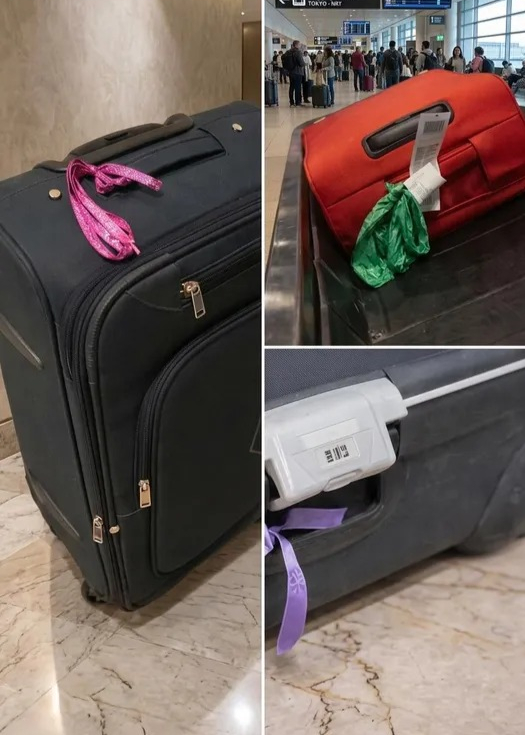
Why Ribbons on Suitcases May Cause More Problems Than They Solve
A Common Travel Habit at the Baggage Carousel
After a long flight, many travelers want to spot their luggage as quickly as possible. When dozens of nearly identical suitcases begin circling the baggage carousel, it is easy to understand why people look for simple ways to make their bags stand out.
One of the most common methods is adding a bright ribbon, scarf, or tag to the handle. At first glance, this seems like a practical solution because it helps a suitcase become easier to recognize in a crowded airport setting.
For travelers who are tired after landing, anything that saves time at baggage claim can feel worthwhile. A colorful marker appears to offer a fast visual clue, especially when black, gray, and navy suitcases dominate the carousel.
Still, what looks helpful from a passenger’s point of view may create unexpected issues once the bag enters the airport handling system. That is why airport professionals often advise travelers to think twice before attaching loose accessories to their luggage.
How Airport Baggage Systems Handle Suitcases
Modern airports use automated systems designed to move luggage from check-in to the correct aircraft and then back to the right arrival area. These systems depend on speed, accuracy, and clear barcode scanning to keep bags moving efficiently.
Once a suitcase is checked in, it is typically placed on conveyor belts and routed through a series of mechanical and digital checkpoints. The barcode attached to the bag plays an essential role because it tells the system where the luggage needs to go.
If the barcode is scanned correctly, the suitcase can continue through the system with minimal interruption. This allows thousands of bags to be sorted and transported every day with a high level of coordination.
The process may seem simple from the outside, but it relies on consistency. Anything that interferes with scanning or handling can disrupt the path of a bag and force the system to slow down.
Why Ribbons and Loose Accessories Can Create Delays
Airport staff warn that ribbons, loose tags, and similar add-ons can sometimes cause problems during baggage processing. Although they are meant to help the passenger identify a suitcase, they may interfere with the airport’s automated equipment.
One concern is that extra items attached to a handle can partially cover or block the barcode. If the scanning system cannot read the label clearly, the suitcase may not be routed properly through the system.
In that situation, the bag may need to be pulled aside for manual handling. That extra step can slow down processing and increase the chance that the luggage will not move as smoothly as intended.
Loose accessories can also create physical issues. Ribbons, scarves, or dangling decorations may become caught in parts of the conveyor system, which adds another possible complication during transport.
What begins as a simple effort to make a bag easier to recognize can therefore work against the traveler. Instead of improving the experience, it may contribute to delays that make arrival more stressful.
The Importance of Clear and Accurate Bag Labels
Another detail that can affect baggage handling is the presence of old airline stickers or outdated travel labels. Many suitcases still carry remnants from earlier trips, especially if travelers forget to remove them after returning home.
These leftover labels may seem harmless, but they can create confusion for automated systems. If old routing information remains visible, there is a risk that the wrong code could be detected during processing.
That confusion can lead to sorting errors. A suitcase may be delayed, pulled aside, or even directed toward the wrong destination if the system encounters conflicting information.
For that reason, baggage handlers recommend checking luggage carefully before every trip. Removing old stickers and tags helps make sure that only the current barcode and relevant identification are visible.
This small step may reduce the chances of an avoidable mistake. In a process built around speed and accuracy, clarity matters.
Why Some Packed Items Can Lead to Extra Screening
Travelers are also reminded that what goes inside a suitcase can affect the journey through airport systems. Certain dense food products, while generally permitted, may appear unusual during routine screening.
When an item looks unclear or unusual on a scanner, it can trigger additional inspection. That does not necessarily mean the item is prohibited, but it can result in more time being spent on security checks.
Extra screening may slow the bag’s progress through the airport even if the contents are allowed. In a busy travel environment, even minor delays at one stage can affect the overall handling process.
This is another reason why thoughtful packing can make a difference. Travelers often focus on what they need to bring, but the way items appear during screening also matters when trying to move efficiently through the system.
A Better Way to Make Luggage Easy to Identify
Because ribbons and loose accessories can create problems, airport professionals suggest other ways to make a suitcase recognizable. One of the simplest alternatives is choosing luggage with a distinctive design from the start.
A suitcase with a unique color, pattern, or built-in identifying feature can stand out without creating interference for scanners or machinery. This gives travelers the visual advantage they want without adding loose materials to the outside of the bag.
Built-in identification features are especially useful because they are part of the luggage itself. Unlike tied-on ribbons or dangling decorations, they do not move around or risk getting caught during transport.
Distinctive luggage can also save time at baggage claim. A recognizable bag is easier to pick out from a distance, which helps travelers move through the airport more quickly after arrival.
In this way, the goal remains the same: make the suitcase easier to spot. The difference is that the method supports both convenience and compatibility with airport systems.
Handling Tips That May Help Protect Your Bag
Another recommendation from baggage handlers involves the way a suitcase is placed on the conveyor belt. Setting the bag down with the wheels facing upward may help reduce wear and possible damage during handling.
This suggestion is simple, but it reflects the practical knowledge of people who work with luggage every day. A suitcase moves through multiple stages before reaching its destination, and its position can influence how it is handled along the way.
Travelers often focus on packing and timing, but small physical details can matter too. The way a bag enters the system may affect how well it holds up during transport.
Combined with clear labeling and careful packing, proper placement on the conveyor belt becomes part of a broader effort to make travel smoother. Small habits can add up when many steps are involved in the baggage process.
Small Travel Choices Can Have a Big Effect
For many people, tying a ribbon to a suitcase feels like a harmless travel habit. It is simple, familiar, and meant to solve a real problem. Yet airport professionals point out that even well-intentioned choices can have unintended consequences.
When an airport system depends on clear barcode visibility and unobstructed movement, extra decorations on the outside of a bag may create risk rather than convenience. A bag that cannot be scanned easily or that becomes snagged in machinery may require manual attention.
That extra attention takes time, and time matters when thousands of bags are being processed. A delay affecting one suitcase can quickly become frustrating for the traveler waiting at the other end.
By contrast, choosing luggage that is naturally easy to recognize avoids these issues. A bold color, a distinctive pattern, or a built-in identifier offers the same benefit without adding loose material that could interfere with airport equipment.
Preparing Luggage the Smart Way Before a Flight
Before heading to the airport, travelers can improve their chances of a smooth baggage experience by checking a few important details. Making sure the current airline label is clearly visible is one of the most important steps.
It also helps to remove any tags or stickers left over from previous trips. Outdated routing information can create confusion, and clearing it away reduces the possibility of sorting mistakes.
Looking over the outside of the suitcase for loose accessories is equally important. Anything attached to the handle or exterior should be considered carefully before travel, especially if it could block a barcode or catch on equipment.
Inside the bag, thoughtful packing may help avoid added screening time. Dense food items are generally allowed, but travelers should understand that such items can sometimes attract extra attention during routine inspection.
Finally, placing the suitcase on the conveyor belt with the wheels facing upward may help reduce wear. This practical step, along with the others, supports a more efficient journey through the airport system.
A Smoother Journey From Check-In to Arrival
Air travel involves many moving parts, and baggage handling is one of the most important. While passengers only see a small portion of the process, their choices before check-in can influence how smoothly a suitcase travels behind the scenes.
Simple habits such as removing old labels, avoiding loose decorations, packing carefully, and using distinctive luggage can help reduce unnecessary complications. These adjustments do not require much effort, but they can support better results.
The goal is not only to find a suitcase quickly at the baggage carousel. It is also to make sure the bag reaches that carousel without avoidable delays, confusion, or damage along the way.
For travelers hoping to make airport arrivals easier, the most effective solution may not be tying on a ribbon at all. A suitcase that is easy to recognize by design, properly labeled, and prepared with care offers a more reliable path from departure to destination.