
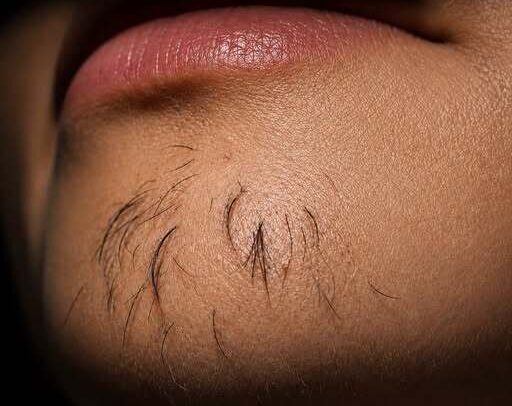
Why Chin Hair Appears in Women and When It May Be Worth Paying Attention
When a Few Stray Hairs Feel Alarming
It can begin with a single coarse hair on the chin.
At first, it may seem like a small detail. Then another hair appears, and the change can suddenly feel much bigger than it is.
For many women, noticing new facial hair can cause worry, embarrassment, or confusion. It may raise quiet questions about hormones, aging, genetics, or whether something deeper is happening inside the body.
In many cases, however, a few chin hairs are not a sign that something is seriously wrong. They are often connected to normal hormonal activity and the way individual hair follicles respond to those hormones.
The Role of Hormones in Facial Hair Growth
Facial hair growth is closely connected to hormones called androgens. Testosterone is one of these hormones, and it exists in all bodies.
Although testosterone is often discussed as a male hormone, women also naturally produce it. The amount present, and the way the body responds to it, can influence where thicker or darker hairs appear.
Some hair follicles are more sensitive to androgens than others. When those follicles react strongly, they may produce coarse hairs on areas such as the chin, upper lip, or jawline.
This does not always mean hormone levels are dangerously high. Sometimes the follicles themselves are simply more responsive to normal hormonal changes.
Why Chin Hair Can Appear Over Time
Chin hair may become more noticeable with age. As the body moves through different life stages, hormone patterns can shift gradually.
These changes may affect hair texture, thickness, and location. A woman who never noticed facial hair before may begin seeing a few new hairs later in life.
Genetics can also play a major role. If facial hair growth is common among women in a family, a few chin or jawline hairs may simply reflect inherited patterns.
For some women, the change is subtle and slow. One hair appears, then another, and over time it becomes something they manage as part of a normal grooming routine.
Menopause and Hormonal Shifts
Menopause is one life stage that can influence facial hair growth.
As hormone balance changes, some women notice new growth on the chin or upper lip. This can happen even if they did not have noticeable facial hair earlier in adulthood.
The appearance of these hairs can feel sudden, but it may be part of a gradual internal shift. The body’s hormone environment changes, and hair follicles may respond in visible ways.
For many women, this type of hair growth is manageable and does not point to a serious health problem.
When Facial Hair May Be Linked to PCOS
Sometimes, increased facial hair can be connected to polycystic ovary syndrome, often called PCOS.
This is especially worth considering when chin or facial hair appears along with other changes. Irregular periods, acne, or noticeable weight changes may be important signs to pay attention to.
Facial hair alone does not automatically mean a woman has PCOS. However, when it appears together with other symptoms, it may be a reason to speak with a healthcare professional.
Getting clarity can reduce fear and help determine whether the hair growth is part of a broader hormonal pattern.
Other Possible Factors
In some situations, medications may play a role in changes to hair growth.
Stress can also be part of the picture, especially when the body is already going through hormonal changes. While stress alone may not explain every case, it can contribute to how the body feels and functions.
Rarely, underlying illnesses may be involved. These cases usually come with other symptoms rather than only a few isolated chin hairs.
This is why the full pattern matters. A small number of slow-growing hairs is different from sudden, rapid, or widespread growth that feels unusual.
When to Seek Medical Advice
It may be time to speak with a healthcare professional if facial hair growth appears suddenly or increases quickly.
It is also worth asking for guidance if the change comes with irregular periods, acne, weight changes, or other symptoms that feel unusual for the body.
A professional can help determine whether the hair growth is a normal variation or part of a condition that needs attention.
For many women, the most helpful step is not panic, but clarity. Understanding the cause can make the change feel less frightening and more manageable.
Why Shame Is Not Necessary
Chin hair can feel deeply personal, especially because facial hair in women is often surrounded by silence and embarrassment.
But the appearance of a few coarse hairs is not a failure of the body. It is often a visible response to hormones, genetics, age, or follicle sensitivity.
Many women experience some form of facial hair growth during their lives. The fact that it is rarely discussed openly can make it feel more unusual than it really is.
Understanding the possible causes can help replace fear with perspective.
A Manageable and Often Natural Change
For many women, chin hairs are simply a manageable part of hormonal activity.
They may appear slowly, remain limited, and never indicate anything serious. In these cases, the change may be inconvenient or frustrating, but not dangerous.
The most important distinction is whether the growth is mild and gradual or sudden and accompanied by other symptoms.
When the change feels extreme, fast, or concerning, medical guidance can provide answers. When it is limited to a few hairs, it is often just one of many normal variations in how the body changes over time.
Understanding Before Panic
A few chin hairs can trigger a strong emotional reaction, especially when they appear unexpectedly.
But fear is not always the right conclusion. Hormones, genetics, aging, menopause, and follicle sensitivity can all influence facial hair growth without meaning the body is failing.
Conditions such as PCOS may be involved in some cases, particularly when other symptoms are present. Medications, stress, or illness may also play a role in less common situations.
The best response is awareness. Notice the pattern, pay attention to other changes, and seek professional advice when the growth is sudden, rapid, or worrying.
For many women, chin hair is not a sign of danger. It is a natural, manageable expression of the body’s changing hormonal rhythm.