
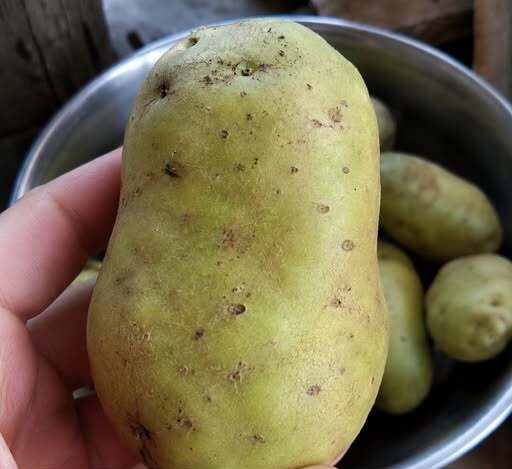
Green Potatoes Can Be a Warning Sign: What to Remove and When to Throw Them Away
Why a Potato May Develop Green Patches
A potato that begins developing green areas has undergone more than a simple change in appearance. The color is a sign that the potato has been exposed to light, either during storage, transportation, or while sitting in a brightly lit kitchen.
Light exposure encourages the potato to produce chlorophyll. This natural pigment creates the green tint that may appear on the skin or extend into the flesh beneath it.
Chlorophyll itself is not the main health concern. The more important issue is that the same conditions that cause greening can also increase the potato’s production of solanine, a naturally occurring substance used by the plant as a form of protection.
For this reason, green patches should not be dismissed as ordinary discoloration. They can serve as a visible warning that the potato may contain a higher concentration of an unwanted natural toxin.
Understanding the Role of Solanine
Solanine is part of the potato plant’s natural defense system. It helps protect the plant, but it is not something people should consume in large amounts.
A potato with increased solanine may develop a noticeably bitter flavor. That bitterness is another warning sign and should not be ignored or covered up with seasoning, butter, cream, or other ingredients.
Eating a high amount of solanine can cause digestive symptoms. These may include nausea, vomiting, stomach pain, abdominal cramping, and diarrhea.
The severity of the reaction can depend on how much of the affected potato is eaten at one time. Children may be especially vulnerable because their smaller body size means that a lower quantity could have a stronger effect.
Not every green potato contains the same amount of solanine. The visible color does not provide an exact measurement, but it offers a practical signal that the potato should be examined carefully before it is prepared.
Green Color Does Not Always Mean Immediate Disposal
Finding a small green patch does not necessarily mean that the entire potato must be thrown away. A potato with limited, shallow discoloration may still be usable when the affected portions are removed properly.
The green areas should be cut away generously rather than trimmed as thinly as possible. Removing only the visible surface may leave some of the affected flesh underneath.
Any sprouts should also be removed completely. Sprouting is another indication that the potato has changed during storage and should receive closer attention before cooking.
After the green portions and sprouts have been cut away, the remaining potato can generally be prepared if it looks normal and does not have a bitter taste. Careful trimming is important because the goal is to remove more than just the most obvious discoloration.
A person should not feel pressured to save every potato. When there is uncertainty about how deeply the greening extends, discarding it is the safer and simpler decision.
When a Potato Should Be Discarded
A potato that is heavily green should not be treated in the same way as one with a tiny patch near the surface. Extensive greening suggests that the potato has experienced significant light exposure.
If much of the skin is green, the color extends deeply into the potato, or several areas are affected, throwing it away is the safer choice. Cutting around numerous green sections may leave too little unaffected flesh and may not remove every questionable area.
A bitter taste is another clear reason to stop eating the potato. Bitterness should not be considered a normal flavor difference or something that cooking will automatically correct.
Heavy sprouting is also a reason for caution. A potato covered in long or numerous sprouts should be discarded rather than repeatedly trimmed in an effort to make it usable.
The condition of the potato should be evaluated as a whole. Strong greening, bitterness, and extensive sprouting together provide several warning signs that it should not be used.
Cooking Is Not a Substitute for Careful Inspection
Many people assume that boiling, baking, frying, or roasting will make any potato safe. That belief can encourage them to cook a green potato without removing the affected sections.
The better approach is to inspect potatoes before cooking begins. Green areas and sprouts should be dealt with while the potato is still whole and easy to examine.
Cooking should not be used as a reason to ignore visible warning signs. A potato that is extremely green or bitter should be discarded before it reaches the pot, oven, or frying pan.
This matters when preparing dishes that use several potatoes together. One badly affected potato can be chopped into a larger recipe and become difficult to identify after it has been mixed with the other ingredients.
Checking each potato separately helps prevent heavily green or sprouted pieces from being included in mashed potatoes, soups, casseroles, fries, or roasted dishes.
Why Proper Storage Makes a Difference
Potatoes are more likely to turn green when they are exposed to sunlight or strong indoor lighting. A bag left near a window, on a bright countertop, or beneath a kitchen light may begin changing color sooner than expected.
Storing potatoes in a cool, dark, and dry location helps slow the greening process. Darkness is particularly important because light is the trigger behind chlorophyll production.
A suitable storage space can help preserve the potatoes’ normal color, flavor, and usefulness. It can also reduce the amount of food that must be trimmed or discarded.
Potatoes should not be left in transparent packaging under bright light for long periods. Even when they appeared normal at the time of purchase, continued exposure can gradually produce green patches.
Regularly checking stored potatoes is also helpful. A single potato that has begun sprouting or greening can be removed before its condition becomes more severe.
Small Changes Can Prevent Unnecessary Risk
Handling green potatoes safely does not require complicated preparation. The most important steps are recognizing the warning signs, removing minor affected areas generously, and discarding potatoes that are extensively green, bitter, or heavily sprouted.
This practical approach avoids two common mistakes. The first is throwing away every potato that has the smallest green mark, even when the affected section can be removed easily.
The second mistake is continuing to use a severely green potato simply because it still feels firm or appears usable after peeling. Firmness alone does not erase the warning created by deep or widespread discoloration.
Consumers should use both appearance and taste as guides. A small, shallow green area may be cut away, but a strong bitter flavor should be treated as a reason not to continue eating.
Extra care is especially sensible when potatoes are being served to children. Because children can be more affected by a concentrated amount of solanine, heavily green potatoes should never be included in their meals.
Check Potatoes Before Preparing a Meal
Potatoes often remain in storage for days or weeks, and their condition can change during that time. A potato that looked normal when it was purchased may later develop green skin or sprouts.
A quick inspection before peeling can reveal whether the potato is still suitable for use. Turn it over, check all sides, and look around any sprouts or damaged areas for signs of green coloring.
After peeling, examine the flesh as well. Sometimes the discoloration is more noticeable once the outer skin has been removed.
If the green section is limited, cut well beyond its edges and remove the affected flesh. If the color covers a large portion or continues deeply beneath the skin, discard the potato.
These steps take only a short time and can prevent unpleasant symptoms while protecting the quality of the finished dish.
The Main Warning Signs to Remember
A green tint develops because light causes the potato to produce chlorophyll. At the same time, the potato may produce more solanine, which is the substance connected with the possible digestive effects.
Small green patches do not always require throwing away the entire potato. They can often be removed with a generous cut, together with any sprouts, before the remaining portion is cooked.
Widespread greening, a bitter taste, or heavy sprouting changes the situation. Potatoes showing those signs are safer to discard rather than serve.
Keeping potatoes in a cool, dark, dry place is the most effective everyday step for preventing the problem. Limiting their exposure to sunlight and bright kitchen lighting helps preserve their normal appearance and flavor.
Green potatoes are not merely unattractive vegetables. Their color is a useful warning that deserves attention, careful trimming, or disposal depending on how severe the change has become.
By inspecting potatoes before cooking and storing them away from light, households can reduce waste without overlooking a possible health concern. The safest decision begins with noticing the signs rather than automatically slicing, cooking, and hoping for the best.