
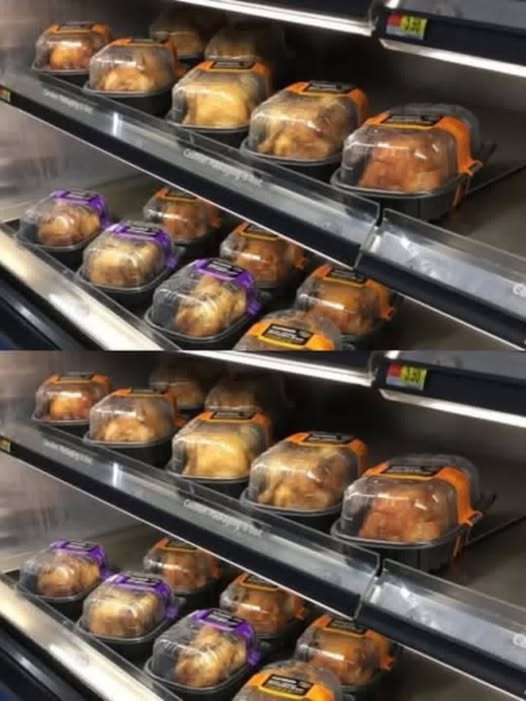
Is Walmart’s $5.97 Rotisserie Chicken Really a Good Deal? Here’s What Shoppers Should Consider
The Low Price Makes It an Easy Weeknight Shortcut
For busy households, a ready-to-eat rotisserie chicken can seem like one of the easiest dinner decisions in the store.
Walmart’s rotisserie chicken is currently listed at $5.97 for a 2.25-pound bird, putting it within reach for shoppers looking for an inexpensive meal that requires almost no preparation.
For one or two people, that combination of convenience and price can be especially appealing.
But the sticker price does not tell the whole story.
The Weight on the Package Is Not All Usable Meat
A 2.25-pound chicken includes more than the meat that eventually ends up on the plate.
Bones contribute to the total weight.
So does skin.
Moisture also affects the final number.
That means the amount of edible meat available for sandwiches, salads, casseroles, soups, or other meals will be lower than the package weight suggests.
That Difference Matters When Comparing Value
A shopper may see a cooked chicken weighing more than two pounds and assume that nearly all of it can be used.
In practice, the actual yield will be smaller once the bones and other non-meat portions are removed.
For a small household, that may not be a problem.
For a larger family, however, the usable amount may disappear quickly.
Convenience Is Part of What You Are Paying For
The biggest advantage of a rotisserie chicken is not simply the chicken itself.
It is the time already saved.
The bird has been seasoned.
It has been cooked.
There is no need to handle raw poultry, wait for an oven to preheat, or monitor cooking time.
For a busy evening, those benefits can make the purchase worthwhile even if the raw-meat value is not the absolute lowest available.
Small Households May Get the Most Benefit
For one person, a rotisserie chicken can stretch across several meals.
For two people, it may provide dinner with enough meat remaining for lunch the next day.
That can make the $5.97 price feel very competitive compared with buying separate prepared meals.
The value improves even more when leftovers are planned rather than forgotten in the refrigerator.
One Chicken Can Be Used in Several Different Ways
The first meal might simply be sliced chicken with vegetables or another side dish.
Remaining meat can then be removed and refrigerated for later use.
It can be added to sandwiches.
It can be mixed into salads.
It can be used in soups, wraps, casseroles, pasta dishes, or other recipes.
Meal Planning Can Make the Purchase More Efficient
A rotisserie chicken is most economical when shoppers know what they intend to do with it.
Buying one for a single dinner and discarding the leftovers reduces its value.
Using most of the edible meat across multiple meals makes the low purchase price more meaningful.
This is especially useful for meal-preppers who want a ready source of cooked protein.
Larger Families May Need to Do More Math
A household feeding several people may find that one 2.25-pound chicken does not provide enough meat for everyone.
Buying two birds increases the cost immediately.
At that point, a raw whole chicken may deserve comparison.
The better option depends on how much usable meat the family needs and how much time they are willing to spend cooking.
A Raw Whole Chicken May Offer Better Yield
Raw chickens can sometimes provide more usable meat for the money, particularly when larger birds are available at a competitive per-pound price.
They also allow the cook to control seasoning from the beginning.
For families feeding several people, that extra yield can matter more than convenience.
The tradeoff is preparation time.
Raw Chicken Requires More Work
Cooking a whole chicken means planning ahead.
The bird needs to be prepared and cooked safely.
Cooking time must be factored into dinner plans.
There is also cleanup afterward.
A rotisserie chicken removes most of those steps.
The Cheapest Option Is Not Always the Best Value
Value includes more than the purchase price.
Time matters.
Convenience matters.
Waste matters.
So does whether the food actually fits into the household’s meal plan.
A product that costs slightly more per usable ounce can still be worthwhile if it prevents spending more money on takeout or last-minute meals.
Shoppers Should Think in Terms of Usable Portions
Instead of comparing only the total package weight, it is more helpful to think about how many servings the chicken is likely to provide.
A couple planning two meals may see excellent value.
A family hoping to feed several adults and children at once may reach a different conclusion.
The same $5.97 chicken can therefore be a bargain for one household and insufficient for another.
The Nutrition Label Deserves Attention Too
Price and convenience are not the only considerations.
Prepared rotisserie chickens are typically seasoned before cooking.
For consumers watching sodium intake, that makes the package nutrition label especially important.
The amount of sodium and the seasoning profile can affect whether the chicken fits comfortably into an individual eating plan.
Sodium-Conscious Shoppers Should Not Assume All Rotisserie Chickens Are the Same
Prepared chicken can vary depending on how it is seasoned and processed.
A shopper who is limiting sodium should inspect the nutrition information on the exact package being purchased.
That is more reliable than assuming every store-prepared chicken has the same nutritional profile.
The Seasoning Can Also Affect Recipes
A strongly seasoned rotisserie chicken may taste good on its own but may not work equally well in every dish.
Meal-preppers planning to use the meat in several recipes should think about whether the existing flavor will complement those meals.
A mild seasoning may be easier to repurpose.
A more distinctive seasoning can limit flexibility.
Meal-Preppers Should Buy With the Next Few Meals in Mind
A rotisserie chicken can be especially useful for people who prepare lunches or dinners in advance.
The meat is already cooked and can be divided quickly.
But planning matters.
Someone preparing several different dishes should consider both the total amount of usable meat and the flavor already added to the bird.
The Purchase Can Reduce Dependence on Takeout
This is one area where convenience can create indirect savings.
A shopper who arrives home tired may be more likely to order restaurant food if dinner requires significant preparation.
A ready-to-eat chicken makes it easier to put together a meal quickly.
If it replaces a more expensive takeout order, its value becomes much greater than the shelf price alone suggests.
It Can Also Make Last-Minute Dinners Easier
Not every meal needs to be carefully planned days in advance.
Rotisserie chicken works well as an emergency dinner option when schedules change or cooking time disappears.
Add a simple side dish and dinner can be ready within minutes.
The Bones Do Not Necessarily Have to Be Waste
Some shoppers may choose to use the remaining carcass as part of another meal-preparation process.
Others may simply discard it.
Either way, shoppers should remember that bones are part of the weight they paid for.
This is why comparing a cooked whole chicken directly with boneless meat by package weight can be misleading.
Skin Also Changes the Yield Calculation
Some people eat the skin.
Others remove it.
Those different preferences affect how much of the purchased weight becomes part of the final meal.
A household that discards the skin will end up with a smaller usable portion than one that consumes it.
Moisture Is Another Hidden Part of the Total Weight
Cooked poultry contains moisture, and that contributes to the weight of the finished product.
This is normal.
But it reinforces the point that a 2.25-pound rotisserie chicken does not translate into 2.25 pounds of boneless meat.
Comparing Cost Per Pound Can Be Misleading
A raw whole chicken and a cooked rotisserie chicken are not identical products.
One requires preparation and cooking.
The other is ready to eat.
Comparing the printed price per pound without accounting for those differences gives an incomplete picture.
Time Has Economic Value Too
For someone working late, caring for children, commuting, or simply trying to avoid another hour in the kitchen, convenience can be worth paying for.
A person with more time and a larger household may place greater value on buying raw poultry and preparing it at home.
Neither choice is automatically better.
The Best Choice Depends on Household Size
A small household may easily stretch one bird over multiple meals.
A large household may need two or more birds for a single dinner.
That difference changes the economics dramatically.
Household size should therefore be one of the first things shoppers consider.
Appetite Matters as Much as Family Size
Two households with the same number of people may still use very different amounts of chicken.
Young children may eat smaller portions.
Teenagers and adults may need significantly more.
People using the meat as a topping may need less than those serving it as the main course.
The Planned Recipe Changes the Value
A chicken used in tacos, soup, pasta, or salad may stretch farther because it is combined with other ingredients.
A chicken served as the main centerpiece of dinner may disappear more quickly.
That is why shoppers should think beyond the first meal.
Rotisserie Chicken Can Be Useful for Portion Control
Because the bird is already cooked, shoppers can remove the meat and divide it into containers immediately.
This can help with meal preparation and reduce the temptation to rely on less planned food choices later in the week.
Again, however, the amount available after deboning matters.
The Nutrition Label Can Help With More Than Sodium
Shoppers interested in nutritional details should read the complete label rather than relying on general assumptions about chicken.
The prepared product may have a different nutritional profile from plain roasted chicken because of seasoning and preparation methods.
The package gives the most relevant information for the specific bird being purchased.
People With Specific Dietary Goals Should Check Before Buying
Someone monitoring sodium may reach a different decision from someone focused mainly on convenience and protein.
A meal-prepper seeking neutral-tasting meat may have different priorities from someone planning to eat the chicken exactly as sold.
The best value depends partly on those personal goals.
It Is Easy to Overestimate How Far One Chicken Will Stretch
The whole bird looks substantial in its container.
Once the meat is removed from the bones, the quantity can seem considerably smaller.
Shoppers feeding several people should keep that in mind before assuming one chicken will cover an entire meal.
Two Rotisserie Chickens Change the Price Comparison
At $5.97 each, buying multiple birds quickly changes the total.
For a larger household, that may make a raw whole chicken or another bulk protein option worth considering.
For a smaller household, however, buying only one keeps the total dinner cost very low.
Convenience Can Reduce Food Waste
A raw chicken purchased with good intentions can become poor value if nobody has time to cook it before it spoils.
A cooked chicken can be eaten immediately.
For people with unpredictable schedules, that reliability can matter.
But Leftovers Still Need a Plan
Convenience does not automatically prevent waste.
If half the rotisserie chicken sits unused in the refrigerator, the low purchase price becomes less impressive.
Shoppers who know how they will use leftovers are more likely to get full value.
Repurposing the Meat Can Make the Deal Stronger
One dinner can become multiple lunches.
Leftover chicken can become filling for wraps.
It can be added to vegetables and rice.
It can be incorporated into a quick casserole.
Using the meat creatively helps stretch the initial $5.97 purchase.
It Can Be Especially Helpful for People Cooking for One
Single-person households often face a different problem from large families.
Buying and cooking a full raw chicken may feel like too much work for one person.
A ready-to-eat bird can provide several portions with almost no preparation.
For those shoppers, convenience may outweigh concerns about maximum meat yield.
Couples Can Often Get Several Servings From One Bird
A two-person household can potentially use the chicken for dinner and still have meat remaining for another meal.
That makes the low upfront price attractive when compared with prepared individual entrees.
The exact value depends on portion size and how the meat is used.
Large Families Have Different Priorities
Parents feeding several people may be more concerned with total volume.
They may prefer a larger raw chicken because it provides more meat and greater control over seasoning.
If time is limited, however, multiple rotisserie chickens may still win on convenience.
There Is No Universal Answer
The question is not simply whether Walmart’s rotisserie chicken is cheap.
At $5.97, the purchase price is clearly low for a fully cooked bird.
The better question is whether it provides enough usable food for the particular household buying it.
Shoppers Should Evaluate Three Main Things
First, consider how many people the chicken needs to feed.
Second, think about how much of the bird will actually be used after bones, skin, and other non-meat portions are accounted for.
Third, inspect the nutrition label and seasoning if dietary needs or recipe flexibility matter.
The Best Deal May Be the One That Fits the Week
There may be weeks when buying and roasting a raw chicken makes more sense.
There may be other evenings when paying for a ready-cooked bird prevents an expensive restaurant order.
Value can change from day to day depending on time and circumstances.
The $5.97 Price Is Only the Starting Point
The sticker price is attractive.
But shoppers get a clearer picture by considering usable meat, household size, nutrition, seasoning, and convenience together.
That broader comparison is more useful than simply deciding that the cheapest-looking option must automatically be the best bargain.
For Small Households, the Rotisserie Chicken Can Be Hard to Beat for Convenience
One inexpensive purchase can provide ready-to-eat protein with almost no effort.
When leftovers are used efficiently, the bird can stretch across more than one meal.
That makes it particularly useful for singles, couples, and anyone needing a quick dinner solution.
For Bigger Families, Raw Chicken May Deserve a Closer Look
Once several servings are needed at the same time, yield becomes more important.
A larger raw bird may provide more usable meat and allow complete control over seasoning.
Families willing to invest the cooking time may find that option more economical.
The Bottom Line Is About More Than Price
Walmart’s $5.97 rotisserie chicken can be a very practical purchase, especially for smaller households or busy shoppers who value convenience.
But the 2.25-pound package weight should not be mistaken for 2.25 pounds of usable meat.
Bones, skin, and moisture reduce the final yield.
For families needing larger quantities, a raw whole chicken may offer better value.
For sodium-conscious shoppers and meal-preppers, the package nutrition label and seasoning profile deserve careful attention.
A Smart Purchase Starts With Knowing How You Will Use It
If the chicken fits the household’s portion needs, dietary preferences, and meal plans, the low price can make it an excellent shortcut.
If it requires buying multiple birds or its seasoning does not fit planned recipes, another option may offer better overall value.
The real bargain is not simply the cheapest chicken in the case.
It is the one that provides the right amount of usable food with the least waste for the people eating it.