
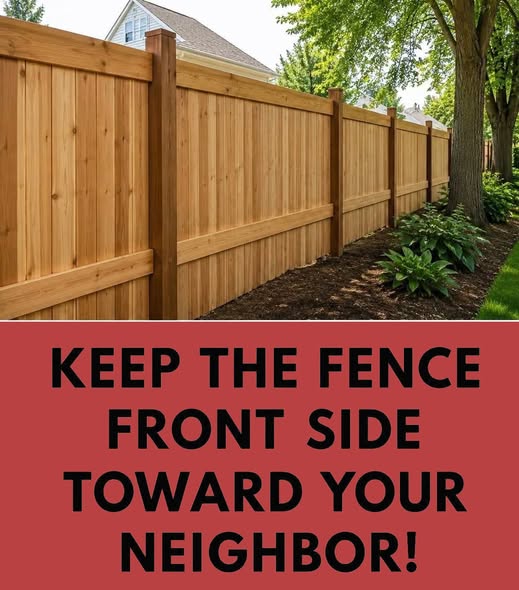
Why the Finished Side of Your Fence Usually Faces Your Neighbor
Your Fence May Be Saying More Than You Realize
Installing a fence can seem like a straightforward home improvement project.
You choose the material.
You measure the property line.
You select the height and style.
Then the panels go up.
But one detail can create unnecessary tension if it is overlooked.
Which side of the fence should face your neighbor?
In many residential settings, the more finished or attractive side is traditionally placed facing outward toward neighboring properties, streets, or public spaces.
The structural side, where rails and posts may be more visible, generally faces the property owner who installed the fence.
This practice is often referred to as following “fence etiquette.”
What Is the “Good Side” of a Fence?
Many fence designs have two noticeably different sides.
One side presents the finished boards or panels.
The other may show supporting rails, brackets, or framing.
The smoother, more decorative side is commonly called the “good side.”
On traditional wood privacy fences, it is usually the side where the vertical boards create a cleaner appearance.
The opposite side may expose horizontal rails and structural supports.
When homeowners talk about facing the good side outward, they are referring to placing that finished surface toward the neighboring property.
Why Is the Finished Side Usually Placed Outward?
The practice developed partly from simple courtesy.
If one homeowner decides to install a large structure directly along a shared boundary, giving the neighboring property the more attractive view is generally considered respectful.
The person paying for the fence still receives privacy and security.
The neighbor does not have to spend years looking at exposed supports.
This arrangement can help a new fence feel like an improvement to the entire boundary rather than something imposed on the property next door.
Local Rules May Matter Too
Fence orientation is not only a matter of manners.
Some cities, towns, homeowners associations, and residential developments have rules governing which side of a fence must face outward.
Requirements can vary significantly depending on location.
Some jurisdictions may require finished surfaces to face neighboring lots or public streets.
Others may regulate fence height, setbacks, materials, gates, and visibility near intersections.
Before installing a new fence, homeowners should check the current rules that apply to their property.
Do Not Assume Every Community Has the Same Rule
There is no single nationwide requirement stating that every residential fence must be installed the same way.
Local building codes differ.
Subdivision rules differ.
Homeowners association requirements differ.
Even neighboring municipalities can have different standards.
That means the safest approach is to verify local requirements before construction begins.
A contractor familiar with the area may also know what inspectors typically require, but homeowners should still confirm the applicable rules themselves.
Why Fence Orientation Can Affect Neighbor Relations
Property boundaries are already sensitive areas.
A new fence can change how two yards look, how sunlight reaches landscaping, and how neighbors interact across the property line.
If the less attractive side suddenly faces the neighboring yard, the installation can feel inconsiderate even when it is technically permitted.
That can create tension before the first board has even settled into place.
A simple conversation before construction can prevent many of these disagreements.
Talk to Your Neighbor Before Installation
If a new fence will run directly beside a neighboring property, it can be helpful to let the neighbor know what you are planning.
You do not necessarily need permission to install a fence entirely on your own property, assuming it complies with applicable rules.
But advance notice can still make the process smoother.
You can explain the approximate location.
The expected height.
The material.
And which side will face each property.
That conversation also gives both homeowners an opportunity to identify concerns before construction begins.
Know Exactly Where the Property Line Is
One of the biggest fence disputes has nothing to do with appearance.
It involves location.
Homeowners sometimes assume that an existing hedge, old fence, driveway edge, or row of trees marks the legal property boundary.
That assumption can be wrong.
If there is uncertainty, a professional survey can help identify the actual boundary.
Building a fence several inches onto a neighbor’s property can create far more serious problems than facing the wrong side outward.
Some Fences Look the Same From Both Sides
Modern fence designs can eliminate the good-side versus bad-side question altogether.
These are sometimes called “good neighbor” fences.
They are designed to look finished from both properties.
Board-on-board designs can provide a similar appearance from either direction.
Some vinyl, composite, aluminum, and decorative metal fencing also looks nearly identical on both sides.
For homeowners concerned about aesthetics and neighbor relations, these designs can be an attractive option.
Alternating-Board Designs Are Another Option
Some wood fences alternate boards or structural sections so neither homeowner receives a completely unfinished view.
This style can create a balanced appearance while still providing privacy.
Depending on the design, airflow may also be improved compared with a completely solid wall of boards.
As with any fence style, local rules should still be checked before installation.
There Can Be a Security Reason for Facing Rails Inward
Traditional privacy fences often place horizontal support rails on the inside of the property.
That arrangement can have a practical advantage.
If the rails face outward, they may provide convenient footholds for someone trying to climb over the fence.
Keeping the smoother side outward removes some of those easy climbing points.
The fence therefore looks cleaner from the neighboring side while also keeping structural supports within the owner’s property.
Street-Facing Fences Deserve Special Attention
If part of the fence borders a street, sidewalk, alley, or other public area, appearance rules may be more specific.
Municipalities often care about how structures look from public rights-of-way.
There may also be visibility requirements near driveways and intersections.
A tall solid fence placed too close to a corner could obstruct sightlines.
That is why homeowners should review more than just orientation before building.
Homeowners Associations May Have Additional Restrictions
Properties governed by a homeowners association may face another layer of rules.
An HOA may regulate approved materials.
Colors.
Heights.
Fence styles.
Placement.
And even whether a fence is permitted in a front yard.
Some associations require architectural approval before work begins.
Ignoring those rules can lead to requests for modifications or removal after construction is complete.
Permits May Be Required
Depending on the location and type of fence, a permit may be necessary.
Permit requirements often depend on fence height, placement, and whether the property is located in a special district.
A short decorative garden fence may be treated differently from a tall privacy fence.
Corner properties may have additional restrictions because of vehicle visibility.
Checking before construction can prevent expensive corrections later.
What If the Existing Fence Faces the “Wrong” Way?
Finding an older fence with the structural side facing a neighbor does not automatically mean anyone violated a rule.
The fence may have been installed before current standards existed.
Local rules may not regulate orientation.
The neighbors may have agreed to the arrangement.
Or the fence design may simply have been installed differently from modern custom.
Before assuming something is improper, check the applicable rules and the history of the property.
Who Is Responsible for Maintaining the Fence?
Maintenance responsibilities can also vary.
If a fence sits entirely on one homeowner’s property, that owner is generally responsible for the structure.
If neighbors jointly install a boundary fence, responsibilities may be shared depending on their agreement and local law.
Painting, staining, replacing damaged boards, and controlling vegetation around the fence can all become points of disagreement if expectations are unclear.
Discussing maintenance early can help avoid future confusion.
Think About Future Access
Homeowners should also consider how the fence will be maintained after installation.
If the finished side faces outward but the fence sits directly on the property line, accessing the neighboring side for staining or repairs may require permission.
Leaving an appropriate setback, where required or practical, can make maintenance easier.
The correct approach depends on local rules and the individual property layout.
Gates Should Be Planned Carefully
Gate placement can affect both convenience and safety.
A gate should not unexpectedly swing across a sidewalk, driveway, or neighboring property.
Hardware should remain secure and accessible from the intended side.
Homeowners with pets or young children may also need to consider latch height and locking mechanisms.
A well-designed fence is not only attractive.
It should function properly for the people using the property.
Materials Can Change the Entire Question
Wood fences make the finished-side issue especially noticeable because framing is often visible on one side.
Other materials can look much more symmetrical.
Vinyl privacy panels commonly provide a finished appearance on both sides.
Metal fences are often visually similar from either direction.
Composite systems can also be designed without an obvious unfinished side.
Choosing a two-sided design may cost differently, but it can simplify the appearance issue completely.
A Fence Is Part of the Neighborhood View
Homeowners naturally think about how a fence looks from inside their own yard.
But fences are unusual because they are also viewed every day by people on the opposite side.
A boundary fence can become part of a neighbor’s backyard view for decades.
That makes thoughtful orientation a small decision with a surprisingly long impact.
The finished side facing outward sends a simple message.
Privacy matters, but so does consideration for the people living next door.
Check Before You Build
Before installing a fence, homeowners should verify several basic details.
Confirm the property line.
Check local fence codes.
Review any HOA restrictions.
Determine whether a permit is required.
Consider how the fence will look from both sides.
And when possible, speak with the neighboring property owner before construction begins.
Those steps can save considerable time and frustration later.
A Small Detail Can Prevent a Big Disagreement
Facing the finished side of a fence toward a neighboring property may seem like a minor design choice.
But in many communities, it reflects both established etiquette and local expectations.
Sometimes it may also be required by applicable rules.
The exact requirements depend on where you live.
That is why homeowners should never rely on a single universal rule.
Check locally first.
Then build in a way that respects both your property and the people who will see the other side every day.