
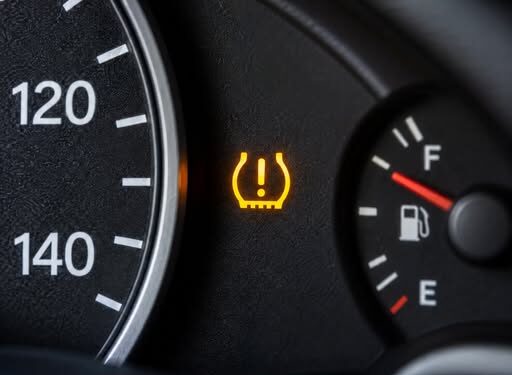
Why Your Tire Pressure Light Stays On After You’ve Added Air
Check the Pressure in Each Cold Tire Before Looking for a TPMS Fault
You’ve added air to your tires, but the amber tire-shaped light is still on. That symbol belongs to your tire pressure monitoring system, or TPMS. It usually means at least one tire is significantly underinflated. If every tire is at the correct pressure and the warning persists, a recent tire service or a faulty sensor could explain why.
Start With a Gauge and the Sticker Inside the Driver’s Door
Use a reliable gauge to check each tire while it’s cold. Compare the readings with the recommended pressures on the vehicle’s door placard. The number molded into the tire’s sidewall is the tire’s maximum pressure. The placard gives the pressure recommended for your vehicle.
Check every tire, even if only one looks low. If your vehicle’s system monitors the spare, check its pressure too. A reading from each tire gives you a better starting point than adding air to whichever one looks soft.
If the Pressure Drops Again, Look for a Leak
Tires can lose air gradually, and colder weather can lower their pressure enough to trigger the warning. A puncture or a slow leak can also cause the light to come back after you’ve filled the tire.
If one tire repeatedly reads low while the others stay near their recommended pressures, tell the tire shop which one is losing air. That gives the technician a specific tire to inspect. The pattern is especially helpful when the tire looked fine immediately after you filled it.
A Tire Rotation or Replacement May Require a Relearn
If the warning appeared after a rotation or tire replacement, check your owner’s manual. Some vehicles need a relearn procedure after tire service so the monitoring system can recognize the sensors or their positions. A temporary spare can also affect how the system behaves.
The correct procedure depends on the vehicle. The manual can tell you whether a relearn applies and how your model handles a temporary spare. Once you’ve confirmed that the pressures match the placard, leave them at those values while you check the system.
A Sensor or Its Battery Can Also Keep the Warning On
A failing sensor or a depleted sensor battery can leave the warning on even when a gauge shows that the tires are properly inflated. If the light persists after you’ve checked the cold pressures and followed the instructions for your vehicle, have a tire shop inspect both the tires and the TPMS.
Tell the shop when the warning first appeared, whether any tire has been losing air, and whether you recently had the tires rotated or replaced. Those details can help the technician distinguish a pressure problem from a sensor issue.