
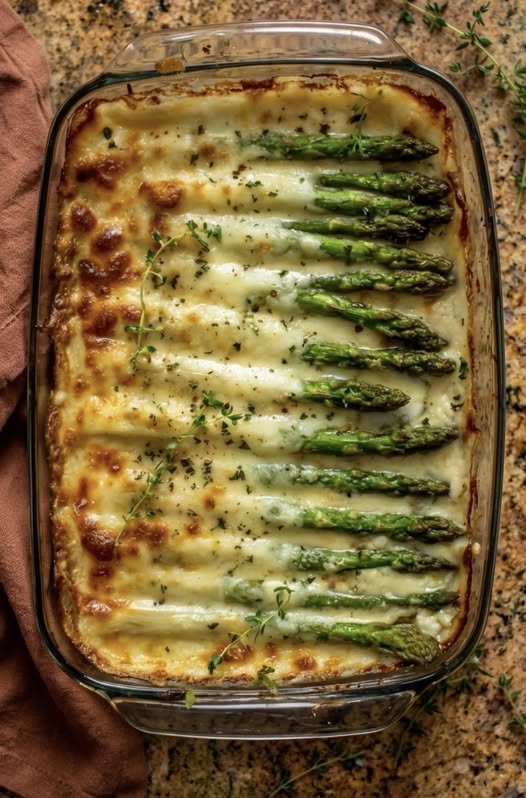
Cheesy Baked Asparagus Is the Easy Side Dish Everyone Will Ask for Again
A Simple Vegetable Dish With Irresistible Comfort
Some side dishes quietly appear at dinner once or twice, while others quickly become part of the regular meal rotation. Cheesy Baked Asparagus belongs in the second group because it combines tender roasted vegetables with a warm, bubbling layer of melted cheese.
This recipe is especially useful on evenings when dinner needs to feel comforting without requiring complicated preparation. Fresh asparagus, a few basic seasonings, mozzarella, and Parmesan come together in one baking dish to create a side that looks inviting and tastes satisfying.
The aroma of roasting asparagus, garlic, butter, and melting cheese can draw everyone into the kitchen before the rest of the meal reaches the table. Although the ingredients are simple, the finished dish feels special enough for family gatherings, Sunday dinners, and holiday celebrations.
It can also solve the common problem of making vegetables more appealing to people who usually avoid them. The cheese adds richness, while the roasting process gives the asparagus tender centers and lightly crisp tips.
Why This Recipe Works for So Many Meals
One of the strongest qualities of Cheesy Baked Asparagus is its versatility. It can be prepared as a quick vegetable side for a busy weeknight, served beside a larger holiday meal, or included in a low-carbohydrate dinner.
The recipe requires only a short preparation period. Most of the work involves trimming the asparagus, coating it with oil and seasonings, and adding cheese after the spears have started roasting.
It is also easy to adjust based on the ingredients already available in the kitchen. Mozzarella provides a mild flavor and soft, stretchy texture, while Parmesan brings a sharper and more savory finish.
Different seasonings, cheeses, or toppings can be added without changing the main cooking method. This flexibility makes the recipe practical for households that enjoy experimenting or need to use ingredients before they go to waste.
Ingredients Needed for Cheesy Baked Asparagus
The recipe begins with 1 pound, or approximately 450 grams, of fresh asparagus. Choose stalks that are bright green, firm, and topped with tightly closed tips.
Thicker asparagus spears work particularly well because they remain tender and juicy during baking while the exposed tips develop a lightly roasted texture. Thin spears may also be used, although they can cook more quickly and should be watched closely.
One tablespoon of olive oil helps the seasonings cling to the vegetables and encourages even roasting. Avocado oil can be used when a substitute is needed, while melted butter may be added for a richer finish.
The basic seasoning mixture includes ½ teaspoon of garlic powder, ¼ teaspoon of black pepper, and ½ teaspoon of salt. These ingredients enhance the natural flavor of the asparagus without overwhelming the cheese.
The cheese layer is made with ¾ cup of shredded mozzarella and ¼ cup of freshly grated Parmesan. Mozzarella creates a smooth, melted topping, while Parmesan adds depth and a lightly salty flavor.
Half a teaspoon of Italian seasoning is optional but works well with the garlic and cheese. One tablespoon of melted butter may also be drizzled over the cheese before the final bake.
Red pepper flakes and chopped fresh parsley can be added at the end. The pepper flakes contribute gentle heat, while parsley gives the finished dish a fresher appearance and flavor.
Preparing the Asparagus Correctly
Preheat the oven to 400°F, or 200°C, before beginning the preparation. Allowing the oven to reach the full temperature is important because a properly heated oven helps the asparagus roast rather than slowly steam.
Lightly grease a baking dish or prepare a sheet pan with parchment paper. The asparagus should have enough room to lie in a mostly even layer without being tightly crowded together.
Rinse the asparagus under cold water to remove any dirt. After washing, dry every spear carefully with a clean towel or paper towel.
Removing excess moisture is one of the most important steps in the recipe. Wet asparagus releases water while baking, which can prevent browning and lead to a softer, watery texture.
Trim away the tough ends before placing the spears in the baking dish. This can be done by snapping the stalks near the bottom or cutting approximately 1 to 2 inches from each end.
The lower portion of asparagus can be woody and difficult to chew. Removing it ensures that every part of the finished dish remains tender and enjoyable.
Seasoning and the First Bake
Arrange the prepared asparagus in the baking dish and drizzle it with 1 tablespoon of olive oil. Sprinkle the salt, black pepper, and garlic powder evenly across the stalks.
Toss the asparagus gently so that each spear receives a light coating of oil and seasoning. Avoid using so much oil that it collects at the bottom of the pan.
Place the uncovered baking dish in the preheated oven. Bake the asparagus for 7 to 9 minutes, until it begins to soften but still holds its shape.
This first baking stage allows the vegetable to start cooking before the cheese is added. If the cheese were placed on raw asparagus immediately, it could brown before the stalks became properly tender.
The asparagus should remain bright and firm enough to support the topping. It will continue cooking during the second baking period, so it does not need to be completely tender at this point.
Adding the Mozzarella and Parmesan
Remove the baking dish from the oven after the initial roasting period. Sprinkle the shredded mozzarella evenly over the asparagus, followed by the freshly grated Parmesan.
Distributing the cheese across the entire dish ensures that each serving includes both tender asparagus and a generous melted topping. Small uncovered areas are acceptable because they allow some of the tips to become crisp.
Add the optional Italian seasoning over the cheese. For extra richness, drizzle 1 tablespoon of melted butter across the top before returning the pan to the oven.
Bake for another 6 to 9 minutes. The dish is ready when the mozzarella is fully melted, the Parmesan has blended into the topping, and small golden areas begin to appear.
For deeper browning, the oven may be switched to broil for the final 1 to 2 minutes. The dish should be watched continuously during this step because melted cheese can change from golden to overcooked very quickly.
Serving the Dish at Its Best
Cheesy Baked Asparagus should be served immediately after it leaves the oven. The cheese is softest and most appealing while hot, and the asparagus retains its best balance of tenderness and structure.
Sprinkle red pepper flakes over the top for mild heat. Chopped parsley can also be added for a fresh finishing touch.
A small amount of lemon zest or fresh lemon juice may be used when a brighter flavor is preferred. The citrus helps balance the richness of the mozzarella, Parmesan, oil, and optional butter.
Transfer the asparagus carefully with a wide serving spoon or spatula. This helps keep the cheese attached to the spears instead of leaving most of it behind in the baking dish.
How to Prevent Soggy Asparagus
Soggy asparagus is usually caused by excess moisture, overcrowding, or insufficient oven heat. Drying the spears thoroughly before seasoning is the first defense against this problem.
The asparagus should also be arranged in a single layer whenever possible. When too many stalks are packed into a small baking dish, trapped steam prevents the edges from roasting.
Using a fully preheated 400°F oven allows the asparagus to cook quickly. The two-stage baking method also prevents the cheese from trapping moisture around raw vegetables.
Fresh asparagus is recommended for this dish. Frozen asparagus releases a significant amount of water as it heats, making it difficult to achieve the same roasted texture.
Making the Recipe Ahead of Time
Most of the preparation can be completed in advance when needed. The asparagus may be washed, dried, trimmed, and seasoned before being stored in a covered container in the refrigerator.
It can be prepared this way up to one day before baking. The cheese should be kept separate and added during the cooking process for the freshest texture.
Baking the entire dish too far in advance is not ideal because reheated asparagus becomes softer. Preparing the raw ingredients early and baking them shortly before serving provides better results.
Storage and Reheating
Leftover Cheesy Baked Asparagus can be stored in an airtight container in the refrigerator for up to three days. The cheese will become firm when chilled, but the flavor remains enjoyable.
For reheating, place the leftovers in a 375°F oven for approximately 5 to 8 minutes. This method warms the asparagus while allowing the cheese to soften again.
Microwaving is possible, but it may cause the asparagus to release additional moisture. The oven generally provides a better texture.
Freezing is not recommended. Both the asparagus and the cheese can change considerably after thawing, resulting in a softer and less appealing dish.
Easy Ways to Customize the Recipe
Garlic Butter Cheesy Asparagus can be made by replacing the olive oil with melted garlic butter. This variation creates a deeper, richer flavor while keeping the same preparation method.
For a brighter option, finish the baked asparagus with lemon juice and zest. This version works especially well when the dish is served beside heavier holiday foods.
A spicy variation can include red pepper flakes, cayenne pepper, or a small amount of chili oil. The heat should be added gradually so it does not overpower the asparagus and cheese.
An Italian-style version combines mozzarella, Parmesan, Italian seasoning, and dried oregano. These flavors pair naturally with baked chicken, pasta dishes, and tomato-based meals.
For additional crunch, seasoned breadcrumbs may be sprinkled over the cheese before the final bake. Crushed pork rinds can provide a similar crisp topping for a lower-carbohydrate meal.
Other cheeses can also be used. Monterey Jack creates a smooth and mild topping, Gruyère adds a deeper flavor, and sharp cheddar produces a stronger cheese presence.
What to Serve With Cheesy Baked Asparagus
This side dish pairs easily with several weeknight proteins. Oven-baked chicken thighs, skillet pork chops, pan-seared salmon, and baked chicken breasts all work well with the roasted asparagus and cheese.
It can also accompany grilled steak, bunless burgers, or creamy garlic shrimp as part of a low-carbohydrate dinner. The vegetable provides freshness while the cheese keeps the meal satisfying.
For holidays and special occasions, serve it beside roast turkey, glazed ham, or prime rib. Its golden topping makes it attractive enough for a festive table without adding a difficult cooking task.
Vegetarian meals can include Cheesy Baked Asparagus with baked ziti, stuffed shells, risotto, or a hearty grain bowl. It also works with pasta and mashed potatoes when a comforting family dinner is needed.
For a particularly quick meal, pair the asparagus with rotisserie chicken and a simple starch. Because the side dish cooks in less than 30 minutes, it can add a homemade element to an otherwise convenient dinner.
A Dependable Recipe Worth Repeating
Cheesy Baked Asparagus demonstrates how a small group of familiar ingredients can create a memorable side dish. The combination of roasted vegetables, garlic, mozzarella, and Parmesan delivers comfort without requiring lengthy preparation.
Its two-stage cooking method keeps the asparagus tender while allowing the cheese to become melted and lightly golden. Careful drying, proper spacing, and a hot oven help preserve the best possible texture.
The recipe can be adjusted for ordinary dinners, low-carbohydrate menus, vegetarian meals, or holiday gatherings. Different cheeses, herbs, spices, and toppings can be added while the dependable foundation remains the same.
With its simple ingredients and quick cooking time, this dish can easily become part of a regular dinner routine. It offers the convenience needed on busy evenings and the warm, inviting appearance expected from a special meal.