
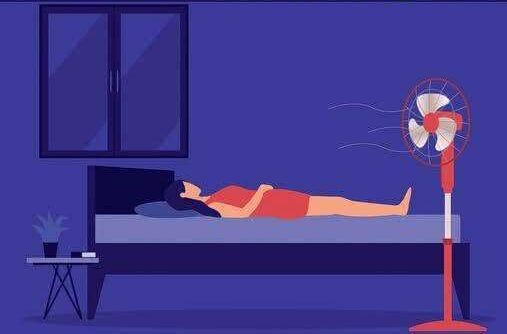
How Sleeping With a Fan Every Night May Affect Your Eyes, Sinuses, Throat and Muscles
The Nighttime Breeze That Feels Comforting May Also Create Unwanted Discomfort
For many people, sleeping with a fan is an essential part of the nighttime routine. The steady breeze cools the bedroom, reduces stuffiness and creates a soft background sound that can make it easier to relax.
However, leaving a fan running close to the bed for several hours may also contribute to uncomfortable symptoms. Dry eyes, an irritated throat, nasal congestion and muscle stiffness can sometimes appear after a full night of continuous airflow.
These effects do not mean that everyone must stop using a fan. They do show why the fan’s position, speed and cleanliness can make an important difference.
A few practical adjustments may allow sleepers to continue enjoying the cooling effect without waking up feeling dry, congested or unusually sore.
Why Continuous Airflow Can Cause Dryness
A fan does not lower the room temperature in the same way as an air conditioner. Instead, it moves air around the room and across the body, creating a cooling sensation.
That moving air can also increase the loss of moisture from exposed areas. When airflow remains directed toward the face for many hours, the mouth, nose and eyes may become noticeably dry.
The effect can be stronger when the fan is placed close to the bed or operated at its highest setting. A person may fall asleep feeling comfortable but wake several hours later with symptoms that were not present before bedtime.
Because the discomfort develops gradually during sleep, many people do not immediately connect it to the fan. They may blame the weather, allergies, their sleeping position or a lack of rest.
Waking Up With a Dry or Irritated Throat
A raw or raspy throat is one of the most common complaints associated with sleeping in constant airflow. The breeze can remove moisture from the mouth and throat, especially when a person sleeps with their mouth partially open.
By morning, the throat may feel rough, scratchy or uncomfortable. Some people may also experience a persistent need to drink water immediately after waking.
The discomfort may be more noticeable when the fan points directly toward the sleeper’s head. Hours of air moving across the face can leave the mouth and throat feeling far drier than they did at bedtime.
Moving the fan farther away can reduce the intensity of the airflow. Lowering the speed may also provide enough circulation to keep the room comfortable without sending a powerful stream of air directly toward the mouth and nose.
How the Eyes May Become Dry Overnight
The eyes depend on moisture for comfort. Continuous airflow can encourage that moisture to evaporate more quickly, particularly when the eyelids do not remain completely closed during sleep.
A person may wake with burning, irritation or a gritty sensation behind the eyelids. The eyes can feel as though they have been exposed to dust or fine sand throughout the night.
This dry feeling may be especially unpleasant during the first few minutes after waking. Blinking may feel uncomfortable until the eyes naturally regain some moisture.
Directing the fan away from the face can help limit this effect. The room can still receive air circulation without forcing the breeze across the eyes for the entire night.
Reducing the fan speed may also make the airflow gentler. A lower setting often provides enough movement to create comfort while decreasing the drying effect around the face.
Nasal Passages and Sinuses Can Also Become Irritated
The nose and sinuses contain delicate tissues that can become uncomfortable when exposed to dry, moving air for long periods. Overnight airflow may reduce moisture in these areas and leave the nasal passages feeling irritated.
Some sleepers may wake with burning sinuses, a blocked nose or an uncomfortable feeling of pressure. Others may experience coughing or repeated sneezing shortly after getting out of bed.
Dryness can make nasal passages feel clogged even when there is no obvious illness. The body may respond to irritation by producing congestion, creating the impression that the room is stuffy even though the fan has been running all night.
This can become a frustrating cycle. A person may increase the fan speed because the nose feels blocked, but stronger airflow may create even more dryness and irritation.
Placing the fan at a greater distance and avoiding direct airflow toward the head can reduce the amount of air passing continuously through the nose.
Dust Can Be Circulated Around the Bedroom
Dryness is not the only concern. A fan also moves particles that are already present in the room.
Dust can collect on fan blades, nearby furniture, floors and bedding. When the fan operates, some of those particles may be lifted and circulated through the air.
Dust mites and their allergens may also be disturbed, particularly when bedding and bedroom surfaces are not cleaned regularly. Instead of simply creating a refreshing breeze, the fan may repeatedly move irritating particles through the sleeper’s breathing space.
This can contribute to coughing, sneezing and congestion during the night or early in the morning. Symptoms that appear to be “seasonal allergies” may sometimes be connected to dust and allergens being circulated inside the bedroom.
The dramatic description “bedroom biohazard” may sound extreme, but it highlights the importance of basic cleaning. A dusty fan placed close to the bed can distribute particles for hours while the sleeper remains in the same position.
Why Cleaning the Fan Blades Matters
Fan blades can gather a visible layer of dust over time. Because the blades are often above eye level or protected by a grille, this buildup may go unnoticed.
Once the fan begins spinning, the movement of air can disturb the accumulated material. Some dust may remain attached to the blades, while other particles can spread into the surrounding room.
Regular cleaning reduces the amount of material available to circulate. The blades, grille and nearby surfaces should be kept free from heavy dust buildup.
The fan should be turned off before cleaning. Keeping the appliance clean not only improves the quality of the airflow but also prevents layers of dust from continuing to accumulate near the sleeping area.
A fan that appears clean from a distance may still have dust hidden along the edges or behind the protective cover. Inspecting it regularly can prevent the buildup from becoming excessive.
Clean Bedding Can Reduce Airborne Irritants
Bedding is another important part of the sleeping environment. Sheets, pillowcases, blankets and pillows remain close to the face for several hours every night.
When a fan moves air across the bed, particles resting on the fabric may be disturbed. Keeping linens clean can reduce the amount of dust and allergens available to circulate.
Regular cleaning is especially important when the fan is used every night. A clean fan will provide limited benefit if the bedding and nearby surfaces remain covered with dust.
The bedroom should be treated as a complete environment rather than focusing only on the appliance. Fan blades, linens, furniture and floors all influence the air moving around the bed.
Keeping these areas clean can help reduce morning sneezing, coughing and congestion linked to airborne irritation.
Cool Air May Contribute to Muscle Stiffness
Some people wake after sleeping with a fan and feel unusually stiff. The neck, shoulders, back or legs may feel tense even when the sleeping position seemed normal.
As the room becomes cooler during the night, muscles exposed to constant airflow may tighten without the sleeper noticing. The person remains in one position for an extended period while cool air repeatedly passes over the same area.
By morning, the body may feel sore or restricted. The discomfort can resemble the feeling of having slept awkwardly, even when the mattress and pillow have not changed.
This does not necessarily mean the fan caused every ache. However, direct cooling may contribute when the stiffness appears mainly after nights with strong airflow.
A fan aimed directly at the neck or upper body may be more likely to create this problem. Redirecting the breeze around the room instead of onto one specific muscle group can provide a gentler cooling effect.
Fan Placement Can Make a Major Difference
The position of the fan is one of the simplest factors to change. A unit placed beside the pillow sends concentrated airflow toward the eyes, nose, mouth and throat.
Moving it farther away allows the air to spread before reaching the bed. The room can remain ventilated while the sleeper avoids a constant blast against the face.
The fan can also be angled toward another part of the room. Air will continue circulating, but the body will not remain in the direct path of the breeze for several hours.
An oscillating setting may help distribute airflow rather than concentrating it in one location. This prevents the same area of the body from receiving continuous cooling throughout the night.
The goal is to create general air movement, not to place the sleeper directly in front of a powerful stream of air.
A Lower Setting May Be Enough
Many people automatically use the highest fan setting during warm nights. Strong airflow can feel refreshing when first getting into bed, especially after a hot day.
However, the body’s needs may change after sleep begins. A speed that initially feels comfortable may become too cold or drying several hours later.
Reducing the setting can maintain airflow without producing the same level of moisture loss or muscle cooling. A moderate breeze may be enough to prevent the room from feeling stagnant.
Using less intense airflow can also make it easier to position the fan farther from the bed. Together, these two adjustments may reduce dryness while preserving the soothing effect many sleepers enjoy.
Pay Attention to Patterns in Morning Symptoms
Morning discomfort can have many possible causes, but repeated patterns are worth noticing. A person who regularly wakes with dry eyes, a rough throat, congestion or stiffness may benefit from examining the bedroom environment.
Changes do not need to be dramatic. Moving the fan, lowering its speed and cleaning the blades and bedding may be enough to determine whether airflow is contributing to the symptoms.
It can also help to notice whether the discomfort improves on nights when the fan is not directed toward the bed. A clear difference may indicate that the position or intensity of the airflow needs adjustment.
The fan itself is not necessarily the problem. How it is used often determines whether it creates comfort or irritation.
Enjoying a Nighttime Fan Without the Hidden Cost
A fan can remain a useful part of the bedroom, particularly during warm weather. Its cooling breeze and steady sound can make falling asleep easier for many people.
The key is to avoid placing it too close to the face or leaving it on an unnecessarily powerful setting. Air should circulate around the room instead of striking the eyes, nose, mouth or muscles continuously.
Cleaning the fan blades and protective cover helps prevent dust from being spread through the bedroom. Washing bedding and removing dust from nearby surfaces can further reduce airborne irritation.
These small precautions may help prevent dry eyes, a sore throat, clogged sinuses, coughing, sneezing and morning stiffness.
A comfortable night does not need to end with an uncomfortable morning. With better positioning, gentler airflow and consistent cleaning, the familiar nighttime breeze can remain soothing without quietly creating new problems while the household sleeps.