
The Small Steel Tool That Defined Careful Craftsmanship in the Home Workshop
A Familiar Sound From an Earlier Generation
Before modern power tools became standard equipment in home workshops, many repair and woodworking projects were completed with a small collection of dependable hand tools. Among them was a simple steel rod that rarely attracted attention but played an important role in producing a clean, professional finish.
The work often began with the clear sound of a hammer striking a nail. Once the nail had been driven close to the surface, the carpenter paused, positioned the narrow tool over the nail head, and delivered a lighter, more controlled tap.
That final strike pushed the nail slightly below the surrounding wood. The tool responsible for this precise step was the nail punch, also commonly recognized as a nail set.
It had no motor, moving parts, electrical cord, or complicated mechanism. Its usefulness came from its durable construction, carefully shaped tip, and the skill of the person holding it.
Why Nails Needed to Be Driven Below the Surface
A hammer could drive a nail securely into a piece of wood, but striking too close to the finished surface created a risk. One poorly placed blow could leave a dent, split an edge, or damage the grain around the nail.
The nail punch allowed the worker to complete the job without repeatedly bringing the wide face of the hammer into contact with the board. Its narrow tip rested directly against the nail head, concentrating the force in a small and controlled area.
With one or two careful taps, the nail could be lowered just beneath the surface. This created a small recess that could be covered, smoothed, or left nearly invisible, depending on the project.
The result was both practical and attractive. Nails remained firmly in place while the surrounding wood stayed smooth enough for sanding, painting, staining, or regular use.
For furniture, trim, cabinets, shelves, doors, and handmade household objects, this final detail helped separate rushed work from thoughtful craftsmanship.
A Modest Tool With a Specific Purpose
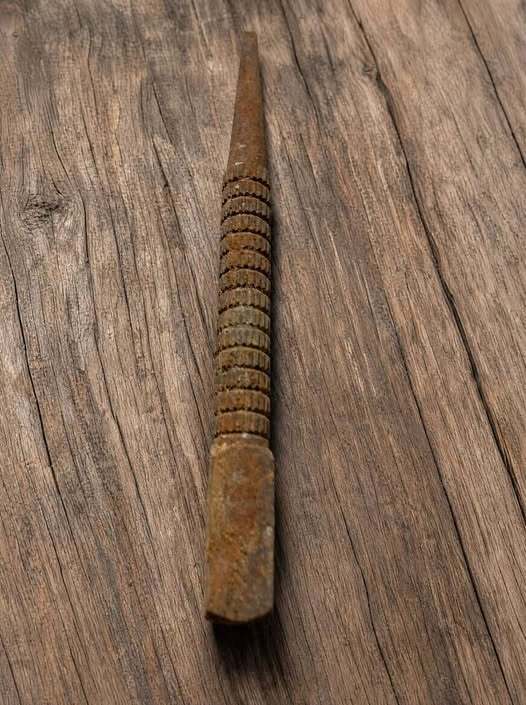
A traditional nail punch was usually made from hardened steel so it could withstand repeated contact with a hammer. One end was shaped for striking, while the opposite end narrowed into a tip designed to fit the head of a nail.
Some versions had textured or ridged sections that provided a more secure grip. These details helped prevent the tool from slipping when the user needed to place it accurately over a small nail head.
The design was straightforward, but precision mattered. A tip that was too wide could mark the surrounding wood, while one that was too narrow might slide off the nail.
Experienced woodworkers often kept several nail punches in different sizes. Selecting the correct tool made it easier to control the strike and protect the finished surface.
Although the tool was small enough to disappear beneath larger items in a toolbox, its job could not always be performed safely or neatly by another tool. Its value came from doing one task exceptionally well.
The Quiet Final Step in Countless Projects
Many household projects involved loud, visible stages. Boards were measured and cut, hinges were installed, and nails were driven into place.
The nail punch usually appeared near the end, when the basic construction had already been completed. Its work was quieter and more deliberate, focusing on the details that made the finished object comfortable to touch and pleasing to see.
A shelf could be strong without concealed nail heads, but the smooth surface made it appear more carefully made. A repaired door could function with raised fasteners, but lowering them reduced the chance of snagging clothing or catching a hand.
In this way, the tool served both appearance and function. It helped create surfaces that felt complete rather than unfinished.
The difference was often subtle. A visitor might never notice where the nails had been placed, yet that lack of visible hardware was evidence that someone had taken the extra time to complete the final step.
A Common Sight in Mid-Century Garages
During the middle decades of the twentieth century, many family garages and basements served as practical workspaces. Repairs were often handled at home, and useful objects were maintained for as long as possible.
Workbench drawers held hammers, screwdrivers, hand saws, measuring tools, spare fasteners, and small steel implements collected over years of use. The nail punch was frequently part of that working assortment.
It might have been used to install trim, repair a loose stair, build a toy chest, secure the back of a cabinet, or finish a simple wooden gift. Each task added another mark to the tool’s surface.
The striking end gradually became dented from repeated hammer blows. The grip darkened with oil, dust, and contact with hardworking hands.
These signs of wear did not necessarily reduce its usefulness. Instead, they demonstrated that the tool had repeatedly completed the job for which it had been made.
Lessons Passed From One Pair of Hands to Another
For many people, learning to use a nail punch was part of learning how to handle tools responsibly. An older relative might demonstrate how to steady the rod, keep fingers away from the striking area, and use controlled force rather than unnecessary power.
The lesson was not simply about driving a nail below the surface. It also taught patience, coordination, and respect for the material being worked on.
A beginner quickly learned that a hard swing was not always the best swing. Accuracy mattered more than strength, especially when the project had reached its finishing stage.
The familiar instruction to “tap, not smash” captured the tool’s entire purpose. It reminded the learner that careful work depended on restraint as much as effort.
Those workshop moments often became lasting memories. A child might forget the measurements of a particular shelf but remember the steady hand that guided the nail punch into place.
Why Old Tools Can Carry Personal Meaning
When an old nail punch is discovered in a garage drawer or inherited toolbox, it may appear insignificant at first. It can look like little more than a short piece of steel marked by age and use.
Its meaning often becomes clearer when connected to the projects it helped complete. The worn tool may have been present when a family table was repaired, a bedroom shelf was installed, or a wooden toy was built.
Unlike decorative keepsakes, workshop tools were rarely protected from scratches or wear. Their value came from being used repeatedly, often for ordinary tasks that supported daily life.
For that reason, every dent can suggest a history of practical effort. The marks may reflect years of small repairs, weekend projects, and objects kept in service instead of being discarded.
The nail punch becomes a reminder of the person who held it, the habits that person followed, and the care placed into work that was never intended to attract attention.
The Lasting Value of Repairing and Reusing
The world of home repair has changed significantly, but the basic purpose of the nail punch remains relevant. Wood still needs to be protected from careless hammer marks, and finishing nails still need to sit beneath a smooth surface.
Modern equipment can make many jobs faster, yet speed does not remove the need for precision. Even with advanced tools nearby, a simple nail punch can provide direct control during delicate finishing work.
Its continued usefulness also reflects an older approach to ownership. Furniture, shelves, doors, and household fixtures were often repaired when they became damaged rather than immediately replaced.
A small tool could therefore contribute to extending the life of a much larger object. By securing loose pieces and improving worn surfaces, it helped restore items that still had years of use remaining.
This practical relationship between maintenance and longevity remains one of the strongest reasons traditional hand tools continue to deserve a place in the workshop.
Restoring an Old Nail Punch for Future Use
An older nail punch found beneath a layer of dust may still be functional. Surface wear can reveal its age without preventing it from completing its original task.
Once cleaned and inspected, the tool can return to the workbench rather than remaining only as a display piece. Using it again allows its history to continue through new repairs and projects.
The restored tool may feel different from newly manufactured equipment. Its grip carries the smoothness created by years of handling, while the striking end shows evidence of repeated use.
Those imperfections can make the object more meaningful. They connect present-day work with the hands that relied on the same tool many years earlier.
Each new project adds another chapter without erasing the old ones. The nail punch remains useful because its design was created around a permanent need rather than a passing trend.
Craftsmanship Hidden Beneath the Surface
The nail punch represents a kind of workmanship that is easiest to recognize by what is no longer visible. After the nail is lowered and the surface is finished, the tool’s contribution nearly disappears.
That invisibility is part of its success. The completed board feels smooth, the fastener remains secure, and attention stays on the finished object rather than on the hardware holding it together.
Much of careful craftsmanship follows the same principle. The most important details are not always dramatic, and the most useful tools are not always the largest or most expensive.
Sometimes quality is created through a pause, a steady hand, and one final controlled strike. The small steel nail punch made that moment possible in workshops for generations.
Whether it rests in an old toolbox or returns to active use, it continues to symbolize patience and pride in a job completed properly. Its lesson remains simple: the details hidden beneath the surface can determine how the entire finished piece looks, feels, and lasts.