
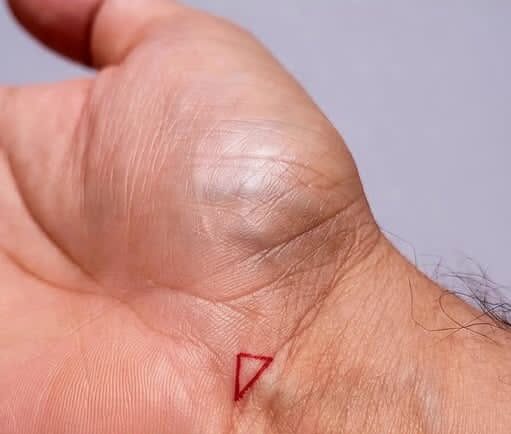
What a Triangle Mark on the Wrist Really Means
Why Small Wrist Lines Attract So Much Attention
Many people eventually notice small lines, creases, or intersecting marks on the skin around their wrists. In some cases, these ordinary lines may appear to form a triangle or another recognizable shape.
Because the human mind naturally looks for familiar patterns, a simple arrangement of lines can seem unusual or meaningful. This has helped old stories and superstitions about wrist markings survive across generations.
Some folklore traditions claim that a triangle-shaped mark carries a message about a person’s future, strength, luck, or ability to overcome difficulties. These claims may sound intriguing, but they have no factual basis.
A shape created by natural skin lines does not possess hidden power. It cannot determine someone’s future, attract wealth, provide protection, or influence the outcome of life events.
The Old Belief About Recovery From Hardship
One popular version of the superstition suggests that people with a triangle on the wrist recover quickly after difficult experiences. The mark is sometimes presented as a sign that a person will always find a way out of trouble.
This idea may offer emotional comfort, particularly to someone going through a challenging period. However, the presence or absence of a skin marking has no connection to how quickly a person recovers from hardship.
People move through difficult times because of their choices, patience, support systems, personal effort, circumstances, and many other real-life factors. A collection of lines on the wrist cannot create resilience or guarantee a positive result.
Some individuals naturally respond to setbacks with determination, while others may need more time and support. These differences cannot be explained by a triangle or any other shape found on the skin.
It is therefore important to separate an encouraging story from reality. A person can be strong and capable without having any particular wrist marking, and someone who has the mark is not automatically protected from hardship.
Claims About Sudden Wealth and Good Fortune
Another old claim connects the triangle shape with unexpected money or sudden prosperity. In these stories, the mark is sometimes described as a sign that financial success will arrive at the right moment.
There is no truth behind this belief. A physical mark cannot attract money, create financial opportunities, or change a person’s economic circumstances.
Financial outcomes develop through real conditions and decisions. Work, planning, expenses, opportunities, responsibilities, and unexpected events can all affect a person’s situation, but a wrist crease cannot.
The idea of a hidden sign promising wealth may be appealing because it makes the future feel more predictable. It can be comforting to imagine that a visible mark proves good fortune is on the way.
However, such expectations can also be misleading. Depending on superstition instead of practical judgment may encourage unrealistic hope and distract from the choices that genuinely matter.
No line, triangle, symbol, or skin pattern can guarantee riches. People should not view an ordinary mark as evidence that a financial reward is waiting for them.
Why the Triangle Is Sometimes Linked to Strength
Some folklore descriptions interpret the triangle as a symbol of personal strength. The shape is said to represent stability, determination, or the ability to remain standing through difficult circumstances.
Symbols can carry cultural or personal meaning, but that does not give them supernatural power. A person may choose to view a triangle as an inspiring image, yet a naturally formed triangle on the wrist does not create strength.
Real strength is shown through actions, patience, discipline, courage, and the willingness to continue when life becomes difficult. These qualities develop through experience and personal character rather than through skin markings.
A person without the supposed symbol may display remarkable resilience. At the same time, someone who has triangle-shaped lines may still experience fear, disappointment, uncertainty, or failure.
The mark does not control either person. It is simply a visible pattern that has been given an imaginary meaning by old superstition.
The Promise That Everything Will Work Out
Another version of the story claims that events will eventually turn in favor of anyone carrying the triangle mark. This suggests that the person is somehow destined to receive positive outcomes.
Life does not operate through signs on the wrist. Good and difficult experiences can happen to anyone, regardless of the shapes formed by their skin lines.
There is also no guarantee that every situation will end exactly as a person hopes. Some problems can be solved, some require compromise, and others may lead to outcomes that must simply be accepted.
Believing that a mark guarantees success can create false confidence. It may cause someone to underestimate risks or expect favorable results without taking sensible action.
Hope can be valuable, but it should not be confused with superstition. Healthy hope encourages effort, patience, responsibility, and realistic thinking rather than dependence on an imagined sign.
Palmistry as Historical Folklore
Stories about wrist marks are often connected with palmistry traditions. These traditions assign meanings to lines, shapes, and patterns found on the hands and wrists.
Some people enjoy reading about these beliefs as a form of historical folklore. They may find the symbolism interesting in the same way that people enjoy learning about legends, customs, and ancient stories.
There is an important difference between exploring folklore and accepting it as fact. A traditional story can be culturally interesting without being true or having authority over a person’s life.
Treating the triangle as an old symbolic idea is different from believing it predicts wealth, recovery, protection, or future success. The first approach recognizes the story as folklore, while the second gives unsupported power to an ordinary mark.
Keeping that distinction clear allows people to learn about old traditions without allowing superstition to guide important decisions.
Recognizing Patterns Does Not Give Them Power
Human beings are naturally skilled at identifying familiar forms. People can see faces in clouds, animals in shadows, and meaningful symbols in random lines.
The same tendency can make intersecting wrist creases appear to create a triangle. Once the shape is noticed, it may feel too exact to be meaningless.
However, recognizing a pattern does not prove that the pattern carries a message. It only shows that the lines happen to resemble a familiar geometric form.
Different people may interpret the same lines in different ways. One person may see a triangle, another may see a letter, and someone else may see nothing unusual.
This variation shows that the supposed meaning comes from interpretation rather than from any real force contained in the mark.
The Claim That Citrine Enhances Positive Energy
Some versions of the superstition go beyond the wrist marking and recommend wearing a particular stone. Citrine is sometimes presented as an object that can strengthen the supposed positive energy connected with the triangle.
This claim is also baseless. A created object or stone cannot activate a skin marking, increase its power, or cause good fortune to enter someone’s life.
Wearing a stone may have personal, decorative, or sentimental meaning. A person may enjoy its appearance or associate it with a positive memory.
Those personal feelings do not prove that the object can guide events, provide blessings, remove hardship, or influence the future. The stone remains an object and does not gain power from being connected to an old story.
Combining two superstitious ideas does not make either one more reliable. A triangle-shaped wrist mark has no special force, and wearing citrine does not give it one.
Why These Stories Continue to Spread
Superstitions often survive because they offer simple answers to complicated questions. People naturally want reassurance about money, hardship, success, safety, and the future.
A visible mark can seem like a personal sign, especially when a story describes it as rare or fortunate. The belief may feel even more convincing when someone connects a positive event to the mark afterward.
However, remembering the times when a story appears correct while ignoring the many times it fails can strengthen an unsupported belief. Positive and negative events happen whether the mark is present or not.
These stories also spread because they are easy to share. A person only needs to look at a wrist, search for a shape, and repeat the promised meaning to someone else.
Repetition can make a claim feel familiar, but familiarity is not proof. A false idea does not become true simply because it has been repeated for a long time.
Faith and Superstitious Claims
Believing that a physical mark controls destiny can also conflict with true faith. Skin lines and created objects should not be treated as sources of protection, blessing, or guidance.
A person’s life is not controlled by a triangle on the wrist. The mark cannot decide whether someone succeeds, fails, becomes wealthy, remains safe, or overcomes a difficult period.
Giving such power to a physical feature can shift trust toward something that has no ability to act. The same concern applies to stones or other objects that are claimed to carry invisible power.
People may appreciate an object or notice an unusual mark without assigning spiritual authority to it. Recognizing something as ordinary does not reduce a person’s hope, dignity, or ability to face life with confidence.
An Ordinary Mark Does Not Define a Person
A triangle formed by wrist lines does not reveal character, destiny, faith, financial prospects, or emotional strength. It is not a promise of protection and is not a warning of future events.
Someone’s value cannot be measured by a physical pattern. People should not feel superior because they believe they have a fortunate mark, and they should not feel disadvantaged because they do not see one.
Personal growth comes from real experiences, decisions, responsibilities, and relationships. Success and recovery require more than the appearance of lines on the skin.
It is possible to enjoy folklore as an old story while rejecting its claims. Curiosity does not require belief, and an interesting tradition does not have to become a rule for living.
Ultimately, the triangle superstition has no power over anyone’s life. Neither the mark nor a stone can guide, bless, protect, or transform the future.
The most reasonable response is to recognize the shape for what it is: an ordinary arrangement of natural lines that has been surrounded by imaginative stories. A person’s future remains far more complex and meaningful than any mark found on the wrist.