
Donald Trump Was Declared Finished Again and Again—Then He Returned to the White House
Bankruptcies, television fame, electoral defeat, criminal cases, and relentless controversy repeatedly threatened his public life, but each setback became part of an extraordinary political comeback
Donald Trump has been described as finished more times than most public figures could survive.
His business empire faced repeated financial crises. His public image became a frequent target of ridicule. Political experts dismissed his presidential ambitions, voters removed him from office in 2020, and legal cases threatened to overwhelm his attempt to return.
Yet Trump repeatedly found a way back to the center of American life.
In January 2025, he returned to the White House as the 47th president of the United States, becoming only the second person in American history to serve two nonconsecutive presidential terms. He remains president in July 2026.
To his supporters, the comeback demonstrated remarkable resilience and proved that political institutions, media organizations, and establishment figures had underestimated him.
To his opponents, it revealed how spectacle, grievance, and constant attention can overpower accountability in modern politics.
Whatever judgment history eventually delivers, Trump’s rise cannot be explained as a simple journey from success to power. It is a story of collapse, reinvention, celebrity, anger, loyalty, and an unusual ability to remain visible when almost anyone else would have been forced from the stage.
His Story Began Far From the Political Establishment
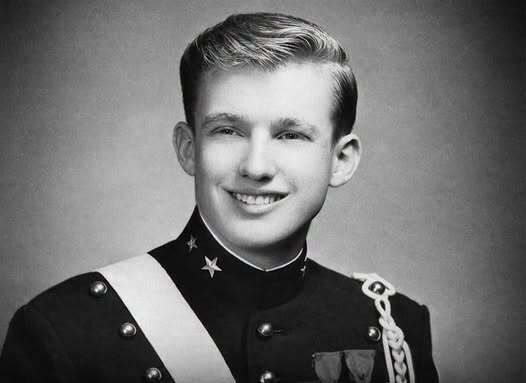
Donald John Trump was born in Queens, New York, on June 14, 1946. He attended the New York Military Academy before studying at the University of Pennsylvania’s Wharton School.
He entered the real-estate business associated with his father, Fred Trump, whose company developed and managed housing primarily in New York City’s outer boroughs.
The younger Trump wanted something more visible.
He shifted his attention toward Manhattan, where a building could become more than property. It could become a symbol, a headline, and an advertisement for the person whose name appeared across its entrance.
Trump cultivated an image built around luxury, boldness, and extraordinary wealth. His properties, interviews, parties, and personal life became part of the same public product.
He was not merely selling apartments, hotels, or office space. He was selling the idea of Donald Trump.
Visibility Became One of His Most Valuable Assets
Trump understood early that public attention could have financial value.
His name appeared on towers, casinos, products, books, and licensed developments. Even people who knew little about the financial structure behind his businesses recognized the brand.
He became a regular figure in New York tabloids, where business announcements existed beside stories about celebrity relationships, rivalries, and personal disputes.
Traditional business leaders often attempted to separate their private lives from their companies. Trump did the opposite.
His personality became inseparable from the enterprise.
That approach created risks, but it also made him difficult to ignore. A failed project did not necessarily erase the brand if another interview, deal, or controversy kept his name in circulation.
Public embarrassment could therefore be reframed as publicity. Criticism could reinforce the image of a combative outsider. Even negative coverage helped maintain the visibility on which the larger operation depended.
His Businesses Faced Repeated Financial Crises
The glamorous image concealed periods of serious financial instability.
Several Trump-related casino and hotel businesses entered Chapter 11 bankruptcy protection between the early 1990s and 2009. Fact-checking reviews have generally counted six corporate bankruptcy filings connected with his businesses, rather than a personal bankruptcy by Trump himself.
The distinction mattered legally, but the crises still threatened his business reputation.
Debt had financed rapid expansion, particularly in Atlantic City. When revenues failed to meet expectations, creditors, bondholders, and business partners faced difficult negotiations.
For many executives, repeated bankruptcies would have produced lasting disgrace.
Trump presented them differently.
He described the restructurings as the use of laws available to business owners. Instead of accepting the identity of a failed businessman, he emphasized survival, dealmaking, and the preservation of his personal brand.
The companies changed. Assets were restructured or lost. But Trump remained publicly associated with wealth.
That gap between financial complexity and public perception became a central feature of his career.
He Turned Business Celebrity Into Television Authority
Trump’s public reinvention accelerated when he became the central figure on The Apprentice, which premiered in 2004.
The reality program presented contestants competing in business challenges while Trump occupied the role of decisive corporate leader.
Each episode reinforced a carefully designed image: the commanding office, the boardroom, the luxury properties, and the dramatic dismissal of unsuccessful contestants.
The program gave millions of viewers a version of Trump defined less by complicated debt restructurings and more by confidence, control, and success.
He had been famous before television, but The Apprentice introduced him to a much broader national audience.
For years, viewers saw him play a powerful executive who evaluated others and decided who deserved another chance.
The format transformed a real-estate personality into a recognizable symbol of authority.
When he later entered politics, he did not begin as an unknown businessman. He arrived with a character already familiar to millions of voters.
His Presidential Campaign Was Initially Treated as a Spectacle
When Trump launched his 2016 presidential campaign, many political observers doubted that he could win the Republican nomination.
He had never held public office, served in the military, or managed a conventional political organization.
His rallies, insults, controversial statements, and confrontational debates appeared to violate the normal rules of presidential campaigning.
But the features that disturbed political professionals attracted voters who believed the political system had become scripted, distant, and unresponsive.
Trump promised to disrupt that system rather than manage it politely.
He spoke directly about immigration, trade, manufacturing, national identity, and resentment toward political elites. His language was often blunt, inflammatory, and divisive, but it communicated urgency to people who felt ignored.
Every controversy generated more attention.
Rivals waited for his campaign to collapse. Instead, many of them disappeared from the race while Trump remained at the center of the conversation.
He Converted Outrage Into Political Energy
Trump’s communication style relied heavily on repetition, conflict, and memorable language.
He assigned mocking labels to opponents, attacked unfavorable media coverage, and portrayed criticism as evidence that established institutions feared him.
This created a powerful cycle.
Opponents treated each new controversy as potentially disqualifying. Supporters often interpreted the backlash as proof that Trump was challenging a hostile establishment.
The more intensely he was condemned, the more some voters identified with him.
His campaign did not merely survive outrage. It frequently used outrage as fuel.
Trump won the 2016 election and entered the White House as the 45th president despite losing the national popular vote to Hillary Clinton.
The victory shocked much of the political and media establishment because it exposed the limits of conventional campaign analysis.
His First Presidency Deepened the Country’s Political Divide
Trump’s first term produced intense loyalty and equally intense opposition.
Supporters praised his judicial appointments, tax policies, regulatory changes, immigration enforcement, foreign-policy approach, and confrontations with long-standing institutions.
Critics condemned his conduct, rhetoric, treatment of immigrants, handling of the COVID-19 pandemic, attacks on the press, and efforts to test or expand presidential power.
His administration rarely experienced a quiet period.
Investigations, personnel changes, protests, international disputes, and social-media battles created a continuous sense of political emergency.
Trump was impeached twice by the House of Representatives and acquitted twice by the Senate.
Under ordinary political expectations, impeachment, scandal, or sustained low approval would have encouraged a president to moderate his behavior.
Trump generally moved in the opposite direction.
He treated institutional resistance as a political identity, presenting himself as the target of forces that were also hostile to his supporters.
The 2020 Defeat Appeared to Be His Final Collapse
Trump lost the 2020 presidential election to Joe Biden.
He refused to accept the result and repeatedly claimed that the election had been stolen, despite the absence of evidence establishing widespread fraud capable of changing the outcome.
His efforts to overturn the result culminated in one of the darkest episodes in modern American political history when a mob attacked the U.S. Capitol on January 6, 2021.
After leaving Washington, Trump appeared politically isolated.
He had lost the presidency. Major technology platforms suspended his accounts. Republican leaders who had supported him publicly criticized his conduct.
Businesses and institutions sought distance from his name.
Many commentators believed his political career had finally ended.
But Trump did not behave like a defeated former president.
He Refused to Leave the Stage
Trump maintained control over a large portion of the Republican electorate after leaving office.
He continued holding rallies, endorsing candidates, raising money, and attacking Republican officials who rejected his claims about the 2020 election.
Potential successors discovered that appealing to Republican voters often required either securing Trump’s approval or carefully avoiding direct conflict with him.
His residence in Florida became the center of a political movement that operated outside government but remained powerful inside the Republican Party.
The usual pattern for a defeated president involves retirement, memoirs, carefully selected speeches, and declining influence.
Trump instead conducted what resembled a permanent campaign.
By refusing the ceremonial role of a former president, he prevented the party from moving fully beyond him.
Legal Jeopardy Did Not End His Comeback
Trump entered the 2024 campaign while facing an unprecedented collection of criminal and civil cases.
His opponents believed the legal proceedings demonstrated that no individual should stand above the law.
Trump portrayed the cases as politically motivated attempts to prevent voters from returning him to power.
The prosecutions created serious risk, but they also strengthened his position among supporters who already distrusted prosecutors, federal agencies, courts, and national media organizations.
Each courtroom appearance became a campaign event.
He spoke to cameras before and after hearings, transforming legal vulnerability into political theater.
Rather than separating the campaign from his legal defense, Trump merged them into one story: he argued that the same establishment targeting him was also trying to silence the people who supported him.
The 2024 Election Completed an Extraordinary Return
Trump secured the Republican nomination again and defeated Democratic nominee Kamala Harris in the 2024 presidential election.
The certified result returned him to the presidency after four years outside the White House.
The victory represented more than an ordinary change in party control.
Trump had survived electoral defeat, impeachment, the aftermath of January 6, criminal charges, civil judgments, Republican challengers, and predictions that his influence was collapsing.
He returned with a stronger hold over his party than he had possessed during much of his first term.
Former critics had become allies. Republican candidates increasingly adopted his language, priorities, and combative approach.
The politician once dismissed as an outsider had reshaped the institution he originally entered to disrupt.
Supporters See Survival as Proof of Strength
Trump’s supporters often interpret his setbacks differently from his critics.
Where opponents see scandal, they may see persecution.
Where traditional institutions see rule-breaking, they may see a leader refusing to obey a system they consider corrupt.
Where critics identify repeated business and political failures, supporters emphasize the fact that he remained standing.
This difference is essential to understanding his durability.
Trump does not need every voter to believe every claim he makes. He needs supporters to believe that the institutions challenging him are less trustworthy than he is.
Once that relationship is established, attacks can become evidence of authenticity.
The more powerful the institution confronting him, the more heroic resistance may appear to those already loyal to him.
Critics See a Warning About Democratic Accountability
Trump’s opponents draw a darker lesson from the same history.
They argue that relentless repetition, partisan loyalty, media saturation, and public exhaustion can weaken the consequences that once followed misconduct.
In this interpretation, survival is not automatically evidence of innocence or ability.
It may instead demonstrate that attention can overwhelm memory and that each controversy can erase the one before it by generating a newer, louder conflict.
Critics also warn that presenting every investigation, court ruling, election loss, or institutional limit as illegitimate can undermine public trust in democracy itself.
If supporters accept only outcomes that favor their leader, elections and courts become extensions of political identity rather than shared systems of accountability.
Trump’s career therefore raises questions larger than any one individual.
He Understands That Politics Is Also a Competition for Attention
Modern political influence depends partly on controlling what the public discusses.
Trump has shown an unusual ability to dominate that competition.
His statements generate immediate reactions from allies, opponents, news organizations, entertainers, and social-media users.
Even people who strongly dislike him may spend hours discussing his latest remark, reinforcing his position at the center of national attention.
This resembles the strategy that powered his earlier celebrity.
The objective is not always universal admiration. It is continued relevance.
In an overcrowded information environment, being impossible to ignore can be more valuable than being broadly respected.
Trump understood this before many conventional politicians did.
Failure Became Part of the Brand
Trump’s career did not eliminate failure. It changed how failure was presented.
A bankruptcy could become evidence of aggressive dealmaking.
A political defeat could become a stolen victory.
An investigation could become persecution.
A hostile headline could become proof that the media feared him.
This strategy does not erase facts, but it gives supporters an alternative framework through which to interpret them.
Trump rarely accepts an opponent’s definition of an event.
He supplies his own explanation quickly, repeats it forcefully, and pressures allies to adopt it.
Once competing narratives circulate, public reaction often divides according to political loyalty rather than shared evidence.
His Comebacks Reveal a Changed Media Environment
Trump rose during a period when television, online news, social platforms, entertainment, and politics increasingly blended together.
The same personality could be a businessman, celebrity, television performer, candidate, president, defendant, and social-media brand.
Those identities reinforced one another.
Television fame supplied political recognition. Political controversy increased audience interest. Legal cases generated campaign attention. Campaign speeches shaped news coverage.
Older political structures were built for candidates who depended heavily on parties, donors, and traditional media organizations.
Trump developed a direct relationship with supporters that made him less dependent on gatekeepers.
Attempts to exclude him could strengthen the feeling among followers that they were part of a movement being denied a voice.
His Story Cannot Be Reduced to Admiration or Condemnation
Trump’s public life invites extreme conclusions.
Supporters may portray him as an unmatched fighter who survived attacks that would have destroyed anyone else.
Opponents may view him as a dangerous figure who repeatedly escaped consequences through wealth, polarization, and manipulation.
Both reactions reflect important parts of his political power.
He succeeds not despite division, but partly through it.
Strong approval and strong hostility keep him central to the national story.
A more conventional figure might seek to reduce conflict. Trump often treats conflict as confirmation that the contest matters.
The Meaning of His Return Is Still Being Written
Trump’s second presidency is ongoing, so the full consequences of his return cannot yet be measured.
His current term will shape how historians interpret the larger arc of his career.
Supporters expect him to fulfill promises of national renewal and institutional change.
Critics fear further erosion of democratic safeguards, political norms, and limits on executive authority.
The final judgment will depend not only on whether Trump remained powerful, but on what he did with the power he recovered.
Is Failure Still Real When the Story Never Ends?
Donald Trump’s history does not prove that failure has disappeared.
Businesses still collapsed. Elections still produced winners and losers. Courts still issued judgments, and political decisions still carried consequences.
What his career demonstrates is that failure does not always control the narrative that follows it.
A public figure capable of retaining an audience, redefining the setback, and returning quickly to conflict may prevent any single defeat from becoming final.
Trump’s greatest political skill may not be avoiding collapse.
It may be persuading millions of people that every collapse is merely another scene before the comeback.
Love him or loathe him, his return to the White House transformed that ability from a personal survival strategy into a force capable of reshaping a political party and a nation.
The most difficult question is no longer how Donald Trump survived being declared finished.
It is what happens to a democracy when the person who refuses to leave the stage becomes the author of the next chapter.