
Fish Cribs Turn Empty Lake Bottoms Into Hidden Nurseries for Aquatic Life
What began as a practical fishing technique became a lasting tradition of habitat restoration, community stewardship, and family connection
A calm lake can appear almost motionless from the shoreline.
The surface reflects the sky, a fishing bobber rises and falls gently, and the only sounds may be birds in the trees or water touching the side of a boat.
Beneath that peaceful surface, however, life is constantly moving.
Small fish search for food and shelter. Larger predators circle through open water, while insects, plants, and microorganisms compete for space across the lake bottom.
In many lakes, one of the most important hiding places is not a natural reef or fallen tree.
It is a structure built and placed there by people.
What Is a Fish Crib?
A fish crib is an underwater structure designed to create shelter for fish and other aquatic organisms.
Traditional versions were often made from logs, branches, stones, and other sturdy materials that could be lowered to the bottom of a lake.
The structure formed a rough framework filled with open spaces where smaller fish could hide.
Some cribs resembled simple wooden boxes. Others looked more like piles of timber weighted with rocks.
The exact design varied according to the available materials, the depth of the water, and the species anglers hoped to support.
Although the structures were originally associated with fishing, their value extended far beyond attracting mature fish to a convenient location.
Once submerged, a crib could gradually become a small ecosystem.
Early Anglers Learned That Shelter Attracted Life
Long before sonar, electronic mapping, and high-powered fish finders became common, anglers relied on observation and experience.
They noticed that fish rarely spread themselves evenly across a lake.
Instead, they gathered around submerged trees, rocky ledges, weed beds, and other places that offered food or protection.
Open lake bottoms provided fewer advantages, especially for young fish vulnerable to larger predators.
Anglers realized that placing structure in an otherwise empty area could change how fish used that part of the lake.
If natural cover was missing, people could build an artificial replacement.
The idea was simple: create shelter, and aquatic life would eventually gather around it.
Some Cribs Were Lowered Through Winter Ice
In colder regions, communities sometimes constructed fish cribs during winter.
Frozen lakes provided a temporary work platform that made it easier to position heavy materials over a selected location.
Builders assembled a crib on the ice and filled it with rocks or other weight.
As the ice melted, the structure dropped into the water and settled onto the lake floor.
This method required careful planning because the crib could not be easily moved once it sank.
Other groups transported smaller structures by boat and lowered them using ropes.
Regardless of the method, the goal remained the same: place durable habitat where fish had few natural places to hide.
A Bare Structure Slowly Became a Living Habitat
A newly submerged crib did not immediately become crowded with fish.
The transformation happened gradually.
Algae and microscopic organisms began growing on the wood and stone surfaces.
Small aquatic insects arrived to feed and reproduce.
The insects attracted tiny fish searching for food.
Those fish used the spaces between logs and branches to avoid larger predators.
As the structure matured, it could support multiple levels of the food chain.
The crib no longer functioned as an empty pile of material.
It became a feeding area, nursery, hiding place, and hunting ground.
Young Fish Benefited From the Protection
Newly hatched fish and small juveniles face constant danger.
They may be eaten by larger fish, birds, turtles, and other predators before reaching maturity.
A fish crib provides narrow spaces that larger animals may be unable to enter.
Young fish can slip between branches, logs, stones, or mesh panels when danger approaches.
The structure also concentrates food close to shelter, allowing the fish to feed without traveling long distances through exposed water.
Survival is never guaranteed, but even modest improvements in shelter can help more young fish reach adulthood.
That can contribute to a healthier and more stable population over time.
Predators Also Gathered Around the Cribs
Fish cribs do not benefit only small species.
Larger fish soon learn that the structures attract prey.
They patrol the outer edges, waiting for smaller fish to leave the protection of the crib.
This makes the habitat valuable to anglers, who may find game fish concentrated nearby.
The crib creates a layered environment in which smaller fish remain close to the center while predators use the surrounding water.
That interaction is part of a natural food web.
A successful crib does not remove danger from the lake. It creates enough complexity to give smaller fish a better chance of surviving it.
The Structures Became Popular Fishing Locations
Once anglers discovered that fish gathered around cribs, the locations became closely guarded knowledge.
Some families marked the spots using shoreline landmarks rather than written maps.
A large tree, distant barn, or unusual rock formation could help someone align a boat over the hidden structure.
Experienced anglers often knew which crib held fish at different times of the year.
Some worked best during cool mornings, while others became active during evening feeding periods.
Knowing where the crib was located did not guarantee success.
Anglers still needed to understand depth, weather, seasonal movement, and fish behavior.
Even so, the underwater structure increased the likelihood that fish would be present.
A Fishing Tool Became a Conservation Practice
The earliest builders may have been motivated primarily by the desire to improve fishing.
Over time, the broader ecological value of fish cribs became more apparent.
Many lakes had lost natural habitat because of shoreline development, vegetation removal, erosion, and the clearing of fallen trees.
When branches and timber were removed from the water to create cleaner shorelines, fish lost important cover.
Artificial structures offered a way to replace some of what had disappeared.
The focus gradually expanded from attracting fish to rebuilding habitat.
People began viewing the lake not as an unlimited supply of fish, but as a living system that required care.
Communities Began Working Together
Fish crib projects often brought together anglers, conservation clubs, landowners, and local volunteers.
Building a large structure required labor, materials, transportation, and planning.
One person might provide logs, while another supplied rope, stone, or access to a boat.
Volunteers gathered to assemble the structures and decide where they should be placed.
The work became a community event rather than an individual fishing secret.
Participants were investing in the future of the lake, knowing that the full benefits might not appear for several years.
That long-term commitment helped change attitudes about fishing and conservation.
Families Passed the Tradition to Younger Generations
For many families, fish cribs became part of a larger relationship with the lake.
Parents and grandparents taught children where the structures were located and why fish gathered around them.
A fishing trip became an opportunity to explain food chains, spawning areas, predator behavior, and the importance of habitat.
Children learned that catching fish was only one part of enjoying the water.
Protecting the places where fish fed and grew was equally important.
Some families returned to the same coves year after year, following routes established decades earlier.
The underwater structure remained unseen, but its location became part of family memory.
The Cribs Carried Stories as Well as Fish
Every long-used fishing spot collects stories.
There are memories of the largest catch, the fish that escaped near the boat, and the morning when nobody caught anything but still refused to leave.
Fish cribs became anchors for those experiences.
A grandparent might remember helping sink the structure as a teenager.
Years later, that same person could take a grandchild to fish above it.
The crib connected different generations to one place beneath the water.
Even when the wood began to decay, the memories associated with it remained.
Modern Designs Use Different Materials
Contemporary fish habitat structures do not always resemble the old log-and-rock cribs.
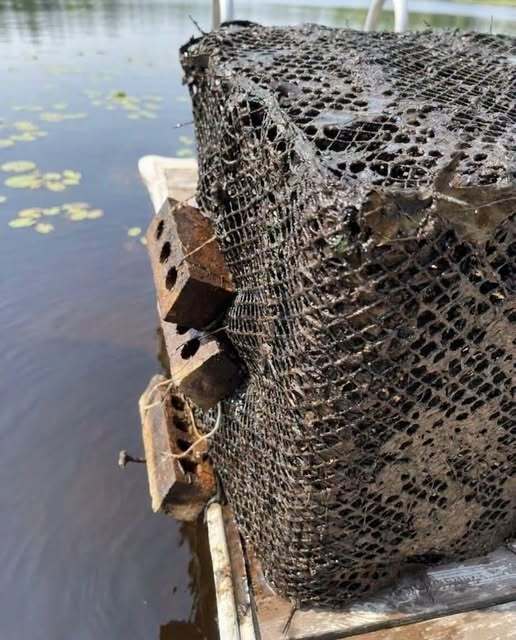
Some are built from PVC pipes, plastic panels, mesh, or specially designed synthetic materials.
These materials may last longer underwater and can be shaped to create spaces for fish of different sizes.
Modern designs may resemble underwater trees, bushes, cages, or open frameworks.
Each style attempts to create surface area for growth and gaps where fish can hide.
Some structures are designed to avoid snagging fishing lines, while others emphasize dense shelter for juvenile fish.
The appearance has changed, but the basic principle remains unchanged.
Where shelter is created, life is more likely to gather.
Placement Matters as Much as Construction
A fish crib cannot be dropped randomly into any part of a lake and expected to succeed.
Water depth, oxygen levels, bottom conditions, seasonal temperature changes, and existing vegetation all affect its usefulness.
A structure placed too deep may receive insufficient light and oxygen during certain seasons.
A crib placed too shallow may create navigation hazards or become exposed when water levels fall.
Soft sediment can swallow heavy structures, reducing the open spaces fish need.
Placement near existing drop-offs, spawning areas, or travel routes may improve the habitat’s effectiveness.
Successful projects often require guidance from lake managers or fisheries professionals who understand the local ecosystem.
Poorly Planned Structures Can Create Problems
Not every object placed in a lake becomes beneficial habitat.
Unsafe materials can release harmful substances or create hazards for wildlife and people.
Loose wire, unstable metal, treated lumber, and discarded household items may cause more harm than good.
Structures can also interfere with boats, swimmers, and fishing equipment if they are placed in unsuitable locations.
For these reasons, fish cribs should not be installed without proper permission and planning.
Many lakes have rules controlling artificial habitat placement.
Responsible projects use approved materials and document the exact location of every structure.
Fish Cribs Cannot Repair Every Lake Problem
Artificial shelter can improve habitat, but it cannot solve all ecological damage.
A lake suffering from severe pollution, invasive species, low oxygen, or destructive shoreline development needs broader restoration.
Adding cribs will not replace clean water, healthy vegetation, stable shorelines, or responsible fishing limits.
The structures work best as one part of a larger conservation effort.
They can supplement natural habitat while communities address the deeper problems affecting the lake.
A healthy fishery depends on water quality, food availability, spawning success, and sustainable harvest as well as shelter.
The Lake Bottom Is Not an Empty Landscape
People often judge a lake by what they can see from the shore.
The water may appear full and healthy even when the bottom lacks structure.
To fish, however, a flat and open lake floor can resemble an empty field without trees or buildings.
There are few places to hide and fewer locations where food becomes concentrated.
A crib introduces vertical shape into that empty environment.
It creates edges, shadows, surfaces, openings, and pathways.
Those details can determine where fish feed, rest, and survive.
The Structures Encouraged Shared Stewardship
Traditional fishing often celebrates individual skill and secret knowledge.
Fish crib projects introduced a more cooperative idea.
Instead of depending only on luck or guarding a private location, communities worked together to improve the water for everyone.
The benefit extended beyond the people who built the structure.
Future anglers, children, wildlife watchers, and nearby residents could all gain from a healthier fish population.
This shared responsibility helped turn conservation into a local tradition rather than an abstract concept.
People cared for the lake because it was part of their lives, not because someone far away instructed them to do so.
An Invisible Structure Can Have a Lasting Influence
Most visitors will never see a fish crib directly.
It remains beneath the surface, gradually darkening as algae and aquatic growth cover its original material.
Fish weave through the openings. Insects cling to the surfaces, and predators patrol nearby.
Above it, boats pass, bobbers drift, and families wait for the familiar pull of a line.
The hidden structure continues working without drawing attention to itself.
Its importance is measured not by how impressive it looks, but by the life that gathers around it.
The Promise Beneath the Water Remains the Same
Fish cribs began as a practical response to a simple observation.
Fish need shelter, and barren water offers little protection.
By building structure, early anglers created places where algae, insects, young fish, and predators could interact.
The practice eventually became part of habitat restoration, community conservation, and family tradition.
Modern materials may last longer, and technology may make the structures easier to locate.
Yet the central idea has not changed.
When people care for the unseen world beneath the surface, the lake is better prepared to support life above it.
The next tug on a fishing line may begin near a hidden crib built years earlier by someone who understood that a healthy lake requires more than water.
It requires shelter, patience, and people willing to protect what they may never fully see.