
No Quarter at Aldi? Simple Ways Shoppers Handle the Cart Problem
Why One Missing Coin Can Disrupt an Entire Shopping Trip
The problem often appears at the worst possible moment. A shopper arrives at Aldi with a grocery list, a limited amount of time, and every intention of completing a normal shopping trip, only to discover that there is no quarter available for the cart.
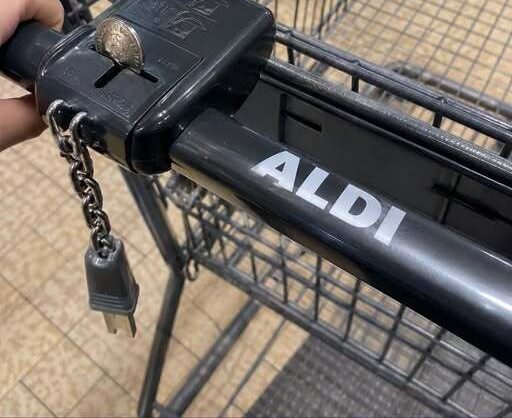
The carts are lined up outside and connected by chains. Without the small coin needed to release one, the shopper may suddenly feel stuck before even entering the store.
Keys may be in hand, but they do not automatically solve the problem. A wallet filled with cards or larger bills may also be useless when the cart mechanism requires one specific coin.
Although the amount involved is only twenty-five cents, the inconvenience can feel much larger. The shopper has already driven to the store, prepared a list, and arranged time for the trip, so leaving over a missing quarter can seem unreasonable.
The situation may also feel more stressful when other customers are nearby. Standing in front of the cart line while searching through pockets, bags, cup holders, and compartments can create an unnecessary sense of pressure.
How Aldi’s Cart System Creates the Quarter Problem
Aldi’s cart setup requires shoppers to insert a quarter before removing a cart from the connected row. The coin remains inside the locking mechanism while the cart is being used.
After shopping, the customer returns the cart to the designated area and reconnects it to the line. The quarter is then released and returned to the shopper.
This means the coin is not a cart fee. It functions as a temporary deposit that encourages customers to bring the cart back instead of leaving it elsewhere in the parking lot.
The process is simple when a quarter is available. The difficulty begins when a shopper arrives without one and realizes that other coins, payment cards, or ordinary cash cannot immediately unlock the cart.
For regular Aldi customers, carrying a quarter may eventually become automatic. For new or occasional shoppers, however, the requirement can be easy to forget until they are already standing outside the store.
Asking a Cashier Can Be the Fastest Solution
One of the simplest responses is to walk inside and speak with a cashier. A brief and polite explanation may be enough to resolve the situation without abandoning the shopping trip.
The shopper does not need to make the problem complicated. Explaining that there is no quarter available for a cart allows the cashier to understand exactly what is needed.
This approach is especially practical for someone planning to purchase many items. Carrying a large grocery order without a cart may be difficult, so taking a moment to ask for assistance can prevent a much bigger inconvenience later.
Some people hesitate because they feel embarrassed about forgetting such a small item. However, a missing quarter is an ordinary shopping problem, not a serious mistake.
A calm request can save time that might otherwise be spent searching the vehicle repeatedly or considering whether to leave the store entirely. It also avoids turning a minor inconvenience into the main event of the shopping trip.
Using a Key as a Temporary Workaround
Some shoppers rely on a key when they do not have a quarter. The idea is to use an item already carried every day as a temporary way to deal with the cart mechanism.
This method appeals to people because keys are usually close at hand. Even when a wallet has no coins, a car key or house key may still be available.
The usefulness of this workaround depends on the key and the cart mechanism. The goal is simply to release the cart without losing access to the key or creating another problem.
A shopper using this approach must also remember that the key may remain connected to the cart during the shopping trip. That can be inconvenient when the same key is needed for the vehicle or home.
For that reason, the key workaround may be more suitable as an emergency option than a permanent routine. A dedicated quarter or reusable token is usually easier to manage over time.
Shopping Without a Cart Is Sometimes Possible
Not every visit requires a full-size shopping cart. A customer buying only a few products may choose to continue without one rather than spending additional time solving the coin problem.
Boxes can provide a practical alternative. Aldi shoppers often encounter empty product boxes that can hold groceries during the trip and help carry them after checkout.
This method works best when the shopping list is short and the items are not too heavy. A box may be enough for produce, packaged foods, household basics, or several small purchases.
Walking through the store without a cart can also encourage the shopper to stay close to the original list. With limited carrying space, unnecessary purchases may be less tempting.
However, this option becomes difficult when the order includes large, heavy, or numerous products. A cart remains the more practical choice for a major grocery trip.
The decision depends on the situation. A customer purchasing only a handful of items may find that continuing without a cart is easier than returning to the vehicle or leaving the store.
A Plastic Token Can Replace the Need for Spare Change
A reusable plastic token offers another way to prepare for future visits. Instead of treating the cart requirement as a search for money, the shopper can keep one dedicated object for unlocking carts.
The token can be attached to a keychain, stored in a handbag, or kept in the vehicle. Because it is reserved for shopping, it is less likely to be spent elsewhere.
This is one advantage over carrying an ordinary quarter. A coin placed in a cup holder may eventually be used for another purpose, removed during cleaning, or taken without being replaced.
A token has one clear job. Its value comes from being ready when the shopper reaches the cart line, not from being part of the household’s spending money.
For people who visit Aldi regularly, this small item can remove the need to check pockets and wallets before every trip. It turns preparation into a simple routine.
Keeping a Dedicated Quarter in the Car
The most direct long-term solution is to reserve one quarter specifically for Aldi visits. It can remain in the vehicle and return to the same location after every shopping trip.
A center console, glove compartment, or small storage area can serve as the quarter’s permanent home. The exact location matters less than using the same place consistently.
After the cart is returned and the coin is released, the shopper can immediately place it back in its designated spot. This small habit prevents the quarter from mixing with other change.
The method works because it separates the coin from ordinary money. It is no longer viewed as twenty-five cents available for spending but as a reusable piece of grocery equipment.
Consistency is the key. If the quarter is placed in a pocket after shopping and later carried into the house, the next visit may begin with the same frustrating search.
Returning it directly to the car helps preserve the routine. Over time, checking for the quarter can become as natural as bringing reusable bags or remembering the grocery list.
Storing the Quarter With Reusable Shopping Bags
Another practical option is to keep the quarter with the bags used for groceries. This connects two parts of the Aldi shopping routine in one place.
If the bags remain in the car, the quarter can be stored in a small pocket or secure compartment. When the shopper collects the bags, the coin is collected at the same time.
This reduces the number of separate details that must be remembered. Rather than thinking about bags and a quarter as two different tasks, the shopper treats them as one prepared grocery kit.
A dedicated shopping bag may also hold a reusable token, a written list, or other small items needed during the trip. Keeping these materials together can make arrival at the store smoother.
The system is especially useful for households in which several people use the same vehicle. Everyone knows where the cart coin belongs and where it should be returned.
Turning a Small Frustration Into a Reliable Habit
Forgetting a quarter can initially make Aldi’s cart system feel unnecessarily difficult. The inconvenience is real when a shopper is already in the parking lot and ready to begin.
However, the problem usually becomes easier after it happens once. The experience encourages shoppers to create a simple system that prevents the same situation during future visits.
Some will depend on a cashier when necessary. Others may use a key in an unexpected moment, carry their groceries in a box, or keep a plastic token attached to their keys.
Many regular customers eventually settle on the most basic method: one quarter stored in a reliable location and used only for the cart.
The coin then becomes part of the shopping routine rather than part of the household’s loose change. It stays in the vehicle, bag, or keychain until it is needed again.
This change in thinking makes the cart requirement much less stressful. The shopper is no longer hoping to find a quarter by chance but arriving with a small tool prepared for a specific purpose.
A Tiny Item That Can Protect the Entire Grocery Trip
A quarter is easy to overlook because it seems insignificant. Yet at the Aldi cart line, that small object can determine whether the shopping trip begins smoothly or with an unexpected delay.
The best solution does not need to be complicated. Asking for help, using an available workaround, shopping with a box, or maintaining a dedicated token can all keep the trip moving.
Preparation remains the easiest answer for future visits. A quarter stored in the car or attached to the grocery bags requires almost no space and can be reused again and again.
Once the cart is returned, the coin comes back, ready for the next trip. The same quarter can remain part of the routine for months as long as it is consistently returned to its designated place.
What begins as an irritating parking-lot surprise can therefore become a useful reminder. Small systems often prevent the most common inconveniences.
With one coin or token treated as permanent grocery gear, shoppers can avoid the frantic search, release a cart quickly, and focus on the reason they came to the store in the first place.