
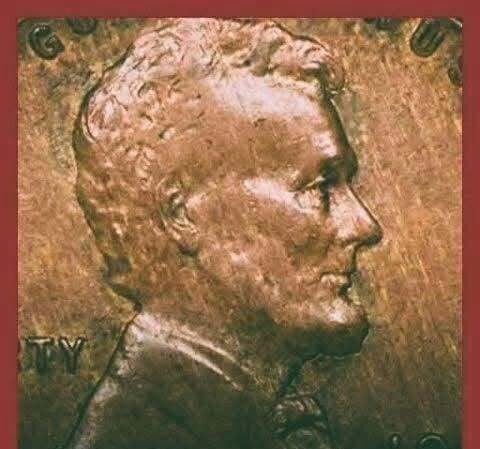
The Rare 1943 Bronze Lincoln Cent Born From a Wartime Minting Error
How a Few Leftover Bronze Planchets Created One of America’s Rarest Coins
The 1943 Bronze Lincoln Cent holds a special place among the most intriguing error coins in American history. Created unintentionally during World War II, the coin emerged from a brief production mistake at a time when the United States was carefully managing materials needed for the war effort.
Most Lincoln cents produced in 1943 looked very different from the familiar copper-colored coins used in earlier years. Instead of the traditional bronze composition, the U.S. Mint manufactured that year’s cents from steel coated with a thin layer of zinc.
The change was intended to conserve copper, which had become an important wartime resource. Yet a small number of older bronze coin blanks remained behind during the transition, leading to the creation of a cent that was never supposed to enter circulation.
A Wartime Change in the Lincoln Cent
In 1943, the demands of World War II affected many areas of American production. Materials that had once been used for ordinary consumer items were redirected toward the broader war effort, and copper was among the resources considered too important to continue using in large quantities for one-cent coins.
To reduce the amount of copper required for coin production, the U.S. Mint replaced the usual bronze planchets with zinc-coated steel planchets. A planchet is the prepared metal blank that receives a coin’s design when it is struck by minting dies.
The resulting steel cents had a silver-gray appearance rather than the warm brown or reddish tone associated with bronze Lincoln cents. They were a visible reminder of how wartime priorities could influence even the smallest objects used in daily life.
Millions of these steel cents were produced for circulation. They became the standard one-cent coin for that year and were intended to replace the bronze cents that had been struck before the material change.
However, the transition between the two metals was not completely flawless. Somewhere within the minting process, a few bronze planchets left over from 1942 remained in the equipment used to feed blanks into the coin presses.
The Mistake That Created a Numismatic Treasure
Those remaining bronze planchets were accidentally mixed with the zinc-coated steel blanks prepared for 1943. When they entered the presses, they were struck by dies carrying the 1943 date and the familiar Lincoln cent design.
The result was a small number of genuine 1943 cents made from bronze rather than steel. These coins were not special editions, commemorative pieces, or planned variations. They were accidental products of the production change.
At the moment they were struck, the bronze cents may not have appeared especially unusual to anyone handling large quantities of newly produced coins. Their design was the same basic Lincoln cent design already familiar to the public, and their most important difference was the metal from which they had been made.
That difference eventually transformed them into extraordinary collectibles. A bronze-colored cent bearing the date 1943 stood apart immediately from the gray steel cents that were supposed to represent that year’s entire production.
The mistake demonstrated how even a tightly controlled industrial process could be affected by a small leftover object. A single planchet from an earlier production run could pass through the machinery and create a coin unlike nearly every other cent struck during the same year.
Discovery Captures Public Attention
The first examples began appearing in circulation in 1947, several years after the coins had been produced. Their discovery immediately attracted attention because a bronze cent dated 1943 appeared to contradict the widely recognized wartime change in coin composition.
People had become accustomed to the distinctive appearance of the steel cent. Finding a coin with the same date but the traditional bronze coloring raised obvious questions about where it had come from and whether other examples might still be circulating.
Interest quickly spread through newspapers and coin-collecting circles. The story combined several elements that naturally captured the imagination: a wartime production decision, an unexpected mistake, an extremely rare result, and the possibility that another example might still be found among ordinary pocket change.
The coin became more than a technical minting error. It developed into a mystery that encouraged people to examine old jars, drawers, collections, and groups of circulated cents in hopes of discovering another bronze example dated 1943.
For many members of the public, the appeal came from the idea that an exceptionally valuable object could resemble an everyday coin. Unlike a treasure hidden in a distant location, the 1943 Bronze Lincoln Cent seemed capable of appearing anywhere that old cents had been stored or exchanged.
A Familiar Design With an Unmistakable Difference
The design of the 1943 Bronze Lincoln Cent is immediately recognizable. Lincoln’s portrait appears on the front of the coin in the same familiar style associated with the long-running cent series.
What distinguishes the error coin is its warm bronze surface. That color creates a sharp contrast with the zinc-coated steel cents produced intentionally during 1943, which have a much cooler gray appearance.
The visual difference is central to the coin’s appeal. It allows the rare error to be recognized not because of an unusual portrait or a special inscription, but because the coin was struck on a metal blank that belonged to an earlier year’s production.
Its appearance connects it to the bronze cents that Americans had used before the wartime change. At the same time, the date places it firmly within the year when those bronze blanks were no longer supposed to be part of regular cent production.
This combination gives the coin a distinctive historical identity. It looks familiar, yet its existence represents an exception to the rules that governed cent production during one of the most demanding periods in American history.
Why Collectors Value the Error
For numismatists, the 1943 Bronze Lincoln Cent offers an unusual combination of rarity, historical context, and visual appeal. Each authentic example represents a physical record of the transition from bronze to zinc-coated steel during World War II.
The coin’s scarcity is one of the primary reasons it commands such intense interest. Only a few authentic examples are known today, making every confirmed coin an important part of the broader story.
Collectors also value the fact that the error can be connected to a specific production circumstance. The bronze planchets were not introduced intentionally. They remained from the previous year and entered the minting process by accident.
That clear sequence of events gives the coin a compelling narrative. It was created because an older blank survived the changeover, reached a press, and received the design and date intended for a different metal.
The error also reflects the human and mechanical realities of coin production. Minting requires careful planning and precise equipment, but it still involves physical materials moving through a complex process. When even a small number of planchets remain where they should not, an extraordinary result can follow.
A Coin Shaped by Historical Circumstances
The importance of the 1943 Bronze Lincoln Cent extends beyond its rarity. Its creation cannot be separated from the wartime conditions that caused the U.S. Mint to change the cent’s composition in the first place.
Copper was considered vital to the war effort, and conserving it became important enough to alter the metal used in one of the country’s most common coins. The zinc-coated steel cent was therefore not simply a new design choice. It was a practical response to a period of national crisis.
The bronze error cent preserves evidence of that transition. Without the wartime decision to replace bronze with steel, the accidental use of leftover bronze planchets would not have produced such a notable difference.
Each surviving example carries two connected stories. One is the larger history of resource conservation during World War II. The other is the smaller story of a planchet that remained in the machinery and escaped the intended production change.
Together, those stories make the coin a compact historical artifact. Its size is ordinary, but the circumstances surrounding its creation give it significance far beyond its original face value.
The Mystery of How Many May Exist
Part of the coin’s lasting fascination comes from uncertainty. Only a small number of authentic examples are known, but the original production mistake created the possibility that additional coins may once have entered circulation without being recognized.
When reports of the bronze cents began spreading, collectors and members of the public were inspired to search through older coins. The possibility of finding another example helped turn the error into one of the most widely discussed treasures associated with the Lincoln cent.
Because the coin resembles earlier bronze cents, an unnoticed example could theoretically have been mistaken for an ordinary coin at a quick glance. The 1943 date is the detail that transforms the familiar bronze appearance into something exceptional.
This uncertainty has allowed the story to endure across generations. Even as known examples have become highly prized, the idea that another coin might remain undiscovered continues to add an element of suspense.
The treasure-hunt appeal does not depend on an elaborate map or a hidden vault. It comes from the possibility that an accidental wartime rarity could have survived among common coins for many years.
Extraordinary Value at Auction
Authentic 1943 Bronze Lincoln Cents command extraordinary value when they appear at auction. Their value reflects the limited number known, the historical importance of the error, and the strong demand among collectors.
Each example is more than a scarce version of a familiar coin. It represents an event that cannot be intentionally repeated under the original circumstances because the production transition belonged to a specific moment in 1943.
The market interest surrounding the coin has also strengthened its reputation outside traditional numismatic circles. It is frequently viewed as an example of how an object with a face value of one cent can become a celebrated historical treasure.
Its auction value is closely tied to authenticity. Because the genuine coin is so rare, confirmed examples carry a level of importance that ordinary bronze cents or regular 1943 steel cents do not share.
The small number of surviving coins ensures that opportunities to acquire one are limited. When an authentic example becomes available, it attracts attention from collectors who understand both its scarcity and its connection to wartime American history.
An Accidental Survivor of the Minting Process
The phrase accidental survivor accurately describes the 1943 Bronze Lincoln Cent. The planchet survived from the previous year, remained in the production system, and passed through machinery that had already been prepared to strike a different type of cent.
Its survival required a precise sequence of unintended events. The bronze blank had to remain behind during the changeover, avoid removal, enter the supply of new planchets, and reach the striking press.
Once struck, it also had to leave the facility and remain in circulation long enough to be noticed. Any interruption in that chain could have prevented the coin from becoming part of numismatic history.
This sequence helps explain why collectors view the coin as more than a simple manufacturing defect. It is the product of chance operating within a major historical transition.
The coin therefore represents both precision and imperfection. Its design was struck by official machinery using the correct 1943 dies, but the metal beneath that design was not the metal selected for that year’s regular cent production.
A Lasting Symbol of Wartime Ingenuity
More than eighty years after it was produced, the 1943 Bronze Lincoln Cent continues to fascinate collectors and members of the public. Its story remains powerful because it connects an ordinary object with an extraordinary period in American history.
The zinc-coated steel cent reflected wartime ingenuity and the willingness to adapt everyday production to conserve valuable resources. The rare bronze error reveals the unpredictable side of that same change.
A few forgotten planchets were enough to create one of the most celebrated errors ever associated with an American coin. Their accidental journey through the presses turned them into lasting reminders that even carefully planned systems can produce unexpected results.
The 1943 Bronze Lincoln Cent endures because it combines recognizable design, dramatic rarity, historical meaning, and unresolved mystery. It is both a Lincoln cent and an exception to what a Lincoln cent from 1943 was supposed to be.
Its legacy shows how a minor production oversight can gain enormous significance over time. What began as an unnoticed mistake during a period of wartime urgency eventually became a prized artifact sought by collectors and remembered as a remarkable piece of numismatic history.
Today, every authentic example stands as a tangible link to the pressures, decisions, and technical challenges of World War II. The coin’s warm bronze color continues to distinguish it from the steel cents of its year, preserving the visible evidence of an error that transformed a single cent into an American treasure.