
Head Lice in Children: How They Spread, How to Spot Them, and Safer Ways to Treat an Infestation
Understanding the Causes, Symptoms, and Most Effective Treatment Options
Anyone who has dealt with head lice knows how frustrating the experience can be. The insects are tiny, difficult to see, and capable of spreading through a household before anyone realizes there is a problem.
For many parents, the possibility of a child bringing lice home from school is particularly worrying. Once one family member is affected, checking hair, washing frequently used belongings, applying treatment, and repeatedly combing the scalp can consume a great deal of time.
Head lice can cause itching and discomfort, but they are not considered a dangerous or deadly condition. Successful removal usually depends on identifying live lice correctly, following treatment directions carefully, and checking the hair again afterward.
Why Head Lice Commonly Affect Children
Children often spend long periods close together while playing, studying, traveling, or participating in group activities. This creates opportunities for lice to move directly from one person’s hair to another.
Head lice cannot fly or jump. They move by crawling, which means transmission most commonly occurs during direct hair-to-hair or head-to-head contact.
An infestation may begin with only one child. Because symptoms are not always noticed immediately, lice may have time to spread to siblings, classmates, or other people who have close contact with the affected person.
The start of a new school term can make families more alert to the problem. Children may have spent the holidays attending camps, visiting relatives, playing with friends, or joining other activities involving close contact.
This does not mean that lice are caused by poor hygiene. Clean hair and regularly washed hair can still become infested. The insects need access to the scalp and hair, not dirt or an unclean home.
Can Lice Spread Through Hats and Hairbrushes?
Parents frequently worry about hats, brushes, pillows, towels, and other personal belongings. Although indirect transmission may be possible, lice that have fallen away from the scalp are less likely to remain active for long.
Direct head-to-head contact remains the main concern. Children can reduce the risk by avoiding activities that press their hair against another person’s hair and by not sharing items that have recently touched the head.
Families do not need to treat the home with insecticide sprays or carry out extreme cleaning. Attention should instead be given to the affected person, recently used bedding and clothing, and hair-care items such as brushes and combs.
Combs and brushes may be cleaned by soaking them in hot water. Clothing, pillowcases, towels, and bedding recently used by the affected person can be washed and dried according to appropriate care instructions. :contentReference[oaicite:0]{index=0}
Recognizing the Symptoms of Head Lice
An itchy scalp is one of the best-known signs, but itching does not always begin immediately. Some people may not notice symptoms until several weeks after the infestation starts.
Other possible signs include a tickling sensation in the hair, irritation caused by scratching, or difficulty sleeping because lice are active on the scalp. However, itching alone does not confirm that lice are present.
Dandruff, dry skin, hair products, and other scalp conditions can sometimes resemble lice eggs. A careful examination is therefore important before beginning treatment.
Good lighting can make the inspection easier. Hair may be divided into small sections while the scalp, the area behind the ears, and the back of the neck are checked closely.
How to Identify a Live Louse
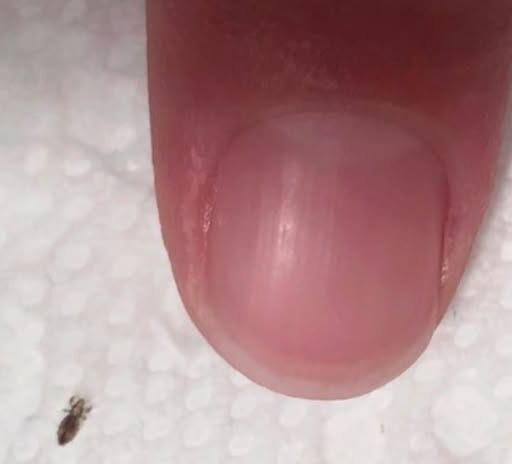
Adult head lice are very small and may be difficult to spot because they move quickly through the hair. Their appearance can vary, and their coloring may blend with the hair or scalp.
A fine-toothed lice comb is one of the most useful tools for confirming an active infestation. The hair should be combed systematically in small sections, beginning near the scalp and moving toward the ends.
After each pass, the comb can be examined under bright light and wiped onto a light-colored tissue or surface. This makes it easier to notice insects that might otherwise remain hidden between the teeth of the comb.
Finding a live crawling louse is the clearest evidence of an active infestation. Beginning treatment solely because a child is scratching may lead to unnecessary exposure to products and may overlook another cause of scalp irritation.
Understanding Lice Eggs and Empty Casings
Lice eggs, commonly called nits, are attached firmly to individual hair shafts. They are usually found close to the scalp, where the temperature allows the eggs to develop.
Unlike loose flakes of dandruff, nits tend to remain fixed to the hair. They do not usually brush away easily with a finger.
The appearance of an egg may vary depending on whether it is developing or has already hatched. Empty casings can remain attached to the hair and gradually move farther from the scalp as the hair grows.
Finding old or empty egg casings does not always mean that live lice are still present. The hair should be checked carefully for moving lice before an active infestation is assumed.
A lice comb may also be used to remove attached eggs and empty casings. Combing requires patience because the hair must be separated into small sections and examined repeatedly.
Why Home Remedies Require Caution
Many home remedies for lice circulate online, including mouthwash, vinegar, oils, mayonnaise, and other household products. These methods are often presented as inexpensive alternatives to approved treatments.
However, mouthwash is not designed to be applied extensively to a child’s scalp or trapped beneath a shower cap or plastic covering. It may contain alcohol and other ingredients that can irritate the skin, eyes, nose, or airways.
A plastic bag should never be placed over or near a child’s head. It creates a serious suffocation risk and is not a safe method of treating head lice.
Vinegar is sometimes claimed to loosen the material that attaches lice eggs to hair. Clinical benefit has not been demonstrated, and vinegar may interfere with the residual action of certain lice medicines when used at the wrong time. :contentReference[oaicite:1]{index=1}
Spraying mouthwash on a child’s hair as a lice repellent is also unsupported and may cause irritation. A strong smell does not prove that a substance can prevent lice from crawling onto the hair during close contact.
Using Approved Head-Lice Treatments
Both nonprescription and prescription treatments are available for head lice. Parents should follow the product label exactly and use only treatments that are appropriate for the affected person’s age.
Applying more medicine than directed will not necessarily kill lice more effectively. It may instead increase the chance of scalp irritation or other unwanted effects.
Some treatments kill live lice but do not destroy every egg. For that reason, a second application may be required after a specified number of days.
The timing of repeat treatment depends on the product. Applying it too early or too late may reduce its effectiveness, so the directions should be read before treatment begins.
Different lice products should not be combined unless a healthcare professional specifically recommends doing so. Parents who are uncertain about which option to use can consult a doctor, pharmacist, or local health department. :contentReference[oaicite:2]{index=2}
The Importance of Careful Combing
Combing can help remove live lice, eggs, and empty casings from the hair. It may also make it easier to determine whether a treatment has worked.
The hair should be divided into manageable sections. Each section can then be combed from the scalp to the ends, with the comb cleaned after every pass.
Bright lighting and patience are essential. Thick, curly, or long hair may require additional time, and a regular comb may be used first to remove tangles before the lice comb is introduced.
All household members should be examined, particularly anyone who has shared a bed or had close head-to-head contact with the affected person. Treatment is generally directed at people who have live lice rather than automatically treating everyone.
Checking Whether Treatment Worked
Hair should be inspected again after treatment. The presence of a few eggs does not necessarily mean that the treatment failed, especially when the eggs are located far from the scalp or appear empty.
Live, active lice are more important when deciding whether an infestation remains. A person may also continue to experience itching for a period after successful treatment because the scalp is still irritated.
If live lice appear as active as they were before treatment, the product may not have worked properly. The directions should be reviewed, and a healthcare professional can advise whether a different treatment is appropriate.
Repeatedly applying the same product without guidance may expose the scalp to unnecessary chemicals while failing to address the infestation.
Reducing the Risk of Lice Spreading Again
The most practical preventive step is to limit direct hair-to-hair contact. Children with long hair may find it helpful to keep it tied back during activities involving close physical contact.
Personal items that touch the head should not be shared during an active infestation. These include brushes, combs, hats, scarves, hair accessories, towels, helmets, and pillows.
Families should check close contacts calmly and discreetly. Head lice are common and should not be treated as a sign that a child or household is dirty.
Children should not be shamed or frightened. A clear explanation that lice are small insects that can be removed through careful treatment can make the experience less upsetting.
A Calm and Safe Response Matters
Head lice can be exhausting for parents, but panic often leads to unnecessary cleaning or the use of unproven substances. The most effective response begins with confirming that live lice are present.
Once an infestation is identified, families should use an age-appropriate treatment exactly as directed, comb the hair carefully, examine close contacts, and complete any required repeat application.
Household chemicals and improvised remedies should not be applied to a child’s scalp simply because they have a strong smell or appear inexpensive. Products that are harmless in one setting may irritate the skin or create other risks when used incorrectly.
With accurate identification, careful combing, appropriate treatment, and follow-up checks, most cases can be managed without extreme measures. The process may require patience, but a methodical and safety-focused approach gives families the best chance of eliminating the infestation and preventing it from spreading again.