
Tiny Larvae in Strawberries: What the Viral Salt-Water Videos Really Show
Viral Videos Spark Questions About Fresh Berries
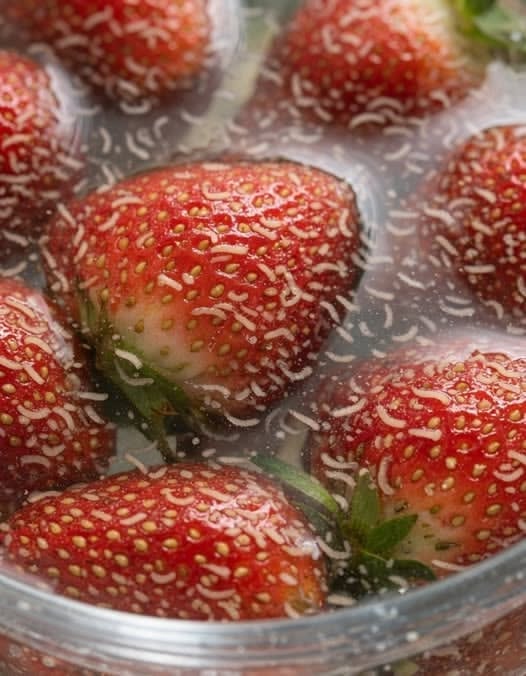
Videos showing tiny white larvae emerging from strawberries have attracted widespread attention online. In many of the clips, fresh berries are placed in a bowl of salt water before small, pale organisms begin moving out of the fruit.
The unexpected sight has left many viewers questioning whether strawberries are safe to eat. For people who regularly enjoy fresh berries, seeing larvae appear from fruit that looks clean and healthy can be unsettling.
However, the presence of these tiny larvae does not mean the strawberries are spoiled, dangerous, or unsuitable for consumption. The organisms are commonly associated with a fruit fly known as the spotted wing drosophila.
This insect can lay eggs inside ripening berries while the fruit is still growing. The salt water used in viral demonstrations does not create the larvae or cause contamination. It simply encourages any larvae already present inside the berries to move out, making them easier to see.
Why the Spotted Wing Drosophila Is Different
Many people are familiar with ordinary fruit flies gathering around soft, damaged, or overripe produce. Those insects are often seen near fruit that has been left on a kitchen counter for too long.
The spotted wing drosophila behaves differently. Instead of waiting for fruit to become overly ripe or damaged, it can lay eggs in berries that are still fresh, firm, and developing on the plant.
This ability means a strawberry may appear completely normal on the outside while containing very small eggs or larvae inside. The fruit can still have a bright color, a firm texture, and no obvious signs of insect activity.
Berries are particularly suitable for this process because they are soft fruits that grow outdoors. Strawberries, like other fresh produce, are exposed to insects and natural environmental conditions throughout the growing period.
The eggs deposited in the fruit can later develop into tiny larvae. Because of their small size and light coloring, they may remain unnoticed during harvesting, packaging, transportation, and normal household rinsing.
Most people who have eaten strawberries throughout their lives would never know whether a berry contained one of these larvae. The salt-water trend has simply made a naturally occurring part of outdoor farming much more visible.
What Happens During a Salt-Water Soak
The viral method usually involves placing strawberries in a container filled with water and salt. After the fruit remains submerged for a period of time, tiny larvae may begin emerging from openings in the berries.
The solution changes the conditions around the fruit and encourages the larvae to leave. This makes them visible against the water or the surface of the strawberry.
The reaction can appear dramatic when filmed closely. Camera zoom, bright lighting, and the contrast between white larvae and red fruit can make the organisms appear larger and more alarming than they actually are.
In reality, the larvae are very small. Their appearance in the water does not prove that every strawberry contains insects, nor does it indicate that an entire package of berries is unsafe.
Some batches may contain no visible larvae at all. Other batches may produce one or more, depending on the growing conditions and whether spotted wing drosophila insects were present near the crop.
The salt-water method is therefore better understood as a way of revealing something that may already be inside the fruit. It is not a required food-safety treatment and does not determine whether properly handled strawberries can be eaten safely.
The Larvae Are Not Considered a Human Health Threat
Although the thought of accidentally consuming a tiny larva may be unpleasant, these organisms are not considered harmful to people. Their presence does not create the kind of health risk associated with dangerous contamination or foodborne illness.
Fresh produce is grown in open-air environments where insects naturally exist. Even with careful farming, harvesting, sorting, and packaging, it is not always possible to prevent every small insect or piece of harmless insect material from coming into contact with food.
Small amounts of natural insect material can occur in produce without making the food unsafe. Safety standards recognize that fresh agricultural products cannot always be completely separated from every element of the environment in which they were grown.
The larvae seen in the videos are connected to the fruit fly’s natural life cycle. They are not parasites that live in the human body, and eating a berry that contains one is not expected to cause illness.
This distinction is important because viral videos often focus on shock rather than context. A close-up image of a larva emerging from a strawberry can create the impression of a serious danger even when the situation does not represent a meaningful health threat.
For many viewers, the strongest reaction is disgust rather than medical concern. That emotional response is understandable, but it should not be confused with evidence that strawberries are dangerous to eat.
Why Fresh Produce Can Contain Natural Insect Material
Strawberries grow close to the ground and develop in outdoor fields. During that time, they are exposed to soil, moisture, wind, insects, and other natural conditions.
Farmers and food handlers use multiple practices to protect crops and maintain quality. Even so, fresh fruit is not produced in a completely sealed environment.
The soft structure of a strawberry also makes it easier for certain insects to interact with the fruit. Unlike produce with a thick peel or hard outer shell, strawberries have a delicate surface that can be penetrated by the spotted wing drosophila.
The insect can reach the berry before it becomes overripe. As a result, the usual signs that consumers associate with fruit flies, such as decay, softness, or visible damage, may not be present.
This does not mean that strawberries are unusually dirty. It reflects the reality that fresh produce comes from living plants grown in natural surroundings.
The same basic principle applies to many agricultural foods. Tiny traces of insects or other harmless natural materials can occasionally remain even after food has been inspected and prepared for sale.
Standards for food safety are designed to keep these occurrences within acceptable limits. They do not require every piece of produce to be entirely free of microscopic or naturally occurring material.
Proper Storage Helps Preserve Strawberry Quality
Once strawberries are brought home, refrigeration is one of the most important steps for keeping them fresh. Cool temperatures slow deterioration and help the berries maintain their texture and appearance.
Strawberries should generally remain refrigerated until they are ready to be eaten. Leaving them in warm conditions for extended periods can cause them to soften and spoil more quickly.
Moisture also affects how long berries remain fresh. Washing strawberries before storage can leave excess water on their surfaces, which may encourage faster deterioration.
For that reason, it is better to rinse the berries shortly before eating them rather than immediately after bringing them home. This allows the fruit to remain dry during refrigeration.
Berries that appear crushed, heavily damaged, moldy, or spoiled should be separated from the rest of the package. Removing deteriorating fruit can help prevent moisture and decay from affecting nearby berries.
Good storage practices are primarily intended to preserve freshness and quality. They are separate from the question of whether tiny fruit fly larvae may naturally be present inside an otherwise healthy berry.
How to Wash Strawberries Before Eating
Rinsing strawberries under cold running water is the recommended preparation before eating. The water can remove surface dirt, loose debris, and material that may have collected during growing, harvesting, packaging, or handling.
The berries can be gently turned during rinsing so that water reaches all sides. There is no need to scrub the delicate fruit aggressively, as too much pressure can bruise or damage it.
After rinsing, the strawberries can be allowed to drain or gently dried. They should then be eaten, prepared, or added to a recipe without unnecessary delay.
Salt-water and vinegar soaks are sometimes used by people who want an additional cleaning step. These methods may help remove debris or encourage small organisms to leave the fruit.
However, such soaking is not necessary to make strawberries safe. Properly stored berries that are rinsed thoroughly under cold running water remain suitable to eat.
A prolonged soak can also affect the fruit’s taste and texture. Strawberries are absorbent and delicate, so leaving them in a solution for too long may make them softer or change their flavor.
Why the Videos Feel More Alarming Than the Reality
Online videos often gain attention by revealing something hidden in an ordinary object. Strawberries are familiar foods, so seeing a living organism emerge from one creates an immediate and powerful reaction.
The videos also remove the process from the broader context of farming. Viewers see the larva but may not be reminded that the berry developed outdoors among insects and other natural organisms.
Because the organisms are normally too small to notice, their sudden visibility can make the issue feel new. In reality, the salt-water technique has not created a new type of contamination.
It has simply shown consumers a part of fruit production that usually remains unseen. The discovery may change how some people think about fresh berries, but it does not establish that strawberries have suddenly become unsafe.
The reaction also demonstrates how close-up filming can influence perception. A tiny larva magnified on a screen may look far more significant than it would appear to the naked eye.
Without information about the spotted wing drosophila and its life cycle, viewers may assume the worst. Understanding what the videos show can help separate an unpleasant visual from a genuine food-safety concern.
Strawberries Remain Safe to Enjoy
The viral salt-water clips highlight a naturally occurring possibility in berries grown outdoors. Spotted wing drosophila insects can lay eggs inside healthy, ripening fruit, and the resulting larvae may remain hidden until a soaking solution causes them to emerge.
The larvae are not considered a health danger to humans. Their occasional presence reflects the natural conditions of agriculture rather than evidence that the fruit is poisonous or contaminated with a harmful substance.
Consumers can continue handling strawberries in a simple and practical way. The berries should be kept refrigerated, checked for obvious spoilage, and rinsed under cold running water just before they are eaten.
People who prefer to use salt water or vinegar may do so as an optional cleaning method. It is not a necessary safety measure, and ordinary rinsing remains sufficient for properly stored fruit.
Seeing tiny larvae emerge from a strawberry may be surprising, but the videos do not mean that fresh berries should be avoided. With appropriate refrigeration and washing, strawberries remain a safe and enjoyable food.