
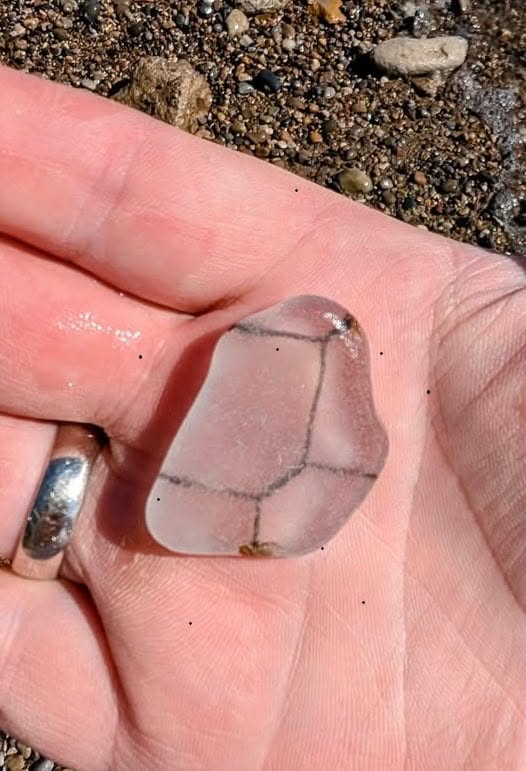
These Frosted Glass Fragments Are Relics of Great Lakes Industrial History
Decades of Waves Transformed Fireproof Factory Glass Into Smooth Pieces Collected Along the Shore
Along certain Great Lakes shorelines, beachcombers occasionally discover unusual pieces of thick, frosted glass with thin strands of steel mesh still visible inside.
At first glance, the fragments may resemble ordinary sea glass.
Their size, weight, and internal wire pattern, however, reveal a much different origin.
These weathered pieces are remnants of the factories, warehouses, shipyards, and industrial buildings that once dominated many waterfront communities across the region.
The Glass Was Designed for Industrial Safety
Wire-reinforced glass was widely used in older industrial buildings because it offered added protection in areas where heat, fire, or breakage were serious concerns.
A grid of steel wire was embedded directly inside the glass during manufacturing.
The mesh helped hold broken sections together, reducing the risk that large pieces would immediately fall from windows or doors.
This made the material useful in factories, stairwells, warehouses, boiler rooms, and other demanding environments.
Factories Once Lined the Great Lakes Waterfront
For generations, Great Lakes cities depended heavily on shipping, manufacturing, steel production, grain storage, and other industrial activity.
Large facilities were often constructed close to the water so raw materials and finished products could move efficiently by ship.
These buildings contained countless windows made from durable reinforced glass.
As industries declined, relocated, or modernized, many of the aging structures were abandoned and eventually demolished.
Demolition Sent Fragments Toward the Water
During the removal of old waterfront factories, broken construction material sometimes entered nearby shorelines.
Glass, brick, metal, concrete, and ceramic fragments became mixed with rubble along the water’s edge.
Some pieces were carried directly into the lake, while others remained buried beneath sand and stones until storms exposed them.
The fireproof glass that once filled industrial windows became part of this debris.
Wave Action Slowly Removed the Dangerous Edges
When first broken, the reinforced glass would have had sharp, irregular edges.
Years of movement through water and stone gradually changed its appearance.
Waves repeatedly pushed the fragments across sand, gravel, and rocky lakebeds.
Each collision wore away a small amount of the surface.
Over decades, the cutting edges became rounded and the once-clear glass developed a cloudy, frosted finish.
The Steel Mesh Often Remained Visible
Although the outside of the glass changed, portions of the original steel reinforcement sometimes remained trapped inside.
The wire may appear as straight lines, small squares, or rust-darkened marks running through the fragment.
This embedded pattern distinguishes the pieces from most ordinary beach glass.
It also provides an immediate connection to the industrial purpose the material once served.
Some Pieces Are Large Enough to Fill a Hand
Unlike the small colored fragments commonly found on beaches, reinforced industrial glass can appear in thick, palm-sized sections.
Its heavier construction allowed some pieces to survive repeated wave action without breaking into tiny fragments.
The resulting objects may feel more like pieces of weathered building material than decorative glass.
Their unusual texture and visible wire make them immediately recognizable to experienced collectors.
Every Fragment Represents Two Different Forces
The pieces combine human engineering with natural erosion.
Workers originally produced the glass to resist heat, impact, and sudden breakage.
Nature then spent decades reshaping the material through water, ice, sand, and stone.
What began as a practical safety product eventually became a smooth shoreline artifact.
The Frosted Surface Records Years of Movement
The cloudy appearance is not paint or artificial treatment.
It develops as countless small scratches scatter light across the glass.
Each wave, storm, winter freeze, and movement across the lakebed contributes to the final texture.
A heavily frosted fragment may have spent many years being turned and polished by the water.
Great Lakes Glass Differs From Ocean Sea Glass
Collectors often use the term beach glass for fragments found along freshwater shores and sea glass for pieces shaped by oceans.
Both are produced through similar processes of erosion.
Great Lakes fragments, however, were shaped in freshwater environments with different shore materials, seasonal ice, and wave conditions.
Industrial shoreline pieces also reflect the specific manufacturing history of the region.
Winter Ice May Have Helped Shape the Fragments
The Great Lakes experience powerful seasonal changes.
Ice can trap debris, move it along shorelines, and press it against rocks and other material.
Spring breakup and storms may then release buried fragments and carry them to new locations.
This repeated cycle adds another force to the slow weathering process.
The Glass Tells the Story of a Lost Waterfront
Many modern Great Lakes waterfronts now contain parks, trails, apartments, and restored public spaces.
Earlier generations knew those same shorelines as working industrial zones filled with smokestacks, warehouses, rail lines, and loading docks.
A fragment of reinforced glass can serve as evidence of that earlier landscape.
It may be one of the few surviving pieces of a building that disappeared decades ago.
It Is Both Debris and Historical Evidence
From one perspective, the fragments are remnants of demolition and pollution.
They entered the lake because old industrial material was not always removed carefully.
From another perspective, they have become artifacts that reveal how communities once worked and built along the water.
Both interpretations can be true at the same time.
The Wire Grid Reveals How the Material Was Manufactured
The internal mesh was placed inside the glass while it was still being formed.
It was not added later to the surface.
This allowed the finished sheet to remain intact longer after cracking.
The visible grid inside a weathered fragment preserves that manufacturing technique in miniature.
The Material Was Tough but Not Indestructible
Wire glass was designed to limit the effects of breakage, not to remain unbroken forever.
Heat, building movement, impacts, demolition equipment, and decades of weathering could still fracture it.
The mesh might hold pieces temporarily in place, but once the surrounding structure was destroyed, sections could separate and enter the environment.
Color Can Vary From Clear to Pale Green
Many fragments appear white or clear after heavy frosting.
Others may display pale green, blue-gray, or amber tones depending on the original glass composition.
Rust from the internal steel can create brown or orange staining near exposed sections of wire.
These variations give each piece a distinctive appearance.
Collectors Value the Visible History
Ordinary beach glass is often prized for its color and smoothness.
Industrial wire glass attracts interest because its history remains physically visible.
The embedded steel identifies it as a product created for a specific architectural purpose.
Collectors are not simply finding a polished shard.
They are holding part of a vanished factory window or fire door.
The Fragments Should Still Be Handled Carefully
Although wave action may smooth the outer edges, not every piece is completely safe.
Exposed wire can rust, break, or form sharp points.
Recently uncovered fragments may also retain cutting edges beneath sand or mineral deposits.
Anyone handling the material should inspect it carefully and avoid allowing children to collect pieces without supervision.
Not Every Piece Should Be Removed
Rules concerning shoreline collecting vary by location.
Some parks, protected areas, historic sites, and public lands prohibit visitors from removing natural or cultural material.
Collectors should review local regulations before taking any object from a beach.
Photographing a fragment where it was found can preserve the discovery without disturbing the site.
Location Adds Meaning to the Discovery
A piece found near a former steel mill, grain elevator, warehouse district, or shipyard may offer clues about the structure from which it came.
Historic maps and photographs can reveal what once stood nearby.
The fragment may not be traceable to one exact building, but its surroundings can help place it within the region’s broader industrial story.
Old Maps Can Reveal Forgotten Factories
Many industrial facilities disappeared before current residents were born.
Historic fire insurance maps, city directories, newspaper archives, and aerial photographs can show where these buildings stood.
Comparing a modern beach with older records may explain why certain types of glass, brick, or metal appear along one section of shoreline.
Storms Often Expose New Material
Powerful waves can rearrange beaches overnight.
Sand may be removed from one area and deposited elsewhere, revealing objects that had remained buried for years.
After storms, beachcombers sometimes discover industrial fragments that were previously hidden beneath the shoreline.
The next storm may cover them again.
Each Piece Has Traveled an Unknown Distance
A fragment discovered on a beach may not have originated directly beside that location.
Currents, storms, ice, and changing water levels can move material considerable distances.
The glass may have traveled along the shoreline for years before finally being deposited where it was found.
That uncertainty becomes part of its history.
The Objects Preserve the Region’s Working-Class Past
Great Lakes industrial history is not only a story of companies and buildings.
It is also the story of the people who worked inside those structures.
Factory employees, dockworkers, engineers, mechanics, and tradespeople spent their lives behind windows made from materials like reinforced glass.
A weathered fragment quietly connects the present shoreline to those working communities.
The Glass Survived After the Buildings Disappeared
A factory might be demolished within days.
Its materials can remain in the surrounding environment for generations.
The glass endured after roofs collapsed, walls were removed, and land was redeveloped.
Its survival shows how industrial history can remain present even when the original structures are no longer visible.
Nature Softened What Industry Made Hard
The glass was manufactured to be durable, rigid, and resistant to damage.
Wave action gradually changed its harsh appearance.
The edges became rounded, the surface turned soft and opaque, and the once-functional sheet became an object people might display for its beauty.
The transformation is an unusual collaboration between industrial design and natural forces.
A Small Fragment Can Hold a Large Story
These pieces may fit easily inside a person’s palm.
The history they represent is much larger.
They recall the rise and decline of industrial waterfronts, changing safety standards, demolition practices, environmental consequences, and the long power of the Great Lakes to reshape human material.
They Are Not Precious Stones, but They Are Valuable
The fragments may have little conventional monetary value.
Their importance comes from context.
They offer a physical connection to buildings, workers, and shorelines that have changed dramatically over time.
For historians and local collectors, that connection can be more meaningful than rarity alone.
The Great Lakes Continue Revealing Their Past
Every wave that reaches shore has the ability to uncover something forgotten.
Old ceramics, bricks, metal fasteners, bottle glass, and industrial safety glass may all appear among ordinary stones.
These objects show that shorelines are constantly moving archives.
They preserve traces of what communities built, discarded, lost, and left behind.
Weathered Glass Becomes a Testament to Change
The reinforced fragments began as part of busy industrial structures.
They later became demolition debris and spent decades beneath moving freshwater.
Today, their frosted surfaces and rusted wire grids tell a story of transformation.
They remind people that even the strongest buildings are temporary, while the materials they leave behind can continue traveling through history.
Palm-Sized Pieces of Great Lakes History
Vintage fireproof glass with embedded steel mesh is more than an unusual beach discovery.
It is a surviving fragment of the region’s industrial past.
Factories may have vanished, shipping patterns may have changed, and waterfronts may have been redeveloped, but these pieces remain.
Smoothed by relentless waves and marked by the wire that once made them safer, they preserve the meeting point between human industry and natural time.
Each frosted fragment is a small reminder that the Great Lakes do not simply border history.
They continue shaping it.