
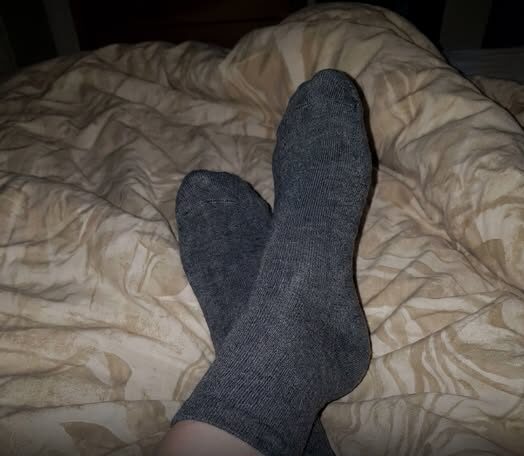
Can Wearing Socks to Bed Help You Sleep Better? Here’s What Happens to Your Body
A Surprisingly Simple Bedtime Habit
When sleep becomes difficult, people often focus on stress, caffeine, late-night screen time, or complicated bedtime routines.
But something as simple as having cold feet may also influence how easily some people fall asleep.
Wearing comfortable socks to bed can warm the feet, encourage blood vessels near the skin to widen, and support the body’s normal process of releasing heat before sleep.
Research on foot warming suggests that this temperature-related process may help some people fall asleep faster.
Why Body Temperature Matters for Sleep
Sleep and temperature regulation are closely connected.
As bedtime approaches, the body normally begins redistributing heat toward the hands and feet.
Blood vessels near the skin expand, a process known as vasodilation.
This allows heat to move from the body’s center toward the extremities, where it can be released more efficiently.
The resulting pattern of warmer skin at the hands and feet and changes in internal temperature is associated with the transition toward sleep.
Warm Feet Can Signal That the Body Is Ready for Rest
Cold feet can make it harder for this heat-transfer process to occur efficiently.
When the feet warm up, blood circulation near the skin increases and the body can redistribute heat more effectively.
This is why warming the feet shortly before or during bedtime has attracted interest as a simple way of supporting sleep onset.
A well-known study examining the relationship between foot temperature and sleep found that warm feet were associated with faster sleep onset.
Later research has also found that warming the feet with bed socks can accelerate sleep onset in adults under certain conditions.
What Research on Sleeping in Socks Found
One small study specifically examined people wearing bed socks while sleeping in a cool environment.
Participants wearing socks fell asleep sooner, slept longer, and experienced fewer awakenings during the night compared with the control condition.
Importantly, the researchers did not find a significant change in core body temperature.
That means the benefit was not simply that socks dramatically cooled the body’s center.
Instead, manipulating foot temperature itself appeared to influence sleep quality.
The Effect Is Not a Guaranteed Cure for Insomnia
Although the findings are interesting, socks should not be viewed as a treatment that will solve every sleep problem.
The research has generally involved relatively small numbers of participants, and individual responses vary.
A more recent study examining specialized socks also suggested improvements in insomnia severity and slow-wave sleep, but its authors emphasized that larger studies and longer follow-up are still needed.
For some people, warming the feet may make a noticeable difference.
For others, it may simply make bedtime more comfortable.
Why Warm Feet and a Cooler Sleeping Environment Can Work Together
The goal is not to make the entire body excessively warm.
Sleep generally works best when the body can regulate heat effectively.
Warm extremities can support heat loss while the surrounding sleeping environment remains comfortable.
This explains why someone may enjoy wearing socks while still preferring a cooler bedroom.
Warm feet and comfortable ambient temperatures are not necessarily contradictory.
Does Wearing Socks Make Your Core Temperature Drop?
The answer is more complicated than the popular explanation sometimes suggests.
Warming the feet can encourage distal vasodilation and help the body redistribute heat, which is associated with sleep onset.
However, research specifically involving bed socks found improved sleep without a significant change in measured core body temperature.
So it is more accurate to say that warm feet may support the body’s normal thermoregulatory transition into sleep rather than claiming that socks directly force the body’s core temperature downward.
What About Melatonin?
Melatonin is naturally involved in the body’s sleep-wake cycle, and temperature changes occur alongside the body’s preparation for sleep.
However, it would be an oversimplification to say that putting on socks directly causes the brain to release melatonin.
The better-supported explanation involves warming the skin, increasing blood flow toward the extremities, and promoting the heat-distribution pattern associated with sleep onset.
Socks therefore may support a natural bedtime process rather than acting like a medication or directly triggering a particular hormone.
Comfort Is an Important Part of the Effect
A pair of socks will not help much if wearing them makes you uncomfortable.
Bed socks should feel soft and loose rather than restrictive.
Tight elastic around the ankle can leave marks and may make the habit unpleasant.
The socks should also be clean and dry.
Many people prefer breathable materials that provide warmth without causing excessive sweating.
Choose Socks That Do Not Feel Restrictive
The ideal bedtime sock does not need to be specialized or expensive.
Comfort should be the priority.
A loose-fitting pair that stays on without tightly gripping the ankle is generally more suitable for sleep than highly compressive socks worn for athletic or medical purposes.
If the socks cause numbness, discomfort, excessive warmth, or irritation, they are not a good choice for sleeping.
Natural Fibers Can Feel More Comfortable
Cotton and wool are common options because many people find them comfortable for nighttime use.
The most important factor is finding a fabric that keeps the feet comfortably warm without leaving them sweaty.
People vary considerably in how warm they become during sleep.
A thick wool pair may feel perfect in a cold bedroom but uncomfortable in warmer weather.
A lighter sock may be enough when only mild foot warming is needed.
Overheating Can Defeat the Purpose
More warmth is not necessarily better.
If socks cause your feet to become excessively hot or sweaty, they may interfere with comfort and disrupt sleep rather than improve it.
The goal is gentle warming.
Someone who naturally sleeps hot may prefer very thin socks or may find that sleeping without socks is more comfortable.
The habit is useful only if it helps create a comfortable sleeping environment.
A Warm Footbath May Work Through a Similar Mechanism
Socks are not the only way to warm the feet before bed.
A warm footbath can also increase foot temperature and promote peripheral heat loss.
Research has found that foot warming before bedtime can influence the temperature gradient between the body’s center and extremities.
However, not every study has found substantial improvements in objective sleep outcomes, which again shows that the effect differs among individuals.
Warm Baths and Showers May Also Support Sleep
The same general principle helps explain why many people find a warm bath or shower relaxing before bed.
Warming the skin can encourage blood flow toward the surface and support heat dissipation afterward.
Studies examining bathing and sleep have linked this thermoregulatory response with shorter sleep-onset times under certain conditions.
So socks are one small part of a broader connection between temperature and sleep.
Could Socks Reduce Nighttime Awakenings?
The small study of bed socks in a cool environment found fewer awakenings among participants wearing socks.
That does not mean everyone who wears socks will suddenly sleep through the night.
Nighttime awakenings can have many causes, including environmental discomfort, stress, medical conditions, medications, and sleep disorders.
Still, if cold feet are repeatedly making someone uncomfortable, keeping them gently warm may remove one source of nighttime disturbance.
People With Persistent Insomnia Need More Than a Pair of Socks
Difficulty sleeping occasionally is common.
Persistent insomnia is different.
If someone regularly struggles to fall asleep, repeatedly wakes during the night, or experiences significant daytime exhaustion, changing socks alone may not address the underlying problem.
Sleep problems can have multiple causes and may require evaluation beyond simple changes to the bedtime environment.
Wearing socks can be treated as a low-effort comfort strategy rather than a substitute for appropriate care.
A Good Night’s Sleep Matters Beyond Feeling Rested
Healthy sleep supports attention, memory, mood, heart health, metabolism, and everyday functioning.
Consistently getting enough sleep is also associated with lower risks of several chronic health problems.
Because sleep affects so many areas of health, small habits that make bedtime more comfortable can be worth experimenting with.
They simply need to be viewed realistically.
How to Try the Sock Method Tonight
If your feet commonly feel cold in bed, choose a clean, comfortable pair of loose-fitting socks before going to sleep.
The socks should warm your feet without squeezing them or making them sweaty.
Keep the rest of the bedroom at a temperature that feels comfortable rather than piling on excessive blankets simply to create more heat.
Then pay attention to how you sleep over several nights.
If you feel more comfortable and seem to fall asleep more easily, the habit may be useful for you.
If you become too warm, simply remove them.
The Real Benefit May Be Simpler Than It Sounds
There is no need to turn sleeping in socks into an elaborate health ritual.
The underlying idea is straightforward.
The body naturally changes how it distributes heat as it prepares for sleep.
Warm feet can support that process, and some studies suggest that foot warming may shorten the amount of time needed to fall asleep.
For someone lying awake with uncomfortably cold feet, a pair of socks may therefore be worth trying.
A Tiny Change That May Make Bedtime Easier
Wearing socks to bed is not a miracle treatment, and the evidence does not support claims that it will instantly cure insomnia.
But there is genuine science behind the connection between warm feet, peripheral blood flow, temperature regulation, and sleep onset.
Studies have found that warming the feet can help some people fall asleep faster, and bed socks have also been associated with longer sleep and fewer awakenings in a cool environment.
The habit is inexpensive, simple, and easy to test.
For some tired sleepers, the difference between another uncomfortable night and a more peaceful bedtime may begin with nothing more complicated than comfortably warm feet.