
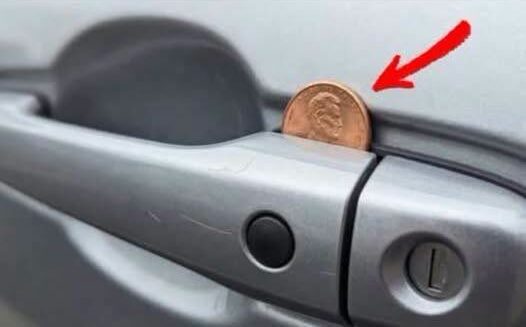
If Your Car Door Suddenly Acts Strangely, Take a Moment Before Getting In
An unexpected problem with a door or lock may deserve more than a quick glance
Most drivers have experienced a stubborn car door at some point.
A key may refuse to turn, a handle may feel unusual, or a lock may suddenly stop working the way it normally does.
In many cases, the explanation is harmless.
Locks wear out, handles break, electronic systems fail, and cold weather or dirt can interfere with normal operation.
But if something about the situation feels unusual, especially in an isolated or unfamiliar location, it can be wise to pause before assuming the problem is purely mechanical.
Start by looking before touching anything
If a car door does not open normally, take a moment to visually inspect the handle, lock and surrounding area.
There may be an ordinary explanation, such as debris near the mechanism or a problem with the key.
However, if you notice an unfamiliar object, unusual damage or anything that appears intentionally placed near the door, avoid immediately reaching for it.
You do not need to determine exactly what it is while standing beside the vehicle.
If the situation makes you uncomfortable, creating distance is often the better first response.
Check the passenger side as well
Drivers naturally focus on the door they normally use.
If the driver-side lock or handle is behaving strangely, it may be helpful to look at the passenger-side door and surrounding area from a safe position.
Comparing the doors can sometimes help reveal whether the issue appears to involve a normal mechanical problem or something more unusual.
That does not mean you should walk around the vehicle repeatedly if you already feel unsafe.
The purpose is simply to observe before putting yourself in a vulnerable position.
Your surroundings matter just as much as the vehicle
A car problem does not happen in isolation.
Where you are and who is nearby can completely change how you should respond.
A stubborn lock in your own driveway during daylight may feel very different from the same problem in a nearly empty parking lot late at night.
Before approaching your vehicle, especially after dark, look around.
Notice whether anyone is standing unusually close to the car, lingering nearby or paying excessive attention to you.
Being aware of the environment gives you more time to make a safe decision.
A few seconds of observation can be valuable
People often approach their vehicles automatically.
They are checking their phones, carrying bags, thinking about the drive home or searching for their keys.
That routine can make it easy to overlook something that is different from normal.
Taking a few seconds to scan the parking area before reaching the car requires very little effort.
Those seconds may help you notice a suspicious person, an unexpected obstruction or simply a situation that makes you uncomfortable enough to wait.
You do not need proof before taking precautions
One of the most important safety principles is that you do not need to prove that a threat exists before stepping away.
Sometimes people hesitate because they worry about overreacting.
They tell themselves that a strange feeling is probably nothing and continue forward even when they are uncomfortable.
It is perfectly reasonable to create distance while you assess the situation.
If there is an innocent explanation, no harm has been done by exercising a little caution.
Trust discomfort without allowing it to become panic
There is a difference between staying alert and becoming frightened by every minor mechanical problem.
Most unusual door behavior will have an ordinary explanation.
The goal is not to assume that every malfunction is evidence of danger.
Instead, treat unexpected circumstances as a reason to slow down and observe.
If your surroundings are normal and there is an obvious mechanical issue, you can address it appropriately.
If several things feel wrong at the same time, stepping away can be the safer choice.
Do not remain beside the vehicle if you feel exposed
If your key will not turn or the door refuses to open, repeatedly trying the same lock can keep you standing in one place for several minutes.
That may be uncomfortable if the location is dark, isolated or unfamiliar.
If you begin feeling uneasy, stop trying to force the issue.
Move toward a place where other people are present.
A well-lit store, security desk, restaurant or busy entrance can give you a safer place to decide what to do next.
A nearby business can provide a safer waiting area
When possible, returning to an open business can be a practical option.
You can wait indoors, ask whether security personnel are available or contact someone for assistance.
Being around employees and other customers can also make you less isolated while the situation is being assessed.
This can be particularly useful when you are unsure whether the issue is simply a broken lock or something that deserves additional attention.
Contact someone you trust
You do not necessarily have to deal with an uncomfortable situation alone.
If something seems unusual, call a family member, friend or another person you trust.
You can explain where you are and what is happening.
They may be able to come meet you or remain on the phone while you move to a safer location.
The simple fact that another person knows where you are can also make it easier to stay calm and make deliberate decisions.
Ask security personnel for help when available
Shopping centers, garages, hospitals, campuses and larger businesses often have security employees nearby.
If you are concerned about returning to your vehicle, asking someone to accompany you can be a reasonable precaution.
Security staff may also be able to observe the vehicle from a distance or determine whether anything in the area seems unusual.
You do not need to investigate a suspicious situation personally when someone trained to handle security concerns is available.
Do not handle unfamiliar objects unnecessarily
If you notice something lodged near a door handle or lock, avoid automatically pulling it out.
It may be harmless debris or an ordinary object that became stuck accidentally.
But if you do not recognize it and the circumstances feel suspicious, there is little benefit in handling it immediately.
Move away and seek assistance instead.
Keeping your distance prevents you from becoming distracted while trying to examine something you do not understand.
A malfunctioning key does not always mean the lock is blocked
There are many ordinary reasons a key may suddenly stop working.
The key itself may be worn or damaged.
The internal lock mechanism may have developed a fault.
Electronic systems may also fail, especially in vehicles that depend heavily on keyless entry.
The steering or locking system may simply need professional attention.
For this reason, unusual behavior should be treated cautiously but not automatically interpreted as evidence of criminal activity.
Use another entrance only when it feels safe
If one car door does not work, the natural response is to try another.
That can be perfectly reasonable in an ordinary setting.
However, if you already feel uncomfortable because of the surroundings or something unusual near the vehicle, walking around the car can increase the amount of time you spend exposed.
In that situation, moving toward a populated area first may make more sense.
You can decide how to access the car later when you have help or feel more secure.
Dark parking areas deserve extra awareness
Visibility changes everything.
In daylight, you can usually see the area around a vehicle clearly before approaching.
At night, shadows, parked vehicles and poorly lit corners can make it more difficult to notice who is nearby.
If you are returning to your car after dark, consider having your keys ready before leaving a building.
Look toward the vehicle from a distance and avoid becoming absorbed in your phone while walking.
The goal is simply to remain aware of what is happening around you.
Unfamiliar locations can make small problems feel more serious
A broken lock is inconvenient anywhere.
It can feel considerably more stressful when it happens somewhere you do not know well.
If you are traveling, visiting a new neighborhood or parked far from familiar businesses, you may not immediately know where to find help.
That makes it even more useful to identify a populated, well-lit place before spending several minutes troubleshooting beside the vehicle.
Do not allow frustration to override caution
Car problems often happen at the worst possible moment.
You may be tired, late, carrying groceries or trying to get home quickly.
That frustration can make it tempting to focus entirely on opening the door.
But repeatedly forcing a lock or becoming absorbed in the problem can reduce your awareness of the surroundings.
If something does not feel right, temporarily abandoning the effort can be the smarter decision.
If you believe there is immediate danger, seek emergency help
Sometimes a situation goes beyond vague discomfort.
You may see someone behaving threateningly, notice clear signs that the vehicle has been tampered with or believe someone is waiting nearby.
In those circumstances, do not return to the vehicle alone simply to verify what is happening.
Move to a safer location and contact local emergency services if you believe you are in immediate danger.
Give them your location and explain what you observed as clearly as possible.
Vehicle assistance may be the answer if the problem is mechanical
Once you are in a secure location, you can consider ordinary explanations for the door problem.
Roadside assistance, a locksmith or another appropriate vehicle professional may be able to help.
A mechanical problem can usually be dealt with later.
There is rarely a reason to remain in an uncomfortable location simply because you want to solve the lock problem immediately.
Personal safety comes first.
Staying calm helps you notice more
Panic can make it difficult to think clearly.
If a door suddenly behaves strangely, take a moment before reacting.
Look at the vehicle.
Look around the parking area.
Notice where the nearest safe, populated location is located.
Then decide whether the situation seems like an ordinary mechanical inconvenience or something that warrants additional caution.
Small precautions do not have to disrupt your day
Safety awareness does not require living in constant fear.
Most days, you will walk to your car, unlock it and drive away without anything unusual happening.
The purpose of these precautions is simply to give yourself options on the rare occasion when something feels different.
Taking 10 or 20 extra seconds to observe your surroundings is a small inconvenience compared with rushing into a situation that makes you uncomfortable.
Your instincts can be treated as information
People often describe a feeling that something is wrong even before they can explain why.
That feeling does not necessarily mean danger is present.
But it can be treated as useful information rather than immediately dismissed.
Perhaps you noticed someone watching you, an object near the handle, unexpected damage or simply a combination of small details that feels different from normal.
Giving yourself distance allows you to assess those details without unnecessary pressure.
Be cautious without assuming the worst
The balanced approach is straightforward.
Do not assume every broken lock represents a threat.
At the same time, do not force yourself to ignore an uncomfortable situation simply because there might be an innocent explanation.
Mechanical faults are common.
Suspicious circumstances are less common, but awareness remains useful.
The safest response often begins with calmly observing before acting.
A few extra moments can make a meaningful difference
If your car door suddenly stops behaving normally, there is no need to panic.
Check the handle and lock visually, pay attention to the surrounding area and consider whether anything seems unusual.
If the situation feels normal, the problem may simply require mechanical assistance.
If something makes you uncomfortable, step away rather than remaining beside the car.
Move toward a busy, well-lit location, contact someone you trust and ask for security or professional help if necessary.
If you genuinely believe you are in immediate danger, contact emergency services instead of approaching the vehicle again.
Your safety matters more than getting into the car immediately
A malfunctioning car door is frustrating, but it does not need to become a reason to ignore your surroundings.
The most important step is often the simplest one: pause.
Look before you act.
Give yourself space if anything feels unusual.
Ask for help rather than investigating a suspicious situation alone.
The door, lock or vehicle can be repaired later.
Your first priority should always be making sure you are comfortable and safe before getting back into the car.