
This Strange Vintage Metal Key Had a Clever Purpose Most People Would Never Guess Today
A Small Household Tool From an Earlier Era
At first glance, this unusual vintage metal tool can be difficult to identify.
Its simple shape does not immediately reveal what it was designed to do, especially for anyone accustomed to modern cans with pull tabs and easy-open lids.
But this small object once had a very practical role in kitchens and households.
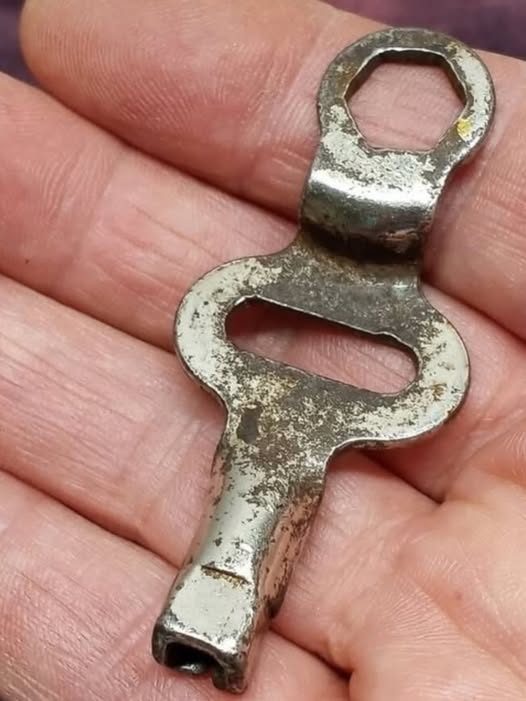
It is commonly recognized as a traditional sardine tin or can key, a tool created to open certain metal containers fitted with a narrow tear-strip lid.
Rather than cutting through the top of the can with a conventional opener, users relied on the key to roll away a thin strip of metal.
The Key Worked With a Special Tear Strip
Older food cans were sometimes manufactured with a narrow metal band running around part of the container.
One end of that strip included a small starting tab.
The tab was designed to fit into the slot on the metal key.
Once inserted, the user simply turned the key.
As the key rotated, the metal strip wrapped around its shaft and gradually separated from the can.
This action opened the container by peeling the sealed section away rather than cutting directly through it.
Using the Tool Was Surprisingly Simple
The basic process required only a few steps.
First, the user located the small metal tab attached to the tear strip.
That tab was pushed through the narrow slot in the key.
The key was then turned slowly by hand.
Each turn pulled more of the metal band away from the can and wound it around the tool.
By continuing to rotate the key, the user could peel back enough of the container to gain access to the contents inside.
Sardine Tins Made the Design Especially Familiar
The tool became strongly associated with sardine cans because similar keys were commonly included with certain tins of preserved fish.
The key could be attached directly to the container when purchased, ensuring that the customer already had the correct tool needed to open it.
For that reason, many people remember these objects specifically as sardine tin keys.
However, the same basic rolling mechanism could be used with other containers designed around a metal tear strip.
The tool itself was simple, inexpensive, and easy to manufacture.
The Design Avoided the Need for a Separate Can Opener
Modern households commonly keep a dedicated can opener in a kitchen drawer.
But containers using a rolling key did not require that type of cutting tool.
The opening mechanism was already built into the design of the can.
As long as the small key remained available, the user could open the package without piercing the lid or cutting around its edge.
This made the system compact and convenient for products that needed to remain sealed until they were ready to be eaten.
The Metal Strip Wrapped Around the Key
One of the most distinctive parts of the process was what happened to the removed metal.
Instead of simply tearing away and falling loose, the narrow strip wound tightly around the key as it was turned.
The result was a small coil of metal wrapped around the tool.
This helped keep the strip under control while the container was being opened.
The rolling action also allowed the user to apply steady mechanical force rather than trying to pull the metal away with bare fingers.
The Tool Was Small but Mechanically Effective
Its usefulness came from leverage.
A person might struggle to peel a narrow metal band away from a can by hand.
By inserting the tab into the slot and rotating the key, however, the user could multiply the force applied to the strip.
The rolling motion made the job much easier.
This is a good example of how many older household tools solved practical problems through extremely simple mechanical designs.
Its Shape Was Designed Around More Than One Function
What makes some examples of these vintage keys especially interesting is the additional opening built into the upper portion of the tool.
Many had a hexagonal hole rather than a completely solid handle.
That feature could provide another practical use.
The opening could function as a small wrench or tightening key for certain household or appliance valves.
This gave the object a second purpose beyond opening cans.
The Hexagonal Opening Could Grip Small Fittings
A hexagonal opening works by fitting around a matching nut, valve, or fitting.
When the tool is turned, the flat sides of the opening can transfer rotational force to the object being adjusted.
On certain household items or appliances, a small tool like this could therefore be used for tightening or loosening a compatible fitting.
The exact secondary use could depend on the particular design and dimensions of the key.
But the inclusion of the opening made the tool more versatile than its modest appearance suggested.
Multi-Purpose Household Tools Were Common
Older household objects were often designed to perform more than one job.
Manufacturers frequently looked for ways to add useful features without making products significantly larger or more complicated.
A sardine tin key with an integrated wrench opening followed that same philosophy.
The main body could open a can.
The shaped opening could potentially assist with a small mechanical adjustment.
All of it fit into an object small enough to store in a drawer or attach directly to packaging.
Why the Tool Can Be Difficult to Recognize Today
The biggest reason these keys puzzle people now is that packaging technology has changed.
Many modern cans use ring-pull lids, tabs, peel-back covers, or standard lids designed for conventional can openers.
The rolling tear-strip system is far less familiar to younger generations.
Without seeing the key attached to its original container, the object can resemble an unusual wrench, bottle opener, appliance tool, or piece of industrial hardware.
Its purpose becomes much clearer once the old can-opening method is understood.
Modern Packaging Made the Key Less Necessary
As easy-open can designs became more common, consumers no longer needed a separate rolling key for many products.
Pull tabs allowed lids to be opened directly by hand.
Other containers adopted peelable seals or different forms of packaging entirely.
These changes reduced the need for the traditional tin key.
A tool that once made perfect sense gradually became an unfamiliar relic.
The Tool Reflects an Earlier Style of Packaging
Vintage household tools often tell a larger story about how everyday products used to be designed.
This key is a perfect example.
Its existence reveals that opening a can was once treated as part of the package’s engineering.
The container, tear strip, tab, and key all worked together as one system.
Removing any one of those parts could make the package much harder to open.
It Was Designed to Be Used and Then Forgotten
Unlike decorative household objects, these keys were created primarily for function.
They were inexpensive and often associated with a specific product.
After a can was opened, the key might be discarded, saved in a drawer, or reused if its shape allowed another purpose.
Few people at the time would have imagined that decades later the same object might become something collectors or curious homeowners struggled to identify.
Older Kitchens Contained Many Specialized Tools
Before modern packaging standardized so many everyday tasks, kitchens often contained specialized implements designed around specific products.
Some tools opened bottles.
Others pierced cans.
Some removed lids, tightened fittings, or worked with a particular style of container.
The sardine tin key belonged to this broader family of practical objects.
Its usefulness depended on understanding exactly how the product it accompanied had been manufactured.
The Rolling Motion Was the Key to the Entire Design
The most important feature was not the shape of the handle itself.
It was the narrow slot.
That slot captured the starting tab of the metal strip.
Once the tab was secured, the key became a winding mechanism.
Each rotation tightened the strip around the shaft while pulling it away from the container.
This transformed a small piece of metal into an effective opening device.
It Was an Elegant Solution to a Simple Problem
From a mechanical perspective, the design was remarkably efficient.
There were no gears.
No springs.
No moving parts beyond the key itself.
The user’s hand supplied all the necessary motion.
The container’s tear strip did the rest.
That simplicity made the tool cheap, durable, and easy to understand once someone had used it before.
The Secondary Wrench Feature Added Extra Value
The hexagonal opening made some versions even more interesting.
Instead of leaving unused space in the handle, the manufacturer could shape that opening to fit another common mechanical need.
A compatible valve or fitting could potentially be turned using the same tool.
Even if the secondary function was not required every day, it made the object more useful than a single-purpose strip winder.
Collectors May Recognize It Immediately
People familiar with vintage packaging, old kitchen equipment, or antique household tools may recognize the object at a glance.
Others may find it completely mysterious.
That difference often comes down to whether someone remembers seeing cans that depended on keys like this.
Once the original packaging disappeared from common use, the key lost the visual context that made its purpose obvious.
Its Strange Appearance Makes More Sense With the Original Can
By itself, the tool can seem oddly shaped.
Placed beside an old tear-strip sardine tin, however, every feature becomes easier to understand.
The slot accepts the tab.
The shaft provides the surface around which the metal strip winds.
The handle provides leverage for turning.
And the shaped opening at the top may provide an additional wrench-like function.
Nothing about the design was accidental.
A Tiny Tool That Represents Changing Technology
The traditional can key demonstrates how quickly ordinary technology can disappear from daily life.
At one time, people could look at such an object and immediately know how to use it.
Today, many people might never have encountered the type of container it was designed to open.
That transformation can happen quietly.
A packaging system is replaced, a tool becomes unnecessary, and within a few generations its purpose becomes a mystery.
The Vintage Key Was More Useful Than It Looked
Despite its modest size, this old tool solved two practical problems.
Its primary purpose was to open cans fitted with a tear-strip lid by winding the metal band around the key.
Its integrated hexagonal opening could also serve as a small wrench or tightening tool for compatible household or appliance fittings.
What now looks like an unusual piece of metal was once a perfectly understandable part of everyday life.
It is a reminder that even the simplest vintage objects can reveal clever engineering hidden in plain sight.